







Natural Hair Growth Supplements: What Actually Works (and What Doesn’t)
Authored by
The Evolv Research Team
Biotin is taken by roughly 29% of supplement users specifically for hair. Clinical trials show no benefit in non-deficient individuals, which describes most of those 29%. That’s the gap between what the supplement industry sells and what the science supports.
Not all hair growth supplements fall into this category. Some have real, replicated clinical evidence. Some have one meaningful trial. Some have mechanism theory and community reports but no human data. And some are selling you a nutrient you already have enough of.
This article ranks natural hair supplements by evidence tier, separating what actually works from what has limited but real data and what’s hype, so you can stop wasting money on the wrong category.
Why Most Hair Supplements Fall Short
Hair loss is multifactorial. It can be driven by hormonal changes, nutrient deficiency, stress, genetics, certain medications, or some combination. No single supplement addresses all of these pathways, and most hair supplements are designed around one mechanism, usually a common deficiency, that may or may not be what’s driving your specific situation.
The supplement industry also has a regulatory reality worth knowing: products don’t need to prove efficacy before going to market. A company can add biotin and collagen to a gummy, label it “Hair Growth Formula,” and sell it without ever running a clinical trial.
Dr. Maria Colavincenzo, speaking to the International Society of Hair Restoration Surgery, summarized thirty-plus years of practice this way: “Only a tiny handful of patients have shown improvements with vitamins and nutraceuticals used as monotherapy.” The fundamental limitation: correcting a deficiency works when deficiency is the problem. Actively stimulating new growth in a non-deficient person is a different and harder ask.
Natural Hair Supplements: What the Evidence Shows
Strong Evidence (Deficiency Correction)
Iron and Ferritin The most clinically documented nutritional driver of hair shedding in women. Hair shedding consistently increases when ferritin falls below approximately 30–40 ng/mL, a level that’s often reported as “normal” on standard lab ranges (which start at 12 ng/mL). Dermatologists targeting hair health typically aim for ferritin of 40–70 ng/mL. Under-diagnosis is common: your doctor may not flag low-normal ferritin as a problem even when your follicles are already noticing.
Timeline: 3–6 months minimum after ferritin normalizes before visible regrowth appears.
Vitamin D A 2024 systematic review found deficiency in 47–54% of patients across major hair loss presentations. The inverse correlation between serum 25(OH)D levels and hair thinning is consistent across studies. Supplementation (typically 2,000–4,000 IU/day with physician guidance) restores levels within a few months; hair response follows.
Vitamin C A secondary supporting supplement rather than a primary driver. Supports collagen synthesis and, importantly, significantly improves iron absorption from plant-based food sources. If you’re supplementing iron, adding vitamin C at the same meal increases uptake.
Promising but Thinly Studied
Saw Palmetto (320 mg/day) The strongest natural DHT inhibitor with replicated trial support. A 2023 RCT (n=80) showed 29% reduction in hair fall and 5.17% increase in density over 16 weeks. A 2020 meta-analysis across 10 trials found 30% DHT reduction and 83.3% of subjects showing increased density on investigator assessment. In a head-to-head comparison with finasteride, saw palmetto showed 38% improvement, less than finasteride’s stronger DHT suppression (~70%), but with a substantially different side-effect profile and no prescription requirement.
Pumpkin Seed Oil (400 mg/day) One landmark 2014 RCT (n=76 men, 24 weeks) showed a 40% increase in hair count versus 10% in placebo, a meaningful effect size. That study needs replication before it can move to Tier 1, but it’s a legitimate data point.
Marine Collagen (Hydrolyzed, 2,000–5,000 Da) Up to 9% increase in hair diameter after 16 weeks in studies with marine-sourced hydrolyzed collagen. Superior bioavailability compared to bovine collagen. Better evidence for hair quality and thickness than for new growth. Worth including in a full stack, but not a standalone regrowth approach.
Hydrolyzed Keratin 12–15% reduction in shedding and improved hair tensile strength in supplementation studies. Better for preserving existing hair quality than generating new growth. Understanding what biomimetic peptides are puts these nutrient-level approaches in context against more mechanistically targeted options.
Overclaimed or Deficiency-Specific Only
Biotin 29% of consumers take it for hair. 0 comprehensive clinical trials show benefit in non-deficient individuals. Genuine deficiency is rare in adults eating varied diets. At high doses (>5,000 mcg), biotin interferes with thyroid and cardiac lab tests. The legitimate use case for biotin is narrow: documented deficiency, biotinidase enzyme disorders, or medication-induced depletion (some anticonvulsants).
Zinc Per the International Society of Hair Restoration Surgery: “Does not reliably result in hair growth.” Useful for documented zinc deficiency, relevant for nursing mothers and some dietary restriction patterns. Marginal standalone effect in non-deficient adults.
Omega-3 Fatty Acids Present on essentially every institutional hair-vitamin list, including Cleveland Clinic’s, and absent from the tiers above for a reason. The mechanism is plausible: omega-3s are anti-inflammatory, and scalp inflammation is a recognized contributor to shedding. The human data, though, comes mostly from combination supplements where omega-3 was bundled with antioxidants and other actives, so the specific contribution of the omega-3 itself has not been isolated. Reasonable to take for general health. Reasonable to expect little from it as a targeted hair intervention.
Vitamin E and folic acid appear on the ISHRS list and carry the same caveat in stronger form: widely included, minimal isolated human evidence for hair outcomes in non-deficient adults.
Generic “Hair Growth Blend” Multi-Vitamins Often underdosed on the active ingredients that have clinical evidence, while including ingredients with minimal standalone support. The formulas rely on ingredient pattern-matching, stacking things associated with hair health, without the dose transparency or clinical backing to verify efficacy.
The Biotin Problem
Biotin deserves its own section because it’s the supplement most readers have already tried and found underwhelming.
The mechanism is real: biotin is a cofactor in keratin synthesis. The marketing logic is: biotin supports keratin → keratin makes hair → more biotin = more hair. The flaw: this relationship only activates when biotin is a limiting factor. If you’re not deficient, your keratin production is already running at the available level of the other rate-limiting inputs. Adding more biotin doesn’t add more production, because there’s no bottleneck there to remove.
43.9% of physicians still recommend biotin for hair, largely from habit and patient expectation, not current evidence. The clinical consensus has shifted in recent years toward “biotin supplementation in non-deficient adults doesn’t support hair growth.”
The safety angle most people don’t know: high-dose biotin (common supplement doses of 5,000–10,000 mcg represent 10,000–33,000% of the 30 mcg daily adequate intake) can produce false results on cardiac troponin and TSH (thyroid) lab tests. The FDA issued a warning on this in 2019. Washout: stop biotin at least 8 hours before bloodwork; some labs recommend 48–72 hours for the highest-dose formulas.
The acne connection is less formalized but widely reported: high-dose biotin appears to increase sebaceous gland activity in some people, producing breakouts during supplementation. If you started a hair supplement and broke out, biotin dose is worth examining.
Natural Supplements vs. Finasteride and Minoxidil: The Honest Comparison
These are different tools at different intervention levels, not a hierarchy of better and worse.
|
Treatment |
DHT Reduction |
Hair Count Evidence |
Requires Prescription |
Notable Considerations |
|
Finasteride (1 mg/day) |
~70% |
Strong, decades of data |
Yes |
Sexual side effects ~2–3% |
|
Minoxidil 5% topical |
None (vasodilator) |
Strong, FDA-approved |
OTC |
Scalp irritation; must continue indefinitely |
|
Saw palmetto (320 mg/day) |
~30–40% |
Moderate (RCTs) |
No |
Minimal; may interact with anticoagulants |
|
Pumpkin seed oil (400 mg/day) |
Unclear |
Limited (1 RCT) |
No |
Minimal |
Natural supplements reduce DHT by roughly half as much as finasteride with a smaller evidence base. They’re meaningful as adjuncts for pattern hair thinning, or as alternatives for people who cannot tolerate prescription side effects or don’t want physician-managed intervention. Minoxidil remains the strongest OTC option for maintenance, and no natural supplement currently matches its evidence level.
The framing that matters: finasteride and minoxidil are physician-managed interventions with specific use cases, side effect profiles, and access requirements. Natural supplements and peptide-based approaches are a different access tier: daily, oral, no prescription, no hormonal disruption. Not inferior; different profile.
How Long Do Hair Growth Supplements Take to Work?
Hair grows approximately 0.5 inches per month in the active growth phase. The cycle from dormant follicle to visible new hair takes months.
Realistic timelines by supplement type: - Iron/ferritin correction: 3–6 months minimum after ferritin normalizes. You won’t see regrowth while ferritin is still correcting. - Vitamin D correction: Similar 3–6 month timeline. - Saw palmetto: Density changes visible around 16 weeks; effects may plateau at approximately 48 weeks. - Collagen/keratin supplements: Hair quality improvements (thickness, breakage reduction) in 12–16 weeks. Not a rapid regrowth driver. - Biotin: No well-defined timeline because efficacy in non-deficient adults isn’t established.
The first sign of progress is almost always reduced shedding, meaning less hair in the brush and shower drain. Density follows over subsequent months. Length comes last. If you’re seeing less shedding at the 8-week mark, the supplement is doing something. If you’re still seeing significant shedding at 4–5 months, the approach may not be addressing your specific driver.
One practical distinction that Reddit hair communities consistently raise: are you losing hair, or is hair breaking before it reaches visible length? Breakage at the scalp or mid-shaft looks like poor growth but is actually a hair quality or structural problem, better addressed with moisture, reduced heat styling, and possibly keratin supplementation than with growth-focused supplements. Learn more about how long peptides take to work for reference on clinical timelines.
Beyond Vitamins: How Biomimetic Peptide Supplementation Works
The supplements covered so far fall into two mechanisms: correcting a deficiency (vitamins and minerals) or partially inhibiting DHT (saw palmetto, pumpkin seed oil). Both are legitimate, and both have a ceiling.
A third mechanism exists: targeting follicle signaling directly. This is where the category meaningfully shifts, and it is no longer a fringe position. Peptide-based hair supplements have moved into the mainstream recommendation set over the past year, appearing at the top of major consumer roundups rather than in the footnotes, which is a reasonable signal that the mechanism is being taken seriously outside the labs.
The biology behind it: GHK-Cu is a naturally occurring human tripeptide with a well-documented role in follicle function. It regulates VEGF (controlling blood delivery to the follicle), supports dermal papilla cell viability, inhibits TGF-β1 (which suppresses follicular activity under stress), and activates Wnt/β-catenin signaling that drives follicles from dormancy into active growth. Critically, GHK-Cu declines with age, from approximately 200 µg/L in your 20s to 80 µg/L by your 60s. This is not deficiency in the classical sense; it’s an age-related decline in a signaling molecule that the follicle depends on.
The delivery challenge: natural GHK-Cu degrades in the digestive tract and doesn’t survive to systemic circulation at therapeutically relevant levels. Topical delivery faces skin barrier limitations. Reaching the follicle by mouth therefore takes a purpose-built molecule that reproduces the same signal and survives digestion intact. Explore the full context in natural peptides and follicle biology.
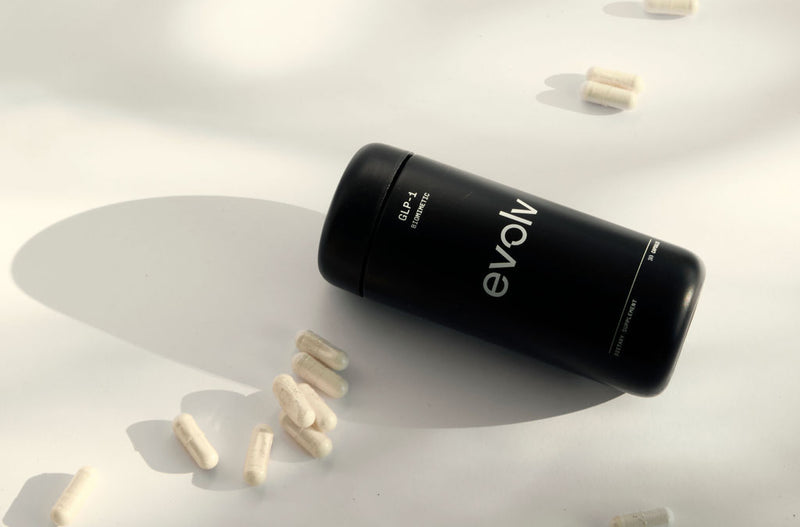
Evolv Grow is a natural biomimetic dietary supplement line built around the EV2 Peptide platform, an orally bioavailable GHK-Cu biomimetic, designed to support hair density, follicular activity, and the natural hair growth cycle.*
The EV2 Peptide is not GHK-Cu. It is engineered to reproduce GHK-Cu signaling, which is why it can be taken by mouth when the parent peptide cannot.
The EV2 Peptide is engineered for systemic delivery, a research program originally led by Dr. Kwang Chul Kwon.
In a randomized, placebo-controlled 12-week study of EV2 Peptide™, interim findings at Day 14 showed: +1.11 cm hair growth in 14 days‡, 39% greater hair growth vs. placebo‡, +0.40 cm hair thickness in 14 days‡, and 4× greater improvement in hair thickness vs. placebo‡. Improvements were observed as early as Day 7.
Available as Evolv Grow for her, supporting growth, volume, density, and reduced shedding, and Evolv Grow for him, targeting crown and hairline density. See the science behind GHK-Cu and Evolv Grow and the full formulation science.
What to Look For in a Hair Supplement
Before you buy:
Get bloodwork first. Iron/ferritin, 25-OH vitamin D, TSH (thyroid), and zinc are all testable. Supplementing what you actually need is more effective than guessing. A dermatologist or primary care physician can order this panel.
Understand the mechanism. What is this supplement doing? Correcting a deficiency? Inhibiting DHT? Engaging follicle signaling? If the product can’t answer that question, you can’t evaluate whether it addresses your situation.
Check for third-party testing. Supplements are not required to contain what their labels say. NSF, USP, or Informed Sport certification indicates independent verification.
Dose transparency matters. Effective doses are established for iron, vitamin D, saw palmetto, and pumpkin seed oil. Products that disclose doses allow you to verify you’re getting the studied amount. Ingredients listed without quantity can’t be evaluated. Proprietary ingredients, like the EV2 Peptide, are a positive differentiator when backed by clinical data.
Be skeptical of timeline claims. Any supplement promising results in days, with no clinical backing, is a red flag. Hair biology operates on months, not weeks. Supplements with published interim data, even early-timepoint data, are more credible than those citing only anecdotal before-and-after photos.
The framework you now have: get your deficiency levels tested first (iron, vitamin D, zinc) and correct what’s low. If DHT is the driver, saw palmetto is the best-evidenced natural option. If biotin is your current supplement, the evidence for non-deficient adults doesn’t support it. And if you want to address follicle signaling at the pathway level rather than only correcting a deficiency, biomimetic peptide supplementation is the fourth tier that most natural supplement content doesn’t cover.
Frequently Asked Questions
What natural supplements actually work for hair growth?
Iron/ferritin correction has the strongest clinical evidence, but only when deficiency is confirmed first. Vitamin D correction follows closely. Saw palmetto (320 mg/day) has meaningful RCT support for reducing DHT and improving hair density. Pumpkin seed oil has one robust trial supporting it. Biotin works only in documented deficiency cases, which are rare. Biomimetic peptide supplementation, specifically an orally bioavailable GHK-Cu biomimetic, represents a distinct fourth tier focused on follicle signaling rather than nutrient replacement.
How long do hair growth supplements take to work?
Iron and vitamin D correction typically require 3–6 months after levels normalize before visible regrowth appears. Saw palmetto density changes emerge around 16 weeks. Marine collagen and keratin supplements improve hair quality in 12–16 weeks. Hair grows roughly 0.5 inches per month in the active growth phase. The first indicator of progress is usually reduced shedding, followed by improved density, then length. Set expectations accordingly: the early marker is shed reduction, not new inches of hair.
Are natural hair supplements safe?
Most are generally well-tolerated. Specific risks: high-dose biotin (>5,000 mcg) interferes with thyroid (TSH) and cardiac (troponin) lab tests, so stop at least 8–72 hours before bloodwork and inform your physician. Vitamin A is fat-soluble and accumulates; excessive intake paradoxically causes hair loss and toxicity. Saw palmetto may interact with anticoagulants. Always consult a physician before adding supplements if you’re pregnant, breastfeeding, or taking medications.
Do natural supplements work as well as Rogaine or finasteride?
Different mechanisms, different evidence levels. Saw palmetto reduces DHT by roughly 30–40%; finasteride reduces it by ~70%, with stronger evidence and a prescription requirement. Minoxidil is an FDA-approved topical vasodilator with no natural equivalent at the same evidence level. Natural supplements are meaningful adjuncts or alternatives for people who can’t tolerate prescription options, not identical substitutes. The honest framing: different tools, different access requirements, different risk profiles.
What are the big 3 for hair regrowth?
In hair-loss communities, the “big 3” refers to the three conventional options usually discussed together: a topical vasodilator, an oral DHT inhibitor, and a ketoconazole shampoo. It is community shorthand, not a clinical protocol, and all three sit in the physician-managed or pharmacy tier rather than the supplement tier. It is worth knowing the term because it frames a lot of online advice, and worth knowing what it leaves out: nothing in the big 3 addresses nutrient deficiency, which is the most documented reversible driver of shedding in women, and nothing in it targets follicle signaling directly. Those are separate mechanisms, and they are where evidence-based supplementation actually operates.
Which vitamins are most important for hair health?
Iron/ferritin is the most clinically documented, and hair shedding reliably increases below ~30–40 ng/mL ferritin. Vitamin D deficiency appears in 47–54% of patients across major hair loss presentations in the research. Vitamin C supports both collagen synthesis and iron absorption. Biotin is widely marketed but only relevant for documented deficiency. The answer for your specific situation starts with bloodwork: iron, vitamin D, TSH (thyroid), and zinc. Supplement what you actually need.
‡ Based on interim findings from a randomized, placebo-controlled 12-week study of EV2 Peptide™. Improvements observed as early as Day 7. Individual results may vary.
These statements have not been evaluated by the Food and Drug Administration. This product is not intended to diagnose, treat, cure, or prevent any disease.