







Menopause Belly Fat: Why It Happens and How to Lose It
Authored by
The Evolv Research Team
You’re doing everything you’ve always done — watching what you eat, staying active — and the belly still won’t budge. Worse: it appeared when you weren’t doing anything different. You weigh roughly the same, but the shape has changed.
You’re not imagining it. And it’s not a discipline problem.
Menopause belly fat is driven by a specific biological mechanism — one that none of your previous weight loss strategies were designed to address. Estrogen decline doesn’t just redistribute fat. It also disrupts the hormonal system that quietly regulates your appetite for decades. When that system breaks down, the rules change. What worked before stops working. Generic advice that ignores the hormonal reality leaves menopausal women stranded with a strategy that was never designed for their biology.
This article covers the specific mechanism behind menopause belly fat, why standard approaches underperform in the menopausal context, and what the evidence actually supports — including the supplement and GLP-1 angle that most guides leave out entirely. For general belly fat strategies that apply across all ages, our guide to losing belly fat covers the broader picture. This article focuses on what’s different about menopause specifically.
What Is Menopause Belly Fat (and Why Is It Different)?
The “meno belly” isn’t simply more of the same kind of fat. It’s a specific redistribution: visceral fat replacing subcutaneous fat and accumulating in the abdominal cavity between organs.
This distinction matters because the two fat types behave differently. Subcutaneous fat (the fat you can pinch) sits under the skin and has relatively limited metabolic activity. Visceral fat is metabolically active — it releases inflammatory cytokines, free fatty acids, and hormones directly into the portal circulation (the blood supply feeding the liver), creating a chronic low-grade inflammatory state that affects insulin sensitivity, cardiovascular health markers, and appetite regulation.
The numbers give this weight. By the end of the menopausal transition, visceral fat rises from roughly 5–8% to 15–20% of total body fat. Postmenopausal women have approximately 36% more trunk fat and 49% greater intra-abdominal fat area compared to premenopausal women of similar total body weight. A visceral fat area exceeding 100 cm² is associated with a 12-fold increase in metabolic syndrome risk, and research suggests that approximately 86% of postmenopausal women exceed this threshold.
One important framing: 65.5% of women aged 40–59 and 73.8% of women over 60 have abdominal obesity. This is not a minority experience. It is a predictable biological outcome.
Perimenopause vs. Menopause: When the Redistribution Starts
The redistribution begins before the final menstrual period, which is why perimenopausal women are already dealing with this. Research from the SWAN study found visceral adipose tissue increases approximately 8.2% per year starting two years before the final menstrual period, then 5.5% per year afterward. Average waist circumference increases by 2.2 cm over the three-year transition period.
If you’re in perimenopause and already noticing the belly shift, you’re not early to this conversation. You’re exactly on schedule.
Why Estrogen Decline Causes Belly Fat (The Actual Mechanism)
This is the part most competitor articles skip — the cellular-level explanation for why fat moves.
Estrogen’s role in fat distribution
Estrogen normally upregulates antilipolytic α2A-adrenergic receptors in subcutaneous fat depots at the hips and thighs. These receptors suppress fat breakdown in those areas — effectively “locking” subcutaneous fat in peripheral sites. Estrogen also suppresses lipoprotein lipase (LPL) activity in visceral fat depots, redirecting fatty acid storage away from the abdominal cavity and toward peripheral subcutaneous tissue.
When estrogen declines, both of these protective mechanisms disappear simultaneously. The lock on hip and thigh fat releases. The brake on visceral fat storage releases. Fat redistributes from peripheral to central — even without changes in total caloric intake or body weight.
This is the mechanism behind the experience: “I weigh the same, but my body completely changed shape.” Total mass may be unchanged; fat distribution has shifted fundamentally.
The Cortisol Loop: Why Stress Makes It Worse in Menopause
Estrogen has anti-cortisol properties — it moderates cortisol activity at the tissue level. As estrogen falls, cortisol’s effects on the body amplify even without a rise in absolute cortisol production. Visceral fat cells contain approximately 4 times the cortisol receptor density of other fat depots, making them disproportionately responsive to this elevated cortisol activity.
Sleep disruption amplifies this loop: more than 25% of perimenopausal women experience significant insomnia. Poor sleep independently elevates cortisol and ghrelin while suppressing leptin — creating the same metabolic state as chronic stress, often stacked on top of it. The cortisol → visceral fat → poor sleep → more cortisol cycle is a specific menopause pattern that generic stress advice typically fails to address.
The GLP-1 Connection: Why Appetite Regulation Breaks Down
This is the differentiating mechanism that essentially no competitor article addresses — and it’s the most relevant to why “eating the same as before” leads to weight gain in menopause.
Estrogen directly supports GLP-1 release from intestinal L-cells and pancreatic alpha cells. GLP-1 is the gut hormone that signals satiety to the brain after meals. Estrogen also enhances the hypothalamus’s sensitivity to GLP-1’s appetite-suppressing effects. When estrogen declines, both the GLP-1 release signal and the brain’s receptivity to it diminish. The appetite regulation system that was quietly operating for decades loses its hormonal anchor.
The result is not imaginary hunger — it’s hunger that is physiologically real and no longer adequately self-correcting. It’s not willpower; it’s signal biology.
As Evolv co-founder Becca McCarthy shared on the Mom Curious podcast: “My journey with GLP-1 started with my perimenopause journey. I entered the phase of perimenopause without knowing what was going on. All these changes happen in your body — brain fog, irregular periods, crippling pain, cognitive issues.” The GLP-1 pathway disruption is the thread connecting the metabolic experience of perimenopause to the body composition shift.
The research supports this connection. A 2023 meta-analysis of 24 randomized controlled trials (1,484 participants) found GLP-1 interventions reduced visceral fat with statistical significance (SMD = -0.59, p<0.00001). The effect was strongest in non-diabetic populations — precisely the menopausal population. Supporting the GLP-1 pathway addresses the visceral fat mechanism specifically, not just overall weight. See how GLP-1 impacts weight, hormones, and longevity for the full mechanistic background.
How to Lose Menopause Belly Fat: What the Evidence Shows
Resistance Training (Strongest Evidence for Visceral Fat)
The single most evidence-supported intervention for menopause belly fat is resistance training.
A meta-analysis of 101 randomized controlled trials in 5,697 postmenopausal women found exercise training reduced visceral fat (SMD: -0.38, p=0.002). A 15-week resistance training program specifically showed significant reductions in visceral fat, subcutaneous abdominal fat, and total abdominal fat in postmenopausal women. High-volume resistance training (~77 sets/week) showed greater improvements in metabolic markers.
The mechanism is menopause-specific: resistance training addresses sarcopenia — the progressive muscle loss that lowers resting metabolic rate and worsens insulin sensitivity — which are two of the core drivers of menopausal belly fat accumulation. Compliance threshold: Two or more sessions per week are required for a significant visceral fat effect.
HIIT and Zone 2 Cardio
HIIT is more effective than steady-state cardio for visceral fat reduction in menopausal women, with the evidence stronger for perimenopause than post-menopause (earlier intervention produces better results). Zone 2 cardio — sustained moderate-intensity aerobic training at approximately 150 minutes per week — supports fat oxidation and metabolic flexibility.
The optimal approach is a combination: resistance training to address muscle mass and insulin sensitivity; cardiovascular training to address fat oxidation and energy expenditure. Each addresses a different part of the mechanism.
Protein Intake and the Anabolic Threshold
Menopausal women have a blunted anabolic response to protein; more protein per meal is required to trigger the same muscle protein synthesis response that premenopausal women achieve at lower doses.
The evidence-based target: 1.2–1.6g protein per kg of body weight daily, with 20–30g per meal minimum. A Mediterranean diet trial in 89 menopausal women produced -2.3 kg fat mass and -3.1 cm waist circumference over 8 weeks while preserving muscle mass — the protein adequacy was central to that outcome.
Adequate daily protein intake is foundational for any of the other interventions to work efficiently. Resistance training on insufficient protein accelerates the sarcopenia it’s designed to address.
Sleep and Stress as Metabolic Levers
These are not secondary concerns — they interact directly with the estrogen-cortisol-visceral fat cascade.
Sleeping under six hours per night is independently associated with excess visceral fat. Chronically elevated cortisol, compounded by estrogen decline, drives preferential visceral fat storage through the cortisol receptor density mechanism described above. Reducing cortisol load — through consistent sleep timing, sleep hygiene, and stress management — directly reduces the hormonal signal telling the body to store fat centrally.
The practical targets: 7–9 hours of sleep, consistent sleep and wake times, and minimizing late-night bright light exposure (which delays melatonin onset and disrupts the cortisol cycle). Understanding how to stop food noise — the constant appetite-related mental chatter that worsens with cortisol elevation — is also part of this hormonal picture.
Why Standard Approaches Don’t Work the Same Way in Menopause
Hear the #1 thing menopausal women say in online communities: “I’m doing everything right and the belly still won’t budge.” This is not a discipline problem. It’s a biology problem — specifically, a mismatch between the strategy and the mechanism driving the fat.
Calorie restriction alone
Post-menopause, fat oxidation drops 32.4% compared to 9.8% in premenopausal controls (Lovejoy et al., 2008), along with approximately 200 kcal/day reduction in 24-hour energy expenditure. The same calorie deficit produces a smaller fat loss. Aggressive restriction compounds this by accelerating muscle loss, and muscle mass is the primary driver of resting metabolic rate. Cutting calories without protecting muscle further slows the metabolism that’s already working against you.
Cardio-only exercise
Standard aerobic exercise doesn’t address the muscle mass loss driving metabolic slowdown. Muscle mass decreases 5–10% per decade after age 50. Cardio reduces fat mass, but without rebuilding the metabolic engine, the overall effect on body composition in menopausal women is limited compared to combined protocols.
Generic weight-loss supplements
Most stimulant-based products don’t target the hormonal mechanism behind menopause belly fat. A 2024 JAMA randomized controlled trial on berberine (337 participants, 6 months) found no significant effect on visceral adipose tissue (1.38% difference vs. placebo, p=0.42). The supplement may have other metabolic marker benefits, but visceral fat reduction in menopausal women is not among them based on current evidence.
What works is a strategy matched to the menopausal mechanism: protecting and building muscle mass, managing cortisol and sleep, providing adequate protein, and addressing the GLP-1 appetite pathway disruption that estrogen decline creates.
Does HRT Help With Menopause Belly Fat?
Hormone replacement therapy (HRT) addresses the root hormonal deficit driving fat redistribution. The evidence shows it helps — primarily by preventing further visceral fat accumulation and redistributing existing fat from central to peripheral sites.
Research at 12 months finds HRT users show no visceral fat redistribution while control groups continue accumulating abdominal fat. HRT shifts fat from visceral to peripheral deposits — an improvement in fat distribution even when total body weight is unchanged. What HRT does not produce is significant overall weight loss.
The combination research is the most compelling. Recent data (2024 Menopause journal; 2026 Mayo Clinic data with tirzepatide) found HRT combined with GLP-1 receptor agonism produces 30–35% greater weight loss than GLP-1 approaches alone — the mechanisms are complementary rather than redundant.
As Evolv co-founder Becca McCarthy shared on the Mom Curious podcast: “It was that really unique cocktail of HRT and GLP-1 that worked in tandem to help me not only tackle those symptoms, but also lose those extra five pounds.” This is a founder-voice personal experience, not a medical recommendation — but it echoes what the research shows about mechanism complementarity.
HRT is a physician-managed decision with individual risk-benefit considerations. Consult your healthcare provider to determine whether it’s appropriate for your specific situation. For women who cannot or choose not to use HRT, or who want to address the GLP-1 appetite-pathway gap specifically, that’s where targeted GLP-1 pathway support operates.
Supplements and GLP-1 Support for Menopause Belly Fat
GLP-1 Pathway Support (Mechanism-Matched to Menopause)
Estrogen decline reduces GLP-1 pathway activity in L-cells and diminishes hypothalamic sensitivity to satiety signals. Supporting the GLP-1 pathway directly addresses the appetite regulation gap that menopause creates — it’s not a generic weight management approach; it targets the specific signaling disruption menopausal women experience.
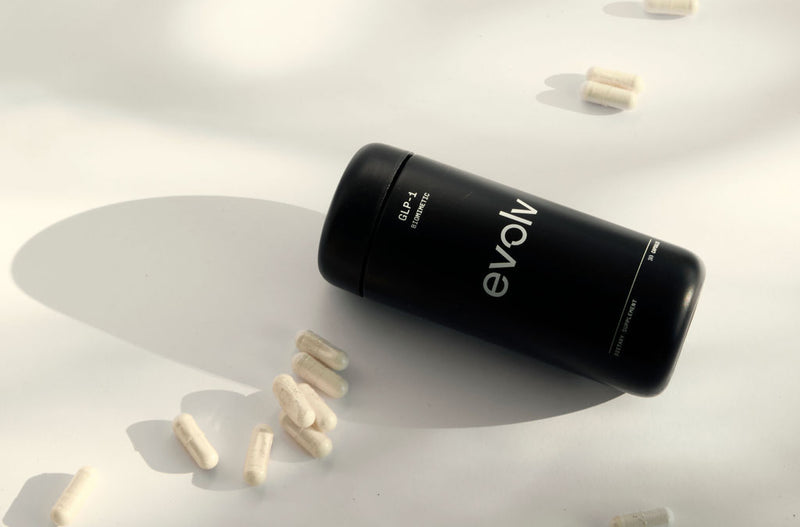
Evolv GLP-1 is a natural biomimetic dietary supplement built around a proprietary bioengineered, yeast-derived peptide designed to support GLP-1 and GIP appetite pathways.
Its active ingredient — the bioengineered, yeast-derived EV1 Peptide — is designed to support the body’s natural GLP-1 and GIP appetite pathways. The women in this ICP (perimenopause/menopause, 30–55) are precisely those for whom GLP-1 pathway activity is declining — making biomimetic pathway support mechanistically relevant to the specific hormonal environment they’re navigating.
These statements have not been evaluated by the Food and Drug Administration. This product is not intended to diagnose, treat, cure, or prevent any disease.
In Evolv’s randomized controlled study, with results read out at 8 weeks, participants lost up to 12+ lbs and reduced waist circumference by up to 4+ inches.* See Evolv’s science page for the clinical methodology. Evolv GLP-1 is available as a daily oral supplement designed to work with your biology — not against it.
For women-specific guidance on how the GLP-1 pathway intersects with hormonal health, see the FAQ for Her. For the broader context on GLP-1 supplements for weight loss, the mechanism applies directly to the menopausal hormonal environment.
Probiotics: The Estrobolome Connection
This is a menopause-specific gut health mechanism that no competitor article covers: the estrobolome.
Gut bacteria produce beta-glucuronidase, an enzyme that reactivates conjugated estrogen for reabsorption in the gut. When the microbiome is disrupted post-menopause — and research documents measurable depletion of Lactobacillus and Bifidobacterium species — circulating estrogen falls further than ovarian decline alone would produce. Supporting the estrobolome supports the body’s capacity to recirculate endogenous estrogen.
Lactobacillus rhamnosus GG specifically reduced body weight, waist circumference, and visceral fat in postmenopausal women in clinical research — likely through this mechanism. Multi-strain probiotic formulas with 10+ billion CFU require 12+ weeks for a measurable metabolic effect. See how GLP-1 supports weight management for more on the GLP-1 mechanism in menopausal weight loss.
Omega-3 Fatty Acids
Honest framing: supplementation trials have not found significant direct visceral fat reduction from omega-3 supplementation. What they do show: significant triglyceride reduction and modest HDL improvement in postmenopausal women, plus anti-inflammatory effects that reduce the inflammatory signaling driving abdominal fat storage.
Best understood as part of the anti-inflammatory foundation rather than a fat-loss supplement. Dose: 2–3g EPA+DHA daily. The role is upstream — reducing the chronic inflammation that compounds visceral fat accumulation, not directly shrinking existing deposits.
Magnesium
Menopausal women are commonly deficient in magnesium, with implications for sleep quality and insulin sensitivity — both indirect but meaningful drivers of visceral fat accumulation. No direct visceral fat RCT evidence exists, but addressing a metabolic bottleneck that worsens both sleep (and thus cortisol) and insulin response matters in the menopause context. Dose: 300–400 mg/day, taken in the evening for sleep benefit.
Ashwagandha (Cortisol Modulation)
An 8-week randomized controlled trial found ashwagandha supplementation produced a 22.2% cortisol reduction (vs. 7.9% in placebo) and -2.32 kg body weight in the treatment group. The sample was primarily male and did not break out fat composition specifically — not a menopause-specific study. But the mechanism pathway is directly relevant: cortisol elevation is a specific menopause belly fat driver through the visceral fat cortisol receptor mechanism, and ashwagandha targets that upstream signal.
Berberine: What the Evidence Actually Shows
Berberine is widely marketed for visceral fat and metabolic health. The largest RCT to date (2024 JAMA, 337 participants, 6 months) found no significant effect on visceral adipose tissue (1.38% difference vs. placebo, p=0.42) and no significant improvement in insulin resistance markers. The study did confirm modest LDL reduction and CRP reduction.
Berberine has metabolic marker benefits — but the visceral fat evidence is weaker than its marketing claims. Menopausal women deserve this nuance before investing in a supplement that the best available evidence does not support for visceral fat reduction. See top supplements to support healthy metabolism in 2026 for a full evidence-ranked supplement overview.
Menopause belly fat is a biological response to estrogen-driven disruption of fat distribution and appetite regulation. It’s not a failure of willpower or effort. The approaches that work are matched to the mechanism: resistance training to counter sarcopenia, protein-forward nutrition to preserve muscle, sleep and cortisol management to break the central fat storage cycle, and GLP-1 pathway support to address the appetite regulation gap that estrogen decline creates.
The combination strategy that research supports is multi-pronged because the mechanism is multi-pronged. There is no single intervention that resolves this — but there are interventions matched to the biology. That’s the difference between working with your menopausal physiology and working against it.
For women navigating perimenopause or menopause, Evolv GLP-1 offers a natural biomimetic approach to supporting the GLP-1 and GIP appetite pathways that estrogen decline disrupts. For the full picture on natural ways to increase GLP-1 through diet and lifestyle, that’s the complementary foundation.
Frequently Asked Questions
Does HRT help with menopause belly fat?
HRT is associated with less visceral fat accumulation — primarily by preventing further accumulation rather than reversing existing belly fat. At 12 months, women on HRT showed no visceral fat redistribution while the control group continued accumulating abdominal fat; HRT also redistributes fat from visceral to peripheral sites. However, HRT alone does not produce significant overall weight loss. Research suggests HRT combined with GLP-1 pathway approaches produces 30–35% greater weight loss than either approach alone. HRT is a physician-managed decision — consult your healthcare provider to determine if it’s appropriate for you.
How long does it take to lose menopause belly fat?
Research shows meaningful visceral fat reduction in 8–15 weeks with consistent resistance training (2+ sessions/week) and dietary changes. A Mediterranean diet trial in menopausal women produced -3.1 cm waist circumference in 8 weeks. Visceral fat is metabolically active and responds faster to intervention than subcutaneous fat — but the menopausal hormonal context slows the process compared to premenopausal women. Expect 3–6 months of consistent effort for visible body composition changes; 6–12 months for meaningful visceral fat reduction as measured clinically.
Does menopause belly fat respond differently to exercise?
Yes, specifically in which type of exercise produces results. Cardio alone is less effective for menopausal women because it doesn’t address the muscle loss driving metabolic slowdown (sarcopenia). A meta-analysis of 101 RCTs in postmenopausal women found resistance training specifically reduced visceral fat (SMD: -0.38, p=0.002). Combined resistance training plus aerobic exercise is the evidence-based approach: resistance training preserves and builds muscle mass to restore resting metabolic rate; HIIT and Zone 2 cardio address fat oxidation. The combination targets both drivers of menopause belly fat rather than one at a time.
Which supplements are studied specifically for menopause-related weight gain?
The strongest evidence for the menopausal context is for GLP-1 pathway support — estrogen decline reduces GLP-1 pathway activity, and a 2023 meta-analysis of 24 RCTs found GLP-1 interventions significantly reduced visceral fat (SMD = -0.59, p<0.00001). Supporting supplements include probiotics (Lactobacillus rhamnosus GG showed reduced waist circumference and visceral fat in postmenopausal women — likely through estrobolome estrogen reactivation), omega-3 fatty acids (reduces inflammation and improves lipid markers, but has no direct visceral fat effect in RCTs), and magnesium (improves insulin sensitivity and sleep quality). Berberine is widely marketed, but a 2024 JAMA RCT found no significant visceral fat reduction.
*Based on Evolv’s randomized controlled study, with results read out at 8 weeks. Individual results may vary.
These statements have not been evaluated by the Food and Drug Administration. This product is not intended to diagnose, treat, cure, or prevent any disease.