







How to Increase GLP-1 Naturally: 9 Research-Backed Ways
Authored by
The Evolv Research Team
You’ve probably seen berberine called “nature’s Ozempic.” That framing collapses three very different categories — prescription medications, generic plant-extract supplements, and pathway-based biomimetics — into a single comparison they don’t share. They operate on different timescales, different mechanisms, and different levels of intervention. The right question isn’t which is strongest. It’s which approach fits what you’re actually trying to do, and how the foundational levers — diet, exercise, sleep, gut health — work together to support your body’s own GLP-1 signaling consistently over time.
As Evolv co-founder Becca McCarthy shared on the Mom Curious podcast: “GLP-1 is a natural hormone and a biological pathway in our own bodies. We own it.”
GLP-1 is something your body produces every time you eat. Natural methods aren’t a workaround — they’re working with the system that’s already there.
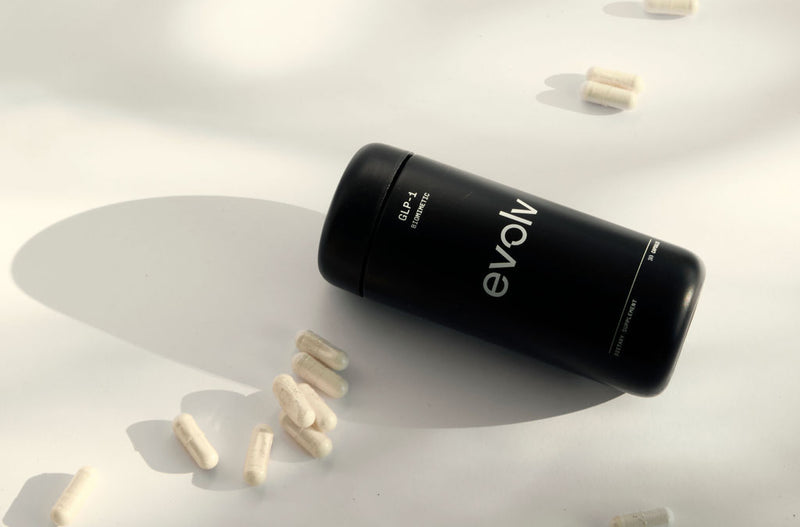
That same insight is what drove the team at Evolv — a biotech supplement company — to develop the first oral GLP-1 biomimetic peptide. The EV1 Peptide is a proprietary, yeast-derived peptide composed of canonical (naturally occurring) amino acids, designed to support the body’s GLP-1 and GIP appetite pathways and help regulate appetite and metabolic health.
This guide covers 9 research-backed approaches to increase GLP-1 naturally — stacked from foundational habits to targeted products — so you can build a protocol that compounds over time.
What GLP-1 does and why the half-life matters
GLP-1 is an incretin hormone released by L-cells in your gut when you eat. It signals satiety to your brain, slows gastric emptying so you feel fuller longer, and supports healthy insulin response.
Here’s the detail most articles skip: your body’s natural GLP-1 has a half-life of approximately 1–2 minutes. The enzyme DPP-4 breaks it down almost immediately after it’s released. That’s by design — it’s a short-burst signaling system, intended to fire at meals and clear quickly.
This is why no single dietary trigger — no food, no plant-extract supplement, no workout — can on its own deliver the kind of sustained pathway engagement that supports consistent appetite regulation. Each meal-by-meal release fades within minutes. Stacking multiple approaches throughout the day builds a meaningful baseline of GLP-1 signaling. And pathway-based products designed to engage GLP-1 and GIP signaling more consistently represent a different category of support entirely. Evolv GLP-1 was developed to operate in that latter category.
If you’re new to what GLP-1 is and why it matters, start there.
9 research-backed ways to support GLP-1 signaling naturally
1. Eat more protein — especially before carbohydrates
Protein is the strongest dietary trigger for GLP-1 release. A 2021 randomized crossover trial found that a whey protein drink before a meal produced 141% higher active GLP-1 response compared to a standard meal alone. A separate 2024 study showed that a high-protein diet (40% vs. 16% protein) increased GLP-1 peak concentrations by 17% and net GLP-1 area under the curve by 27%.
The practical takeaway: aim for 25–30g of protein per meal, and eat your protein before your carbohydrates. Meal sequencing — protein and fiber first, carbs last — amplifies the GLP-1 response from the same food.
Good sources: eggs, Greek yogurt, fish, chicken, legumes, cottage cheese.
2. Prioritize soluble fiber and resistant starch
When gut bacteria ferment soluble fiber, they produce short-chain fatty acids (SCFAs) — primarily acetate, propionate, and butyrate. These SCFAs directly stimulate L-cells to release GLP-1 through the FFAR2 receptor. Research shows that fiber-deficient feeding reduced GLP-1 concentrations by 37% in the ileum and 55% in the colon.
In practical terms: insufficient fiber intake limits how much GLP-1 your body is able to produce in the first place.
Resistant starch — found in cooked-and-cooled potatoes, green bananas, oats, and legumes — is particularly effective because it reaches the colon intact, where L-cells are most concentrated.
Daily target: 25–35g of fiber from whole food sources.
3. Include healthy fats at every meal
Omega-3 fatty acids and monounsaturated fats increase GLP-1 release and slow gastric emptying, extending the satiety signal. Avocado, olive oil, nuts, seeds, and fatty fish (salmon, sardines, mackerel) are the most consistently studied sources.
This doesn’t mean adding fat on top of an existing meal — it means building meals where healthy fats are a structural component, not an afterthought.
4. Support your gut microbiome
The gut–GLP-1 axis is the most underexplored piece of this puzzle. Your gut bacteria are the intermediary between the food you eat and the GLP-1 your L-cells release. Without the right microbial environment, even a well-built diet won’t produce optimal signaling.
A 2024 review in PMC found that supplementation with Lactobacillus reuteri elevated GLP-1 and GLP-2 levels within 4 weeks. Prebiotic fructan (16g/day for 2 weeks in healthy subjects) increased both GLP-1 and PYY.
Actionable steps: include fermented foods daily (yogurt, kefir, kimchi, sauerkraut), feed your gut bacteria with prebiotic fiber (garlic, onions, leeks, asparagus), and avoid unnecessary antibiotic use that disrupts microbial diversity.
Learn more about how GLP-1 supplements work to naturally control your appetite.
5. Exercise consistently — both cardio and resistance training
A 10-week endurance training study found that beta-cell sensitivity to GLP-1 improved by 28% after consistent moderate-to-high intensity exercise. Importantly, exercise doesn’t just increase GLP-1 secretion — it improves how well your body responds to the GLP-1 it already makes.
A 2026 study in the journal Obesity found that 1 year of exercise after weight loss increased late-phase postprandial GLP-1 secretion, potentially helping prevent weight regain.
Baseline: 150+ minutes of moderate-intensity activity per week. Combining aerobic exercise with resistance training appears to produce the strongest metabolic effect.
6. Prioritize sleep quality
Poor sleep delays peak GLP-1 response after meals and disrupts the hormonal cascade that regulates appetite. Chronic sleep deprivation elevates cortisol, which further interferes with GLP-1 signaling and insulin sensitivity.
This is one of the most underrated levers for appetite regulation. If you’re eating well and exercising but sleeping 5–6 hours a night, your GLP-1 signaling is compromised.
Target: 7–9 hours of quality sleep. Consistent bedtime, limited screen exposure before bed, and avoiding late-night meals all support the hormonal environment GLP-1 operates in.
7. Understand why most GLP-1 supplements fall short
As Becca McCarthy shared on the Mom Curious podcast: “Typically a supplement that has GLP-1 on the label is including an ingredient like berberine or green tea extract — a plant that we know can elicit a slightly longer GLP-1 response… That created a lot of confusion in the GLP-1 space.”
Most supplements marketed for GLP-1 support rely on plant extracts that produce short-lived effects measured in minutes — surface-level activity, not sustained pathway engagement. Evolv was specifically designed to operate at a different level of the signaling pathway, supporting GLP-1 and GIP receptor engagement in a sustained way that generic supplement ingredients are not built to deliver.
8. Reduce ultra-processed foods and added sugars
Ultra-processed foods disrupt the gut microbiome that drives GLP-1 signaling and can blunt L-cell responsiveness over time. High-sugar diets create blood glucose spikes that bypass the sustained satiety pathway GLP-1 is designed to support.
This step is foundational. Protein, fiber, and probiotics work less effectively when the gut environment is being undermined by processed-food inputs in parallel.
9. Explore GLP-1 pathway–supporting biomimetics
This is where the category meaningfully shifts.
Everything above — protein, fiber, fats, exercise, sleep, gut health, even targeted plant-extract supplements — works by stimulating your body’s L-cells to release native GLP-1 that degrades within minutes. These foundational levers are real and valuable. They support short-burst, meal-by-meal GLP-1 release.
Biomimetics are an emerging category of wellness products designed around the body’s own signaling pathways rather than around stimulants or generic plant extracts. Within that category, individual products vary widely in mechanism, ingredient design, and evidence base — they aren’t interchangeable.
Evolv GLP-1 is a biomimetic dietary supplement built around a proprietary, yeast-derived peptide designed to support both GLP-1 and GIP appetite pathway signaling.
Its active ingredient — the EV1 Peptide — is a proprietary peptide composed of canonical, naturally occurring amino acids, expressed in Saccharomyces cerevisiae (baker’s yeast). It’s designed to engage GLP-1 and GIP receptor pathways in a sustained, oral, daily format. The peptide and its sustained pathway-engagement design are unique to Evolv, not features of biomimetics as a category.
In an 8-week randomized controlled study, participants consumed approximately 750 fewer calories per day and lost up to 12+ lbs. Evolv GLP-1 is designed for daily oral use with no harsh side effects — in our 8-week clinical study, no participants reported hair or muscle concerns. These outcomes sit in the same magnitude range that published prescription GLP-1 trials report at the 8-week timepoint.
As Becca McCarthy explained on the Mom Curious podcast: “We designed a novel peptide… It only contains canonical amino acids, unlike the pharmaceutical GLP-1s which have some synthetic material in them.”
And on the experience: “Food noise essentially is that constant chatter in your mind that is compelling you to snack. When you’re on Evolv GLP-1, it totally dissipates. And it leaves you all this space to think about what you actually have to do.”
Learn more about how Evolv GLP-1 biomimetic works, or explore the science behind the 8-week study.
Building your GLP-1 support protocol
The right approach to increasing GLP-1 naturally isn’t choosing one method — it’s stacking several. Protein timing, fiber, gut health, exercise, sleep, and targeted products each contribute a layer of support. Combined consistently, they create a meaningful baseline of GLP-1 signaling that supports appetite regulation and metabolic health.
Your biology already has the infrastructure. These 9 approaches help you use it.
If you want to explore how a biomimetic peptide fits into your protocol, learn how Evolv works or see the product.
You can also explore more about the unexpected benefits of GLP-1 beyond weight loss.
Frequently Asked Questions
What naturally increases GLP-1 signaling in the body?
GLP-1 is released by L-cells in the gut in response to food — particularly protein, fiber, and healthy fats. Consistent dietary patterns, a healthy gut microbiome, regular exercise, and quality sleep all support healthy GLP-1 signaling. No single food or habit works in isolation; stacking multiple approaches drives the strongest response.
Which foods are the strongest natural triggers for GLP-1?
High-fiber foods like legumes, oats, and chia seeds; lean proteins like eggs, fish, and Greek yogurt; and healthy fats like avocado, olive oil, and nuts are the most research-backed categories. Fermented foods like yogurt and kefir also support the gut microbiome that plays a key role in GLP-1 regulation. Eating protein and fiber before carbohydrates in a meal amplifies the GLP-1 response.
Is berberine really “nature’s Ozempic”?
Berberine has indirect effects on glucose metabolism through AMPK activation and gut microbiome remodeling, but its impact on the GLP-1 pathway is short-lived and surface-level. It doesn’t sustain GLP-1 or GIP pathway engagement, and clinical results are modest — roughly 2–4 kg of weight reduction. The AAFP notes there has never been a large-scale randomized clinical trial for berberine’s weight loss claims. The “nature’s Ozempic” label oversells what berberine actually does, and collapses three different categories — prescription medications, plant-extract supplements, and pathway-based biomimetics — into a comparison they don’t share.
How do natural GLP-1 approaches compare to GLP-1 medications?
These are different categories of tools designed for different use cases. Prescription GLP-1 receptor agonists are pharmaceutical interventions delivered by weekly injection, typically prescribed for clinical weight management or diabetes care. Traditional natural approaches — diet, fiber, exercise, sleep — support your body’s own short-burst GLP-1 release at the meal level. Evolv GLP-1 is a daily oral biomimetic dietary supplement built around the proprietary EV1 Peptide, designed to support GLP-1 and GIP appetite pathway signaling in a sustained way. Each operates at a different level of intervention; the right fit depends on what you’re working toward and what level of support is appropriate for your situation.
Does exercise increase GLP-1 levels?
Yes. Both aerobic and resistance training support GLP-1 signaling. A 10-week endurance study found that beta-cell sensitivity to GLP-1 improved by 28%. Exercise improves how efficiently your body uses the GLP-1 it already produces — not just how much is secreted. Current guidelines recommend at least 150 minutes of moderate-intensity activity per week.
How long before natural GLP-1 methods show results?
Traditional natural approaches typically require 4–12 weeks of consistent changes before meaningful shifts become noticeable. The strongest evidence supports combinations — fiber-rich diet plus regular exercise plus quality sleep — rather than any single intervention. Evolv GLP-1 is designed to begin supporting GLP-1 and GIP pathways within approximately 4 hours of intake, with body composition changes typically appearing over a period of consistent daily use. Explore Evolv GLP-1.
These statements have not been evaluated by the Food and Drug Administration. This product is not intended to diagnose, treat, cure, or prevent any disease.
Individual results may vary. Consult your physician before starting any new supplement, especially if you are taking medications or are pregnant or breastfeeding.