







What Is Food Noise and How to Quiet It: Tips to Stop Obsessive Food Thoughts
Authored by
The Evolv Research Team
You just ate lunch. A full meal — protein, vegetables, the works. And here you are, twenty minutes later, mentally scrolling through what’s in the fridge.
Or it’s 11 pm. You’re not physically hungry. Your stomach isn’t empty. But you can’t stop thinking about the cookies in the pantry.
That’s food noise — and it’s only in the last few years that researchers, clinicians, and millions of GLP-1 medication users have started using the term consistently. It refers to a specific phenomenon: the persistent mental preoccupation with food that exists independently of physical hunger. This article explains what food noise is, why it happens, how to tell it apart from normal hunger, and the evidence-backed strategies that actually quiet it. Evolv, the brand built around supporting the GLP-1 and GIP appetite pathways, has a particular interest in this phenomenon — because the biology behind food noise is exactly what GLP-1/GIP pathway support is designed to influence.
What Is Food Noise?
Food noise is the persistent, intrusive mental preoccupation with food. It shows up as constant thoughts about what to eat, when to eat next, how to plan around food, what you “shouldn’t” be eating, and how to negotiate with cravings. It exists independently of physical hunger — meaning it can be loud even when you’ve eaten enough and your body doesn’t need fuel.
In a 2025 paper in Nature’s Nutrition & Diabetes journal, researchers formally defined food noise as “constant, intrusive thoughts about food that are disruptive to daily life”. A 2023 PMC review by Hayashi and colleagues — cited 69+ times — proposed a conceptual model linking food noise to food cue reactivity, the brain’s response to environmental food triggers. Both papers make the same point: food noise is a measurable cognitive phenomenon, not a metaphor for poor willpower.
The term entered mainstream conversation when people started taking GLP-1 receptor agonist medications and described the experience. “The food noise went quiet” became one of the most consistent things users reported — not just lower hunger, but reduced mental chatter about food.
What Causes Food Noise?
Food noise has multiple drivers. Some are biological, some are behavioral, some are environmental, and most people experience a combination.
Ghrelin and dopamine reward circuitry. This is the core mechanism. Ghrelin, the body’s primary hunger hormone, doesn’t just signal an empty stomach — it activates the mesolimbic dopamine pathway in the brain, the same reward circuit that makes pleasurable things feel urgent. When ghrelin is elevated, food doesn’t just feel needed — it feels rewarding to think about. For the full mechanism, see the hormone behind your hunger signal.
Restrictive dieting. Caloric restriction reliably raises ghrelin and amplifies food noise. A 2002 NEJM study showed 17% diet-induced weight loss produced a 24% rise in 24-hour ghrelin. Restrict more, dieting harder, food noise gets louder.
Sleep deprivation. A single night of restricted sleep raises ghrelin by about 22% and suppresses leptin (the satiety hormone) at the same time — a double hit that intensifies both physical hunger and mental food preoccupation the next day.
Hormonal shifts. Progesterone peaks before menstruation drives hunger and carbohydrate craving in women. Perimenopause’s estrogen decline does the same. Thyroid dysregulation can amplify food noise in both sexes.
Ultra-processed food exposure. Foods engineered for maximum palatability dysregulate dopamine signaling and food cue reactivity. A 2024 review found chronic ultra-processed food consumption associated with increased hunger, dysregulated reward signaling, and elevated ghrelin alongside suppressed PYY.
Stress and cortisol. Chronic stress elevates cortisol, which directly increases appetite and amplifies the hedonic reward value of food. Stress eating has a hormonal mechanism, not just a behavioral one.
Food Noise vs. Normal Hunger: How to Tell the Difference
Distinguishing food noise from physical hunger is the first step in quieting it. The differences are observable.
Physical (homeostatic) hunger:
- Builds gradually
- Located in the stomach (rumbling, emptiness)
- Doesn’t have specific food preferences — most foods sound appealing
- Patiently waits
- Satisfied by a normal meal
Food noise (hedonic / reward-driven):
- Often appears suddenly or shortly after eating
- Located in the head (thoughts, planning, mental imagery)
- Has very specific cravings (often for sweet, salty, or ultra-processed foods)
- Feels urgent or compulsive
- Not satisfied even after eating, the chatter continues
If your hunger checks the second list more than the first, you’re likely dealing with food noise rather than physical need. The strategies for quieting it are different from “just eat more.”
How to Quiet Food Noise: Evidence-Backed Strategies
There’s no single switch that turns food noise off. But these inputs, applied consistently, measurably reduce the frequency and intensity of food preoccupation over weeks.
1. Front-load protein at every meal. Protein is the strongest ghrelin-suppressing macronutrient. Targeting 25-30% of daily calories from protein (roughly 1.2-1.6 g/kg body weight) reduces post-meal ghrelin rebound and extends satiety — both physical and mental.
2. Add soluble fiber. Psyllium, glucomannan, oat beta-glucan, and chia/flax slow gastric emptying and feed gut bacteria that produce short-chain fatty acids, stimulating GLP-1 and PYY release. This dampens the post-meal hunger spike that fuels food noise.
3. Sleep 7+ hours consistently. One night of poor sleep measurably raises ghrelin and lowers leptin the next day. Chronic sleep restriction sustains the hormonal pattern that drives food noise. Sleep is one of the most underrated levers.
4. Manage stress directly. Daily movement, breathwork, and lowered psychological load reduce baseline cortisol — the stress hormone that amplifies food noise via its effects on the brain’s reward circuits. No food intervention can override a sustained stress response.
5. Reduce ultra-processed food exposure. Ultra-processed foods dysregulate dopamine signaling and increase ghrelin while suppressing PYY. Even partial reductions measurably normalize cue reactivity over a few weeks. Replace with whole-food protein + fiber combinations.
6. Support the GLP-1 and GIP satiety pathway. This is the biological counter to ghrelin dominance. GLP-1 dampens the same dopamine-linked reward circuits that ghrelin amplifies, which is why GLP-1 receptor agonist medication users consistently report “the food noise went quiet.” Lifestyle inputs that support endogenous GLP-1 secretion (fiber, fermented foods, protein) influence this pathway naturally — see natural ways to support GLP-1 signaling through diet and lifestyle for the dietary approaches.
Food Noise and GLP-1: The Hormonal Connection
The reason “the food noise went quiet” became such a consistent report from GLP-1 medication users isn’t a coincidence. It's a mechanism.
GLP-1 and ghrelin operate as opposing forces in the brain’s appetite system. Ghrelin activates the mesolimbic dopamine reward circuit, making food feel urgent and rewarding. GLP-1 dampens the same reward circuits — modulating default mode network activity and reducing food cue reactivity at the neurological level. When GLP-1 signaling is strong, the urgency around food drops.
On a recent episode of the Mom Curious podcast, Evolv co-founder Becca McCarthy described the experience: “Food noise essentially is that constant chatter in your mind that is compelling you to snack. It’s that voice in your head that’s like, I just ate — how much time is going to pass until I eat next? When you’re on Evolv GLP-1, it totally dissipates.”
This is where Evolv enters the conversation as a brand.
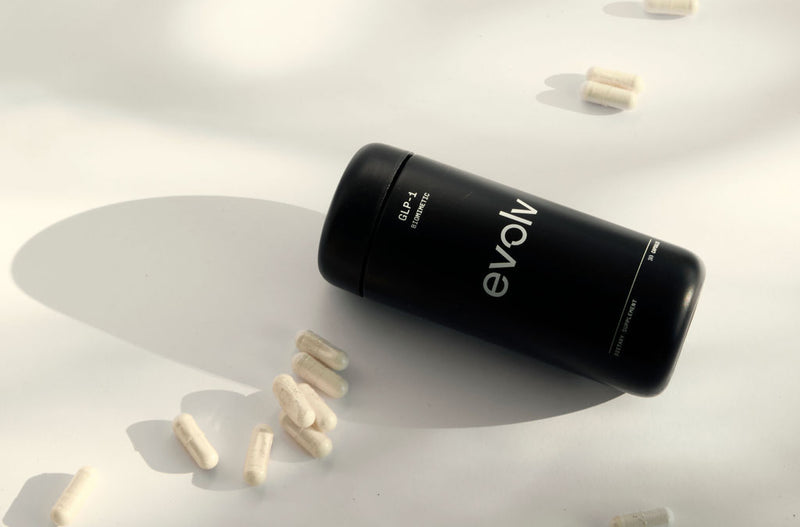
Evolv GLP-1 is a natural biomimetic dietary supplement built around a proprietary yeast-derived peptide designed to support GLP-1 and GIP appetite pathways.
The active ingredient — the bioengineered, yeast-derived EV1 Peptide — is designed to engage the body’s natural GLP-1 and GIP signaling, the same satiety hormone system that opposes ghrelin and damps reward-driven food preoccupation. In the 8-week interim data of Evolv’s randomized controlled study, participants consumed approximately 750 fewer calories per day, with up to 12+ lbs of weight loss. The mechanism isn’t appetite suppression — it’s pathway-based support for the satiety side of the system.
For more on the underlying mechanism, see how appetite control supplements support weight loss and the benefits of GLP-1 that extend beyond appetite control.
When Food Noise Might Need Professional Support
For most people, food noise responds to the lifestyle and biological inputs above. But some patterns warrant professional evaluation rather than self-management:
- Food noise paired with binge episodes: Eating large quantities in a short time with loss of control, often followed by guilt or distress
- Severe restriction alternating with high-intensity food preoccupation: The cycle of restrict-then-binge can indicate disordered eating
- Food noise that’s persistent and disruptive to work, relationships, or daily function: Beyond background mental chatter
- Food noise paired with other ADHD-like symptoms: Attention, impulsivity, executive dysfunction; clinical evaluation can distinguish a broader pattern
If any of these apply, a registered dietitian, therapist, or physician experienced in eating behavior can help. The National Eating Disorders Association (nationaleatingdisorders.org) maintains a free helpline and screening tools.
For everyone else: the lifestyle inputs above are usually enough, especially when applied consistently over 8-12 weeks. For those whose satiety pathway has been blunted by post-diet hormonal patterns or chronic blood sugar instability, Evolv’s oral GLP-1 biomimetic peptide is a daily tablet designed for sustained pathway engagement — meant to work alongside, not instead of, the foods and habits above. For a broader look at the supplement category, see the top appetite control supplements reviewed for 2026.
Frequently Asked Questions
What exactly is food noise?
Food noise is the persistent mental preoccupation with food — constant, intrusive thoughts about what to eat, when to eat next, or how to plan around food — that exists independently of physical hunger. A 2025 paper in Nature’s Nutrition & Diabetes journal formally defined it as “constant, intrusive thoughts about food that are disruptive to daily life.” It’s a recognized concept in modern appetite research, not a buzzword.
What causes food noise?
Food noise is driven by your brain’s reward circuitry, not just your stomach. Ghrelin (the hunger hormone) activates dopamine-releasing neurons in the ventral tegmental area — the same reward pathway that makes pleasurable things feel urgent. Restrictive dieting, sleep deprivation, hormonal shifts, ultra-processed food exposure, stress, and certain medications can all amplify food noise. It’s a biological phenomenon with real mechanisms behind it.
How do you stop food noise naturally?
Five evidence-backed strategies: increase protein at every meal (suppresses ghrelin), eat soluble fiber to slow gastric emptying, prioritize 7+ hours of sleep (sleep loss raises ghrelin and lowers leptin), manage stress to lower cortisol, and reduce ultra-processed food exposure that dysregulates reward signaling. Combined consistently over several weeks, these inputs measurably reduce the frequency and intensity of food preoccupation.
Is food noise an ADHD thing?
Food noise is not exclusive to ADHD, but ADHD can amplify it. People with ADHD often have differences in dopamine signaling — the same neurotransmitter system that drives food noise — and may experience stronger food cravings and reward-driven eating. If food noise is severe and accompanied by other ADHD symptoms (attention, impulsivity, executive dysfunction), a clinical evaluation can help distinguish food noise from a broader pattern that may benefit from professional support.
Do supplements help quiet food noise?
Some supplement categories address food noise indirectly by influencing the satiety side of the appetite system. Soluble fibers (psyllium, glucomannan) blunt post-meal ghrelin rebounds. Magnesium supports sleep, which lowers ghrelin. Biomimetic products that support the body’s natural GLP-1 and GIP appetite pathways — like Evolv GLP-1, the only dietary supplement with clinical results comparable to prescription options (up to 12+ lbs in an 8-week study) — work on the same hormone system that drives food noise at its source. Supplements work best alongside the lifestyle inputs above, not as a replacement.
These statements have not been evaluated by the Food and Drug Administration. This product is not intended to diagnose, treat, cure, or prevent any disease.
Sources
- Dhurandhar EJ, et al. “Food noise: definition, measurement, and future research directions.” Nutrition & Diabetes, 2025. https://www.nature.com/articles/s41387-025-00382-x
- Hayashi D, et al. “What Is Food Noise? A Conceptual Model of Food Cue Reactivity.” PMC, 2023. https://pmc.ncbi.nlm.nih.gov/articles/PMC10674813/
- “Quieting Food Noise: How GLP-1s and Mindfulness Rewire the Default Mode Network and Reward Circuits.” PMC, 2025. https://pmc.ncbi.nlm.nih.gov/articles/PMC12770913/
- Cummings DE, et al. “Plasma ghrelin levels after diet-induced weight loss or gastric bypass surgery.” N Engl J Med, 2002. https://pubmed.ncbi.nlm.nih.gov/12023994/
- Benedict C, et al. “A single night of sleep deprivation increases ghrelin.” PMID 18564298. https://pubmed.ncbi.nlm.nih.gov/18564298/
- LaFata EM, et al. “Ultra-Processed Food Addiction: A Research Update.” Current Obesity Reports, 2024. https://pmc.ncbi.nlm.nih.gov/articles/PMC11150183/
- Harvard Health. “Understanding food noise — and how to turn down the volume.” 2026. https://www.health.harvard.edu/diet-and-nutrition/understanding-food-noise-and-how-to-turn-down-the-volume
- Cleveland Clinic. “What Food Noise Is and How To Quiet It.” 2024. https://health.clevelandclinic.org/food-noise-and-how-to-stop-it
- National Eating Disorders Association. https://www.nationaleatingdisorders.org/
- Becca McCarthy, Mom Curious podcast. https://www.youtube.com/watch?v=AfX4Pim56xY