







What Are Bioactive Peptides? Sources, Benefits, and How They Work
Authored by
The Evolv Research Team
If you’ve ever eaten a cup of yogurt, a filet of salmon, or taken a collagen supplement, you’ve consumed bioactive peptides. Most people just didn’t know it.
Bioactive peptides are one of the most scientifically substantiated categories in nutrition science, not because of supplement marketing, but because they’ve been studied by food scientists, cardiologists, and metabolic researchers for decades. They’re how fermented dairy reduces blood pressure in clinical trials. They’re the mechanism behind collagen supplements and skin elasticity. And they include GLP-1, the gut hormone your body produces naturally after eating, which happens to be the molecule that semaglutide pharmaceuticals are designed to mimic.
This is the category that deserves the clearest, most honest explanation in the supplement space. Here’s what bioactive peptides actually are, where they come from, what the research shows, and how to choose supplements that use real bioactive peptide science rather than marketing terms.
The Mechanism: How Bioactive Peptides Actually Work
Bioactive peptides are short chains of amino acids that exert specific biological effects in the body beyond their basic nutritional function, with molecular weights typically in the 0.4–2 kDa range.
The exact length range depends on which review you read, and it is worth knowing that the sources disagree. Frontiers in Nutrition describes them as ranging from two amino acids (dipeptides) up to 20. ScienceDirect’s food science reference gives a wider window of 3 to 40. The functional definition matters more than the number: a bioactive peptide is short enough to survive digestion partially intact and interact directly with a receptor or enzyme, rather than being fully broken down into free amino acids first.
“Bioactive” is the operative word. Not all amino acid chains are bioactive. What makes a peptide bioactive is its capacity to interact with specific receptors, inhibit particular enzymes, or modulate biological signaling in measurable ways. They bind. They block. They signal.
The most important thing to understand about bioactive peptides: they are dormant inside intact proteins. A full protein molecule, such as casein in dairy or collagen in connective tissue, contains many peptide sequences with biological activity, but those sequences can’t engage any receptor while locked inside the larger structure. They become active only after being released: through gastrointestinal digestion, through fermentation by bacteria, or through enzymatic hydrolysis in food processing or supplement manufacturing.
A useful analogy: full proteins are like a locked drawer. Bioactive peptides are the key inside, functional only once they’re released.
Regular protein (whey isolate, casein powder, dietary protein from whole foods) provides amino acid building blocks for muscle synthesis, cellular repair, and energy. Those amino acids need to be fully digested first. Bioactive peptides are different in mechanism: they’re short enough to interact with specific receptors and enzymes without complete breakdown. They’re not just building blocks. They’re signaling molecules with defined biological targets.
Where Do Bioactive Peptides Come From?
Bioactive peptides occur naturally across most major protein food groups, and they’re released during ordinary digestion. The most studied food sources:
Dairy (Casein and Whey) Dairy is the most extensively researched source of bioactive peptides. Casein and whey both harbor peptide sequences with well-documented activity.
- Casein phosphopeptides (CPPs): Released during digestion of casein; bind calcium, iron, and zinc in the intestine, dramatically improving their absorption. The mechanism behind why dairy is such an efficient calcium delivery vehicle.
- Antihypertensive tripeptides (Val-Pro-Pro and Ile-Pro-Pro): Isolated from fermented milk; demonstrated blood pressure reduction in multiple human trials through ACE inhibition (more on that in the benefits section). These are the basis of functional dairy products for cardiovascular health in Japan and Europe.
- Lactoferricin (from whey lactoferrin): Antimicrobial peptide with immune-supporting activity; also studied for its effects on gut health.
Fermentation significantly amplifies bioactive peptide content. Yogurt, kefir, and aged cheese contain higher concentrations of released peptides than fresh milk, because bacterial fermentation does the enzymatic work before you eat it.
Collagen The body’s most abundant structural protein, collagen is hydrolyzed, meaning broken down enzymatically into shorter peptide chains; it releases collagen peptides that signal fibroblasts to synthesize new collagen and elastin.
The collagen peptide market has the strongest clinical trial base of any peptide supplement category, with two decades of research on skin, joint, and bone outcomes. The most clinically studied branded hydrolysates are VERISOL® (skin outcomes) and Peptan® (joint and skin). Marine collagen from fish scales absorbs faster, reaching peak blood levels in 1–2 hours compared with 3–4 hours for bovine, due to lower molecular weight.
Fish and Marine Sources Marine-derived peptides have the strongest evidence for antioxidant and cardiovascular benefits, alongside the fastest absorption profile. Cardiovascular research on fish peptides is an active field, particularly in Japan. Marine collagen supplements require third-party heavy metal testing given marine contaminant risk.
Plants Soy contains lunasin, a peptide with preclinical anticancer research (cell-line studies only; not established in human trials). Soy also yields antihypertensive and cholesterol-modulating peptides. Pea, oat, wheat, rice, and hemp are emerging research areas for antioxidant and metabolic peptide sequences.
Fermented Foods Miso, tempeh, kimchi, and kefir all unlock bioactive peptides from their parent proteins through fermentation. If you eat a varied diet including fermented foods and quality protein, you’re already consuming bioactive peptides daily. The supplement question is about targeted delivery and concentration, not the underlying biology.
Health Benefits of Bioactive Peptides (What the Research Shows)
Cardiovascular and Blood Pressure This is the most clinically established benefit in human trials. The mechanism is ACE inhibition: angiotensin-converting enzyme (ACE) normally converts a vasoconstrictor that tightens blood vessels; bioactive peptides that block ACE allow blood vessels to relax and pressure to fall.
The antihypertensive tripeptides Val-Pro-Pro and Ile-Pro-Pro from fermented milk have been studied in multiple human randomized controlled trials with statistically significant blood pressure reductions. These peptides are the basis for functional dairy products marketed for cardiovascular health across Asia and Scandinavia. The evidence here is clinical-grade, not preclinical.
Antioxidant Protection Bioactive peptides from egg white, fish, and dairy exhibit free radical scavenging activity in research models. Antioxidant peptides intercept reactive oxygen species that damage cell membranes and DNA. The relevance to cardiovascular health, metabolic disease, and aging biology is well-established theoretically, though large-scale human trials specifically measuring disease endpoints from peptide antioxidants are more limited.
Skin, Collagen, and Joint Health A 2025 meta-analysis of 23 randomized controlled trials (1,474 participants) found that collagen supplementation improved skin hydration, elasticity, and wrinkle appearance. A meaningful body of evidence also shows joint pain reduction and improved mobility with collagen peptide supplementation. Full effects require 2–6 months of daily use.
One honest calibration worth noting: the same 2025 meta-analysis found that industry-funded studies showed larger effects than independently funded ones, a consistent pattern in supplement research worth keeping in mind when evaluating effect sizes. The evidence for collagen peptides is real; the magnitude of benefit is more modest in independent research.
Metabolic Health and Appetite Regulation Food-derived peptides that inhibit DPP-4 (dipeptidyl peptidase-4, the enzyme that rapidly degrades GLP-1 in the body) can support glucose homeostasis and extend the active half-life of naturally produced satiety hormones.
GLP-1 is itself a bioactive peptide, a naturally occurring hormone your gut releases after eating to signal satiety, modulate blood sugar, and regulate appetite. As Evolv co-founder Becca McCarthy shared on the Mom Curious podcast: “GLP-1 is a natural hormone and a biological pathway in our own bodies. We own it.”
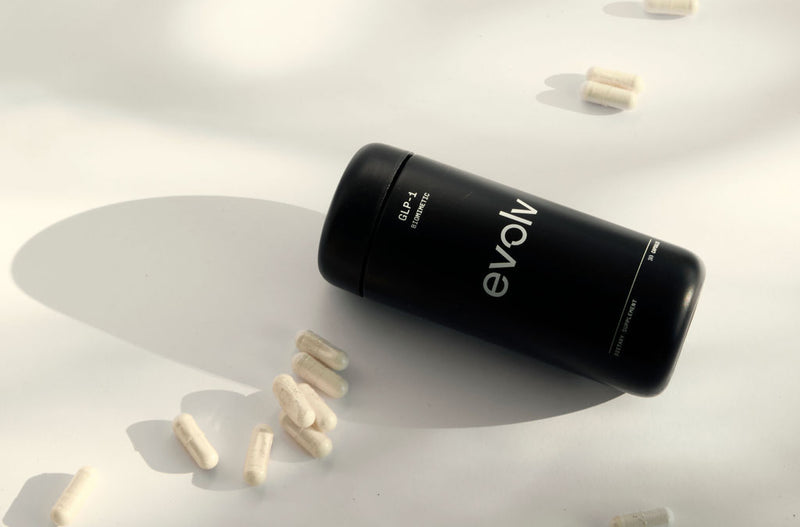
So do bioactive peptides help with weight loss? Indirectly, and through appetite rather than fat metabolism. The evidence points to satiety signaling and glucose handling, not at a peptide that burns anything, and the food-derived versions are a daily foundation rather than an intervention. This context matters: the same science that makes food-derived bioactive peptides interesting is the science behind GLP-1 pathway support. Evolv GLP-1 is a natural biomimetic dietary supplement built around a proprietary bioengineered, yeast-derived peptide designed to support GLP-1 and GIP appetite pathways. Its active ingredient, the bioengineered, yeast-derived EV1 Peptide, is designed to support the body’s natural GLP-1 and GIP appetite pathways, extending the bioactive peptide science into engineered, targeted pathway support. Learn more about Evolv’s science platform and GLP-1 pathway support for weight loss.
Antimicrobial and Immune Support Lactoferricin and related antimicrobial peptides from dairy inhibit pathogenic bacteria and support mucosal immunity. This is the bioactive peptide most relevant to gut health and infection defense, and one of the original reasons fermented dairy products were thought to be more protective than pasteurized milk alone.
Mineral Absorption Casein phosphopeptides (CPPs) form soluble complexes with calcium, iron, and zinc in the intestinal environment, keeping these minerals available for absorption rather than letting them precipitate and pass through unabsorbed. This is the specific mechanism that makes dairy-based calcium more bioavailable than many plant-based calcium sources, and it’s a bioactive peptide doing the work.
Anticancer Research (Preclinical Only) Lunasin from soy has shown anticancer properties in cell-line studies. This is not established in human trials. It belongs in the research-horizon category, not in the evidence-based benefits section.
How to Choose a Bioactive Peptide Supplement
Understanding the category makes supplement selection cleaner. Different peptide types target different outcomes:
Collagen peptides/hydrolysates are the most consumer-accessible category with the strongest RCT base for skin and joint outcomes. Effective doses range from 2.5–10g/day for skin to 10–15g/day for joints. Look for “hydrolyzed collagen” or “collagen peptides” on the label; clinically studied branded hydrolysates (VERISOL, Peptan) have the research behind specific dose thresholds. Collagen is an incomplete protein, so it cannot replace whey or casein for muscle-building purposes.
Whey and casein hydrolysates provide faster absorption than whole protein (pre-hydrolyzed) plus ACE-inhibitory peptides for cardiovascular benefits. Products that disclose degree of hydrolysis (DH) data are generally the better formulations.
Fish/marine peptides offer the fastest absorption profile and the strongest cardiovascular and antioxidant research. Verify third-party testing for marine contaminants, which matters for everyday supplementation at meaningful doses.
Plant-based hydrolysates (soy, pea, rice) are the right choice for vegan consumers. The research base is smaller than dairy and collagen, but it’s growing. Soy-based peptides have the most established evidence in this category.
How to evaluate any bioactive peptide supplement: - What’s driving the effect? Match the peptide class to your goal. Collagen for skin and joints. Dairy ACE-inhibitory peptides for blood pressure. DPP-4-inhibiting peptides for metabolic support. - How complete is the hydrolysis? Better hydrolysis produces shorter, more active peptides. Underdosed or under-hydrolyzed products may deliver the marketing of bioactive peptides without the biology. - Is the dose transparent? Effective doses are established for collagen and antihypertensive peptides. Products that hide doses in proprietary blends can’t be evaluated. - Does bioavailability matter for your goal? For targeted metabolic pathway support, particularly GLP-1 and GIP signaling, how the peptide survives the digestive environment and reaches its target is the central engineering question. This is where the science moves from food-derived peptides toward engineered biomimetic peptide supplements designed to survive digestion and engage specific receptors with precision.
For a deeper look at how engineered peptides differ from food-derived bioactive peptides, including the science behind GLP-1 biomimetic design, see what are biomimetic peptides.
Bioactive peptides are one of the most scientifically legitimate categories in the supplement space, precisely because many of them have genuine human clinical trial backing, not just in vitro studies or rodent data. Antihypertensive peptides from fermented dairy, collagen peptides for skin and joints, GLP-1 as the body’s primary satiety peptide: these are areas where the science is real and growing. The next frontier is engineered peptides that target specific signaling pathways with greater precision than anything food digestion can produce.
Research interest is still accelerating rather than settling. A 2026 review in Chemosensors on natural bioactive peptides catalogues how quickly the application space is widening across metabolic, antimicrobial, and antioxidant targets, which is a fair signal that the category is in an expansion phase rather than a mature one.
Understanding the category gives you the framework to read a supplement label clearly. Whether you’re evaluating bioavailable supplement formulations or exploring how long peptides take to work, the science foundation is the same. And if metabolic health and appetite regulation are the goal, Evolv GLP-1 applies the most advanced expression of that science directly to GLP-1 and GIP pathway support.
Frequently Asked Questions
What are bioactive peptides?
Short amino acid sequences released from parent proteins during digestion, fermentation, or enzymatic hydrolysis. Definitions of the length vary by source: reviews commonly give 2 to 20 amino acids, while others extend the range to roughly 3 to 40. They exert specific biological effects: blood pressure regulation, antioxidant activity, immune modulation, satiety signaling. What makes them “bioactive” is that they interact with specific receptors and enzymes, not just supply amino acids.
What foods are highest in bioactive peptides?
Fermented dairy (yogurt, kefir, aged cheese), fish and seafood, eggs, soy-based fermented foods (miso, tempeh), and bone broth are among the richest dietary sources. Fermentation significantly amplifies bioactive peptide content by releasing sequences before you eat. If you regularly consume protein-rich and fermented foods, you’re already consuming bioactive peptides.
How do bioactive peptides differ from regular protein?
Regular protein supplements provide amino acid building blocks that need to be fully broken down by digestion before use. Bioactive peptides are shorter, pre-cleaved sequences that can interact directly with receptors and enzymes. They’re signaling molecules, not just structural materials. The mechanism is fundamentally different: building blocks versus biological keys.
What are the most well-researched health benefits of bioactive peptides?
Antihypertensive effects have the strongest human clinical evidence, particularly from fermented milk-derived tripeptides (VPP, IPP) that inhibit ACE. Collagen peptides for skin elasticity and joint pain have solid RCT support. Metabolic benefits, including glucose regulation and GLP-1 and GIP pathway support, are an active and growing research frontier.
Are bioactive peptide supplements safe?
Food-derived bioactive peptide supplements such as collagen, whey hydrolysates, and casein hydrolysates are generally well-tolerated, with no observed adverse effects at high doses in research models. Quality and transparency matter: third-party testing is important for marine-sourced products given heavy metal risk. If you’re taking blood pressure medications or blood sugar management drugs, consult a physician, because some bioactive peptides (ACE-inhibitory, DPP-4 inhibitory) may have additive effects.
Is GLP-1 a bioactive peptide?
Yes. GLP-1 (glucagon-like peptide-1) is a naturally occurring bioactive peptide, a hormone your gut produces after eating to signal satiety, modulate glucose response, and regulate appetite. It’s among the most studied bioactive peptide systems in metabolic health. Prescription GLP-1 receptor agonist medications are synthetic drugs that pharmacologically mimic GLP-1 receptor signaling. Evolv GLP-1 is a natural biomimetic dietary supplement built around a proprietary bioengineered, yeast-derived peptide designed to support your own GLP-1 and GIP appetite pathways, a different mechanism category from pharmaceutical agonists. The peptide is not GLP-1 and adds no hormone to the body.
These statements have not been evaluated by the Food and Drug Administration. This product is not intended to diagnose, treat, cure, or prevent any disease.