







Is GLP-1 the Same as Ozempic? What’s Actually Different and Why It Matters
Authored by
The Evolv Research Team
You’ve probably heard both terms thrown around as if they mean the same thing. A friend mentions “GLP-1” at dinner. An ad pushes Ozempic during your morning scroll. A supplement label says “GLP-1 support.” It all blurs together.
But GLP-1 and Ozempic are not the same thing. Not even close.
One is a hormone that already exists inside your body. The other is a pharmaceutical drug that copies it. And with 1 in 8 U.S. adults now taking a GLP-1 medication according to the KFF Health Tracking Poll, understanding the difference isn’t just a science lesson — it changes how you evaluate every weight management option in front of you, from prescriptions to supplements to lifestyle changes.
GLP-1: The Hormone Your Body Already Makes
GLP-1 is a naturally occurring incretin hormone produced mainly by L-cells in your small intestine, released within minutes of eating.
Here’s what it does:
- Signals satiety by telling your brain you’ve had enough food.
- Slows gastric emptying so food stays in your stomach longer.
- Supports insulin release to help regulate blood sugar after meals.
- Helps balance the signals that raise blood sugar.
GLP-1 is part of your body’s built-in appetite regulation system. It’s not a drug. It’s not a supplement. It’s biology you were born with.
The catch: natural GLP-1 has a half-life of about 2 minutes. Your body produces it, uses it, and breaks it down almost immediately through an enzyme called DPP-4. That rapid turnover is normal. It’s also why pharmaceutical companies saw an opportunity.
Ozempic: A Synthetic Molecule That Mimics GLP-1
Ozempic is the brand name for semaglutide, a prescription injectable medication manufactured by Novo Nordisk. It was FDA-approved for type 2 diabetes in 2017 and has since become one of the most widely prescribed GLP-1 drugs in the world, largely driven by its off-label use for weight management. The global GLP-1 receptor agonist market is now worth an estimated $62-70 billion and is projected to exceed $200 billion by 2033.
Semaglutide is a GLP-1 receptor agonist. It binds to the same receptors as your natural GLP-1 hormone, with synthetic modifications that resist DPP-4 breakdown. Instead of clearing in 2 minutes, semaglutide circulates for approximately 7 days — engineered for sustained, weekly-dosed pharmaceutical intervention.
What Ozempic Does Differently from Natural GLP-1
| Factor | Natural GLP-1 | Ozempic (semaglutide) |
|---|---|---|
| Source | Produced by your L-cells after eating | Injected weekly via pen |
| Half-life | ~2 minutes | ~7 days |
| Signaling level | Physiological (normal range) | Pharmacological (sustained) |
| Regulation | Body regulates production naturally | Fixed dose, physician-managed |
| Side effects | None (it’s endogenous) | Nausea, vomiting, constipation, potential muscle loss |
| Cost | Free (your body makes it) | $800-1,000+/month without insurance |
| Access | Always available | Requires prescription; ongoing shortages |
So when someone asks “is GLP-1 the same as Ozempic?” — the answer is no. GLP-1 is the natural signal. Ozempic is a pharmaceutical tool engineered to engage that signaling pathway at a sustained, weekly-dosed intensity.
Why the Confusion Exists
The GLP-1 conversation exploded in 2023-2024 when Ozempic and Wegovy became cultural phenomena. Prescriptions for GLP-1 medications more than doubled for weight management use alone in 18 months. Media coverage used “GLP-1” and “Ozempic” almost interchangeably, and the distinction collapsed in public awareness.
This matters because it creates two problems:
Problem 1: People think GLP-1 requires a prescription. It doesn’t. GLP-1 is a hormone you already produce. Supporting your body’s natural GLP-1 pathways doesn’t require a drug.
Problem 2: People assume all GLP-1 products are the same. They’re not. Prescription medications, plant-extract supplements labeled “natural Ozempic,” and bioengineered oral peptides like the EV1 Peptide are three very different categories of products with very different mechanisms and use cases.
How GLP-1 Medications Actually Work
Ozempic isn’t the only GLP-1 drug on the market. The class includes several medications, each with a slightly different profile:
- Semaglutide (Ozempic, Wegovy, Rybelsus): the most widely known; weekly injection or daily oral tablet.
- Tirzepatide (Mounjaro, Zepbound): a dual GIP/GLP-1 agonist; weekly injection.
- Liraglutide (Victoza, Saxenda): daily injection; older generation.
- Dulaglutide (Trulicity): weekly injection; primarily for diabetes.
All of them work by engaging the GLP-1 receptor at sustained pharmacological levels — far beyond what your body produces on its own.
The clinical results are significant. Semaglutide trials have shown average weight loss of 12-15% of body weight over 68 weeks. Tirzepatide trials have reached up to 22%.
The side effect profile is also significant. According to prescribing data and community discussions on forums like r/Ozempic and r/Semaglutide:
- Nausea and vomiting affect the majority of users, especially during dose escalation.
- Muscle loss is a documented concern. Studies show up to 40% of weight lost on semaglutide can come from lean mass.
- “Ozempic face” (visible facial volume loss) has become a widely discussed side effect.
- Weight regain after discontinuation is common; some studies show most weight returns within a year of stopping.
- Cost remains a barrier. $800-1,000+/month without insurance, and many insurers still don’t cover it for weight management.
- Supply shortages continue to disrupt access across the U.S.
These aren’t edge cases. They’re the primary reasons people search for alternatives.
How Lifestyle Influences Your Natural GLP-1
Before exploring supplements or prescriptions, it’s worth knowing that your daily habits directly influence how much GLP-1 your body produces and how long it stays active. These foundational levers sit underneath every GLP-1 strategy — drug, supplement, or lifestyle alone.
- Protein-forward meals. Dietary protein is the strongest natural stimulus for GLP-1 release. Eating 25-40 grams of protein at a meal can meaningfully increase GLP-1 secretion.
- Fiber, especially soluble fiber. Fiber ferments into short-chain fatty acids in the gut, which stimulate L-cells to release more GLP-1.
- Gut microbiome health. A diverse, healthy gut microbiome supports L-cell function. Fermented foods, prebiotic fiber, and limiting ultra-processed foods all help.
- Sleep quality. Poor sleep suppresses GLP-1 and raises ghrelin (the hunger hormone). Seven to nine hours matters more than most people realize.
- Movement. Regular exercise, particularly resistance training and post-meal walking, improves insulin sensitivity and supports GLP-1 signaling over time.
- Meal timing. Letting blood sugar stabilize between meals (instead of grazing constantly) helps L-cells respond more robustly when you do eat.
These short-burst, meal-by-meal levers establish the baseline. They are valuable on their own and they sit underneath every other approach.
The GLP-1 Support Landscape: 3 Categories, Very Different Science
Demand for GLP-1 alternatives has fueled an explosion of OTC products. “Natural alternatives to Ozempic” pulls nearly 1,900 monthly searches, and “GLP-1 supplements” exceeds 4,400. Not all GLP-1 supplements are built the same. The market breaks into three distinct categories with fundamentally different mechanisms.
Category 1: Plant Extracts and Botanicals
These are the most common products you’ll find when searching for “natural alternatives to Ozempic.” They typically contain:
- Berberine, sometimes called “nature’s Ozempic” on social media. It may modestly influence GLP-1 secretion through indirect mechanisms, but its impact on the GLP-1 pathway is short-lived and surface-level. The NIH notes that berberine’s role in GLP-1 production has not been clinically validated in humans at supplement doses. Large doses commonly cause gastrointestinal upset.
- Yerba mate, which some research suggests may stimulate GLP-1 release, though studies are small and preliminary.
- Curcumin, with well-documented anti-inflammatory properties, but GLP-1 activation claims are based on early-stage animal studies.
- Saffron extract, which may reduce cravings through serotonin modulation rather than GLP-1 pathways.
The common thread: these ingredients have some research backing for individual biological effects, but no finished-product clinical studies demonstrating sustained GLP-1 pathway engagement for weight management. They work indirectly, in short bursts, if at all.
Category 2: Probiotic-Based Approaches
Probiotic GLP-1 products use gut bacteria — primarily Akkermansia muciniphila — to influence GLP-1 secretion through the microbiome. The theory: a healthier gut lining produces more L-cells, which produce more GLP-1.
Pendulum is the most prominent player here. The approach is scientifically interesting but operates through a long, indirect chain — strain colonization → gut lining improvement → L-cell activity → GLP-1 production. Results develop over weeks to months and vary significantly based on individual gut ecology.
Category 3: Bioengineered Oral Peptides
This is the newest and most mechanistically direct category. Biomimetics are an emerging class of wellness products designed around the body’s own signaling pathways rather than around stimulants or generic plant extracts. Within the category, individual products vary widely in mechanism, ingredient design, and evidence base — they aren’t interchangeable.
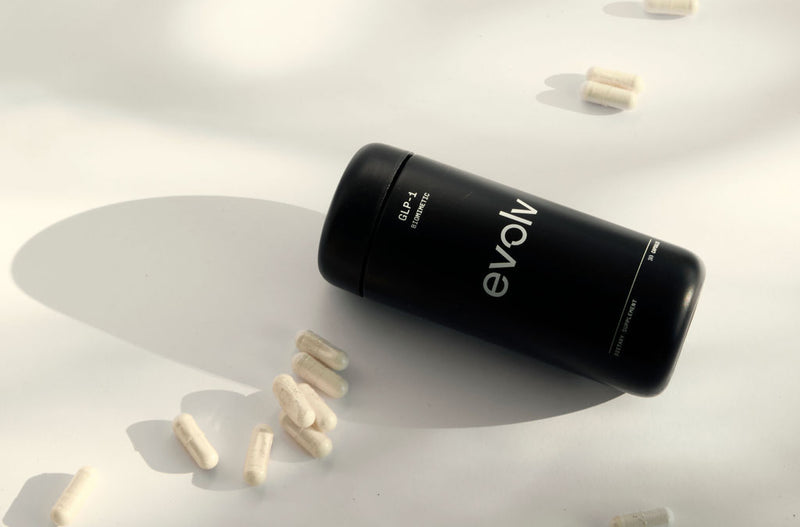
Evolv GLP-1 is a biomimetic dietary supplement built around a proprietary, yeast-derived peptide designed to support both GLP-1 and GIP appetite pathways.
Its active ingredient — the bioengineered, yeast-derived EV1 Peptide (derived from Saccharomyces cerevisiae) — is composed of canonical, naturally occurring amino acids and is designed to support sustained GLP-1 and GIP signaling. The peptide and its sustained pathway-engagement design are unique to Evolv, not features of the biomimetic category at large.
In our 8-week randomized controlled study:
- Participants lost up to 12+ lbs in 8 weeks.
- Approximately 750 fewer calories consumed per day.
- Up to 4+ inches of waist reduction.
- No participants reported hair loss or muscle loss during the study.
Evolv GLP-1 is designed for daily oral use with no harsh side effects. These outcomes sit in the same magnitude range that published prescription GLP-1 trials report at the 8-week timepoint, while Evolv operates in a different category — daily oral, dietary supplement, designed to work with the body’s own signaling rather than at sustained pharmacological levels.
GLP-1 vs. Ozempic: A Direct Comparison
Here’s the clearest way to see how natural GLP-1 support, prescription GLP-1 drugs, and oral biomimetic products differ in design and use case:
| Factor | Natural GLP-1 (your body) | Ozempic (semaglutide) | Oral GLP-1 biomimetic (Evolv) |
|---|---|---|---|
| What it is | Endogenous hormone | Synthetic GLP-1 receptor agonist | Bioengineered yeast-derived peptide |
| How you get it | Your body produces it | Weekly injection (prescription) | Daily oral tablet (OTC) |
| Mechanism | Natural satiety signaling | Sustained pharmacological GLP-1 activation | Designed to support both GLP-1 and GIP appetite pathway signaling |
| Onset | Minutes after eating | Dose-dependent; days to weeks | Many users notice effects within ~4 hours of intake |
| Side effects | None | Nausea, vomiting, GI distress, potential muscle loss | Designed for daily oral use with no harsh side effects; in our 8-week clinical study, no participants reported hair or muscle concerns |
| Cost | Free | $800-1,000+/month | $148/month |
| Prescription needed | No | Yes | No |
| Use case | Foundational biology | Pharmacological intervention | Daily pathway support |
These are different categories of tools designed for different needs. Each operates at a different level of intervention.
Who Should Consider What
You might explore prescription GLP-1 drugs if:
- You have a BMI over 30 (or 27+ with comorbidities) and a physician recommends it.
- You’ve tried lifestyle interventions and need pharmaceutical-level support.
- You can access and afford the ongoing cost.
- You’re prepared for potential side effects and long-term commitment.
You might explore oral GLP-1 pathway support if:
- You want daily, sustained GLP-1 and GIP pathway support without injections or a prescription.
- Cost or access barriers put injectable GLP-1 drugs out of reach, a frustration shared by millions.
- You’re concerned about muscle, hair, or the GI issues commonly reported with injectables.
- You want a science-backed product with a defined mechanism, not another plant extract marketed as “nature’s Ozempic.”
- You’re looking for something that works alongside your existing nutrition and exercise routine, not instead of it.
In either case:
- GLP-1 pathway support, whether through a drug or a supplement, works best alongside real food, movement, and sleep.
- No product eliminates the need for sustainable habits.
- Talk to a healthcare provider before starting any new supplement or medication.
What to Look for If You’re Evaluating GLP-1 Products
The GLP-1 supplement market is flooded. Most products ride the Ozempic wave without the science to back it up. Here’s how to filter:
1. Mechanism clarity. The product should explain how it supports GLP-1 pathways — not just list ingredients. “Contains berberine” is not a mechanism. “Bioengineered peptide designed to engage GLP-1 and GIP signaling pathways” is.
2. Clinical data on the finished product. Ingredient-level studies aren’t enough. A study on berberine doesn’t validate a specific berberine supplement. Look for clinical research on the actual product, ideally a randomized controlled study.
3. Clear daily dosing. You should know exactly what you’re taking and when.
4. Tolerability. Oral GLP-1 products should be designed for daily use without harsh side effects. If a supplement causes significant GI distress, that’s not “working” — that’s a problem.
5. No miracle claims. Any product claiming to be “as effective as Ozempic” or promising guaranteed weight loss is either overpromising or breaking federal advertising law. Real science doesn’t need hyperbole.
The Bottom Line
GLP-1 is not Ozempic. GLP-1 is a hormone — a piece of your biology that existed long before any pharmaceutical company figured out how to engage it.
Ozempic is one tool, designed for sustained pharmaceutical intervention. It’s powerful. It’s also expensive, injectable, prescription-only, and comes with a real side effect profile.
The emerging question isn’t “Ozempic or nothing.” It’s whether newer approaches — particularly oral biomimetic products designed for direct GLP-1 and GIP pathway engagement — represent a meaningful daily-use category alongside lifestyle and pharmaceutical options.
The science is early but directional. The category is evolving fast. And your body’s GLP-1 system was there the whole time, waiting for the right support.
These statements have not been evaluated by the Food and Drug Administration. This product is not intended to diagnose, treat, cure, or prevent any disease.
Frequently Asked Questions
Is GLP-1 the same thing as Ozempic?
No. GLP-1 is a hormone your body produces naturally after eating. It’s released by L-cells in your small intestine and plays a role in satiety, blood sugar regulation, and gastric emptying. Ozempic is a prescription injectable drug containing semaglutide — a synthetic molecule designed to engage GLP-1 receptors at sustained pharmacological levels. GLP-1 is the biological signal. Ozempic is one pharmaceutical tool that engages it.
How do GLP-1 medications like Ozempic work?
Ozempic and similar drugs use a synthetic version of GLP-1 that resists the enzyme (DPP-4) your body uses to break down natural GLP-1. This lets the drug circulate for days instead of minutes, sustaining appetite reduction, slower gastric emptying, and improved blood sugar regulation. Semaglutide trials have shown average weight loss of 12-15% of body weight over 68 weeks. The tradeoff: common side effects include nausea, vomiting, constipation, and in some cases muscle loss.
Are there natural alternatives to Ozempic?
Several categories of products aim to support the body’s own GLP-1 pathways without a prescription. These include plant extracts like berberine, probiotic strains like Akkermansia muciniphila, and bioengineered oral peptides. They differ significantly in mechanism, clinical evidence, and design. Newer biomimetic products are designed for direct engagement of GLP-1 and GIP pathways rather than indirect support.
What are GLP-1 supplements and do they work?
GLP-1 supplements are over-the-counter products formulated to support the body’s natural GLP-1 signaling pathways. Effectiveness varies widely by category. Plant extracts like berberine show modest, short-lived indirect effects — and the NIH notes that berberine’s role in GLP-1 production has not been clinically validated at supplement doses. Probiotic approaches work through the gut microbiome over weeks. Bioengineered peptide-based products — a newer category — are designed for sustained pathway engagement. Look for products backed by clinical studies on the finished product, not just individual ingredients.
Can GLP-1 supplements replace Ozempic?
GLP-1 supplements and Ozempic operate in different regulatory and biological frameworks. Supplements are dietary products available over the counter under DSHEA; Ozempic is a physician-managed, FDA-approved prescription drug. They are not interchangeable. Some people explore GLP-1 pathway support products because they can’t access, afford, or tolerate injectable medications — but the decision should involve a healthcare provider.
Do GLP-1 supplements cause side effects?
Side effects vary by ingredient and category. Berberine commonly causes gastrointestinal upset at higher doses. Green tea extract has been linked to liver concerns in over 50 case reports since 2006, according to the NIH. Oral biomimetic products like Evolv GLP-1 are designed for daily oral use with no harsh side effects — in our 8-week clinical study, no participants reported hair loss or muscle loss. Always consult a healthcare provider before starting any supplement.