Most conversations around GLP-1 focus on one thing: weight.
But biology doesn’t work in silos.
Appetite, sleep, stress, recovery, and metabolic signaling are deeply intertwined — which raises an important question we don’t hear asked nearly enough:
What happens when GLP-1 signaling supports the whole system, not just the scale?
To explore that question, Evolv is currently running an observational research study using continuous Oura Ring biometric tracking to understand how our biomimetic oral GLP-1 peptide may influence sleep, recovery, stress response, and daily readiness under real-world conditions.
This is not a clinical trial in a lab.
It’s something more representative — and arguably more revealing.
Why Look Beyond Weight?
GLP-1 receptors are expressed far beyond the gut.
Emerging research suggests GLP-1 signaling may influence:
-
Circadian rhythm regulation
-
Autonomic nervous system balance
-
Sleep architecture and efficiency
-
Physiological stress response
-
Recovery capacity following daily activity
In other words, changes in appetite don’t happen in isolation. They often coincide with shifts in sleep quality, heart rate variability (HRV), resting heart rate, and perceived energy — signals the body uses to determine whether it feels safe, regulated, and resilient.
Wearable biometrics give us a way to observe those signals continuously, without asking participants to “do” anything beyond living their lives.
Study Design: Real-World, Continuous, Observational
This ongoing Evolv research initiative follows a within-subject observational design using passive biometric tracking and daily self-reported check-ins.
Participants:
-
55 adults
-
Adults only (18+)
Duration:
-
45 days of continuous tracking
-
Days 1–7: Baseline (no Evolv)
-
Days 8–38: Daily Evolv supplementation
Environment:
-
Fully decentralized, at-home participation
-
Normal routines maintained
-
Oura Ring used for continuous biometric tracking
This design allows each participant to act as their own control — comparing their baseline physiology to their own data after introducing Evolv.
What We’re Measuring
Using Oura Ring metrics combined with digital check-ins, the study captures changes across multiple systems, including:
Biometric Outcomes:
-
Sleep stages and total sleep duration
-
Heart rate variability (HRV)
-
Resting heart rate (RHR)
-
Respiratory rate
-
Physiological stress indicators
-
Daily activity balance
-
Readiness score
-
Skin temperature deviation
Self-Reported Signals:
Rather than isolating a single endpoint, this approach lets us observe patterns — how appetite regulation may correlate with recovery, stress resilience, and sleep quality over time.
Why This Matters
Most supplement studies rely on short snapshots.
This one looks at continuous trends.
By pairing a biomimetic GLP-1 peptide with wearable biometric data, we can begin to understand not just if something changes — but how, when, and what changes alongside it.
Does appetite regulation coincide with improved recovery markers?
Do shifts in food noise align with changes in sleep efficiency or HRV?
Does daily readiness improve as metabolic signaling stabilizes?
These are the questions this study is designed to explore.
What Comes Next
The study is currently underway, with data collection continuing through early 2026.
Aggregate results will be released in February 2026, once analysis is complete.
As always, we’ll share findings transparently — including what surprised us, what didn’t, and what warrants further investigation.
Because at Evolv, proof doesn’t come from promises.
It comes from data — collected quietly, consistently, and in the real world.







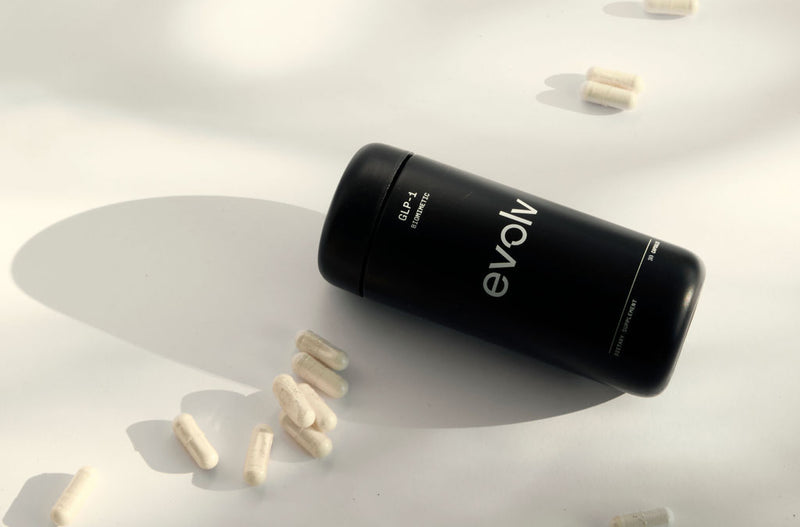


 EVOLV GLP-1
GLP-1 BENEFITS
EVOLV GLP-1
GLP-1 BENEFITS

