







How to Thicken Thinning Hair: 10 Tips That Actually Help
Authored by
The Evolv Research Team
Most thinning-hair advice is cosmetic — it makes hair look fuller for a few hours. Fewer approaches address why hair is thinning in the first place.
There’s a meaningful distinction between making hair appear thicker and making it become thicker. Cosmetic approaches change how existing strands look. Biological approaches change what the follicle produces. Both have value — but they work on different timelines and produce different kinds of results.
The 10 tips below cover the full spectrum: from interventions that work today to those that shift the biological environment over months. The ones near the end are where the more lasting change happens.
What Actually Causes Hair to Thin
Before mapping solutions, it helps to know what you’re dealing with. Hair thinning happens through three main routes — and most adults experience some combination of all three.
Follicle miniaturization: DHT (dihydrotestosterone) binds to follicle receptors and progressively shortens each growth cycle. Over successive cycles, strands grow finer until the follicle produces barely visible hair. This is the pattern behind most thinning in both men and women.
Resting-phase shedding: A significant physiological stressor — illness, surgery, rapid weight loss, hormonal shift, or postpartum changes — can push large numbers of follicles into a resting state simultaneously. The visible shedding appears 2–4 months after the trigger event, then typically resolves as cycles normalize.
Nutrient and signaling deficits: When iron, vitamin D, protein, or follicle-signaling molecules decline, follicles don’t receive the biological inputs they need to maintain an active growth phase. The follicle itself is intact — it’s just operating below capacity.
The cosmetic vs. biological distinction flows directly from this: cosmetic products address none of these causes. Biological interventions target one or more of them directly.
Tip 1: Get Bloodwork Done First
The number one mistake is treating symptoms without knowing the cause.
Before adding supplements or changing routines, check ferritin (not just hemoglobin), TSH, 25-OH vitamin D, and zinc. Standard panels often omit ferritin — ask for it specifically. Research suggests ferritin below approximately 24 ng/mL correlates with increased hair shedding, and correcting a documented deficiency removes the actual brake on follicle cycling.
The rest of these tips work better once the underlying causes are addressed first.
Tip 2: Increase Protein Intake
Hair is approximately 95% keratin — it requires a consistent amino acid supply to maintain an active growth phase.
Insufficient protein shortens the anagen (growth) phase. The research benchmark is approximately 0.8–1.0 g/kg of body weight per day at minimum; higher for active individuals. Practical sources: eggs (complete amino acid profile plus naturally occurring biotin), salmon (protein plus omega-3), lentils, and lean beef. This doesn’t thicken existing strands directly — it supports the biological environment for growth over time.
Tip 3: Address Iron and Ferritin
Iron deficiency is the most clinically documented dietary driver of diffuse hair shedding in women.
Standard blood panels test hemoglobin, not ferritin — ask specifically for ferritin. Analysis of women presenting with hair loss has found iron deficiency in a significant majority of cases. Ferritin below 20 ng/mL correlates with resting-phase shedding in more than half of patients who present with diffuse shedding; functional regrowth threshold sits at approximately 24 ng/mL.
Supplement only with confirmed lab results — excess iron carries its own health risks. Pairing iron-rich foods with vitamin C improves absorption.
Tip 4: Clean Up Your Scalp Environment
An unhealthy scalp equals unhealthy follicles.
Scalp fungal imbalance — particularly Malassezia overgrowth — generates oxidative stress that damages hair shaft protein and lipids. Zinc pyrithione (anti-dandruff) shampoo has shown measurable improvement in visible hair counts in studies, even in patients without a diagnosed scalp condition. Wash 2–3x per week with a sulfate-free or anti-dandruff formula, depending on scalp type. Scalp massage during washing adds 2–4 minutes of blood flow stimulation with minimal effort. Adding a silk pillowcase reduces overnight mechanical friction on fragile strands.
Tip 5: Try Daily Scalp Massage
Mechano-stimulation may signal follicles to remain in the active growth phase.
Four minutes of daily scalp massage — finger pads (not nails), small circular motions, focused on thinning areas — was used in a Japanese study where participants saw increased hair thickness and reduced shedding over 24 weeks. Adding rosemary water or rosemary oil 1–2x daily is the most-cited anecdotal staple in Reddit hair communities, with visible results appearing after 6+ months of consistent use.
This is a long game. Expect nothing in the first 90 days.
Tip 6: Consider Microneedling
Microneedling creates controlled micro-trauma that triggers growth factor upregulation.
A 0.5–1.5 mm dermaroller on a clean scalp, used 1–2x per week, stimulates PDGF, VEGF, and other follicle growth signals through the micro-injury response. Start conservative — 0.5 mm, once per week — and increase depth and frequency only after 4–6 weeks of tolerance. Often combined with minoxidil or topical serums for enhanced penetration. This has become well-regarded in dermatology as an evidence-based option that isn’t prescription-dependent.
Tip 7: Reduce Mechanical and Thermal Damage
Thinning hair is fragile — damage compounds the visual problem.
Wet hair is at peak fragility: wide-tooth comb only, no vigorous towel rubbing. Tight styles — braids, slicked buns, ponytails — create chronic traction on the hair shaft, leading to scalp tension and potential traction-related hair loss over time. Heat tools accelerate breakage by fracturing the shaft; each break reduces visible length and volume. Practical protocol: air dry to approximately 50%, then finish with low heat; alternate tight styles with loose ones; use a silk pillowcase.
Tip 8: Use Volumizing Products Strategically
Cosmetic thickening makes hair look fuller today. Not permanently thicker.
“Volumizing” shampoos coat individual strands to slightly increase their apparent diameter. Conditioner on ends only — applying to the scalp weighs down roots. Root-lift mousse or volumizing spray before blow-drying creates structure at the base. Color and highlights penetrate the hair shaft and slightly increase its physical diameter while also reducing the visual contrast between scalp and hair. Fiber cosmetics (charged particles that cling electrostatically to strands) wash out entirely.
This tier is genuinely useful — just use it accurately. It buys visual improvement while the biological levers do their longer work.
Tip 9: Get a Strategic Haircut
The right cut creates the illusion of density and removes damage that compounds thinning.
Blunt cuts — all ends at the same level — appear denser than tapered or feathered ends. Shorter layers create movement and volume where longer, finer hair flattened by gravity can’t. Removing split ends and breakage every 8–10 weeks reduces the scalp visibility that compromised ends create. A trichologist observation worth keeping: “graduation creates volume for thicker, fuller looking hair” — the architecture of the cut matters as much as what’s on the strand.
Tip 10: Target Follicle Signaling at the Root
This is the deepest tier — working at the biological level that determines strand thickness and density.
Cosmetic products change what existing strands look like. Follicle signaling changes what the follicle produces.
GHK-Cu is a naturally occurring copper tripeptide that circulates at approximately 200 µg/L in your twenties and declines significantly with age. Its mechanisms include VEGF stimulation (improves blood supply to follicles), support for dermal papilla cell viability, and TGF-β1 inhibition (reduces fibrotic suppression of follicle activity). The bioavailability problem: natural GHK-Cu degrades in the digestive tract before reaching follicle tissue at therapeutic levels. Topical peptide serums face limited transdermal penetration. For more on how these signaling mechanisms work, see natural peptides and the biomimetic peptide science behind modern peptide delivery.
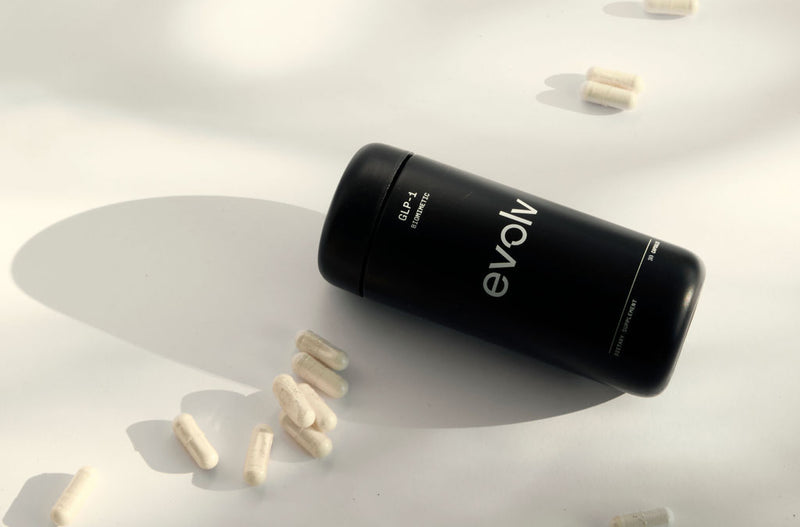
Evolv Grow is a natural biomimetic dietary supplement line built around the EV2 Peptide platform — a bioavailable oral form of GHK-Cu signaling — designed to support hair density, follicular activity, and the natural hair growth cycle.* The EV2 Peptide is engineered and bioavailable: a reengineered form of GHK-Cu biology specifically engineered for systemic oral delivery. Co-developed by Dr. Cory Henderson and Dr. Kwang Chul Kwon, the formulation is built to survive GI transit and reach systemic circulation. See the full science behind the formulation for the clinical methodology.
In a randomized, placebo-controlled 12-week study of EV2 Peptide™, interim findings at Day 14 showed:
-
+1.11 cm hair growth in 14 days‡
-
39% greater hair growth vs. placebo‡
-
+0.40 cm hair thickness in 14 days‡
-
4× greater improvement in hair thickness vs. placebo‡
Improvements were observed as early as Day 7.
Evolv Grow is available in two formulations: Evolv Grow For Her and Evolv Grow For Him.
If you’re combining Evolv Grow with prescription hair medications, consult your physician before starting — the mechanisms are different, but interactions are worth confirming with your doctor.
For context on how peptide-based approaches compare to conventional supplements, see biomimetic supplements and how long do peptides take to work.
How Long Does It Take to See Results?
Timeline varies significantly by approach — managing expectations here is what keeps people from abandoning the interventions that actually work.
-
Cosmetic (volumizing shampoo, styling): Immediate — lasts until the next wash
-
Scalp massage + rosemary oil: 3–6 months of consistent daily use for visible improvement
-
Nutritional correction: Depends on deficiency severity; iron can show improvement in 3–6 months
-
Minoxidil: 6–9 months minimum before evaluating effectiveness
-
Follicle signaling (EV2 Peptide): Evolv’s clinical data showed measurable changes as early as Day 7‡; visible density at the scalp level typically follows one full hair growth cycle (3–6 months)
General rule: hair grows approximately 1 cm per month. Anything that affects the growth cycle takes one full cycle before density changes become visible at the scalp. For a deeper look at the clinical methodology behind Evolv’s hair research, see the Behind the Science blog.
If shedding is sudden, severe, or accompanied by other symptoms, a dermatologist referral is appropriate before self-managing.
Frequently Asked Questions
Can thinning hair become thick again?
It depends on the cause. Resting-phase shedding triggered by stress or a physiological event typically reverses once the stressor is removed — follicles are intact and resume normal cycling. Nutrient-deficiency-driven thinning reverses when deficiencies are corrected. Follicle miniaturization from DHT sensitivity is progressive; early intervention can slow it and partially reverse miniaturization in some follicles, but late-stage cases may be irreversible. The earlier you intervene, the better the outcome.
How long does it take to see results from hair thickening treatments?
Timeline varies by approach. Cosmetic products produce visible results immediately — but temporarily. Nutritional correction takes 3–6 months to show follicle-level changes. Minoxidil requires 6–9 months before evaluating. Biomimetic peptide approaches like Evolv Grow’s EV2 Peptide showed measurable hair growth and thickness improvements as early as Day 7‡ in a randomized, placebo-controlled 12-week study; visible density changes typically follow one full hair cycle (3–6 months). Consistent daily use is the non-negotiable variable in every category.
Is hair thinning permanent?
Not always. The key variable is whether follicles are still alive. Follicles undergoing miniaturization are still active but weakening — interventions can slow and partially reverse this process. Follicles lost to traction-related hair loss, severe scarring, or advanced follicle miniaturization may no longer produce visible hair. A dermatologist can evaluate which follicles are still viable through scalp biopsy or trichoscopy. For most people experiencing early-to-moderate thinning, proactive intervention significantly improves outcomes.
What’s the fastest way to thicken thinning hair?
The fastest visible improvement is cosmetic: volumizing shampoo, root-lift mousse, blow-dry upside down from the roots, and a strategic blunt haircut. These produce the same-day results. For biological thickening — denser strands and more active follicles — there’s no shortcut. The fastest route to actual regrowth is identifying and correcting the underlying cause (bloodwork first), then adding the appropriate intervention. Evolv Grow’s EV2 Peptide showed the earliest measurable changes in a controlled study (Day 7‡), but visible density at the scalp level follows a full growth cycle.
‡ Based on interim findings from a randomized, placebo-controlled 12-week study of EV2 Peptide™. Improvements were observed as early as Day 7. Individual results may vary.
These statements have not been evaluated by the Food and Drug Administration. This product is not intended to diagnose, treat, cure, or prevent any disease.