







6 Best Peptides for Hair Growth: What Each One Does and Why It Matters
Authored by
The Evolv Research Team
The peptides-for-hair category has a signal-to-noise problem. Search results oscillate between topical serums marketed as “liquid gold” and injectable research compounds discussed in Reddit forums. Most content lists products. Very little explains what peptides actually do at the follicle level — or why some work while others are still in preclinical research.
This guide covers the six most discussed peptides for hair growth, ranked by the strength of their clinical evidence. For each: what it does biologically, what the research actually shows, and where the evidence ends and the hype begins.
The natural level of GHK-Cu — the most studied hair peptide — declines from approximately 200 µg/L in your 20s to 80 µg/L by your 60s. That’s not a cosmetic observation. It maps directly to declining follicular signaling, slower growth cycles, and reduced scalp vascularization. Understanding why matters more than knowing which serum to buy.
How Peptides Work for Hair (and Why They’re Different from Biotin)
Peptides signal. Vitamins supplement.
The distinction is mechanistic. Biotin, zinc, iron, and vitamin D provide the raw materials the body uses to build keratin — the structural protein of hair. If you’re deficient, correcting the deficiency matters. But they don’t tell follicles what to do; they just make sure the materials are available.
Peptides work at the receptor and signaling level. They bind to receptors on follicle cells, activate growth pathways, inhibit suppression factors, and regulate the cycle between active growth (anagen), regression (catagen), and rest (telogen). They give instructions rather than supply building blocks.
Three signaling pathways are most relevant for hair: - Wnt/β-catenin: promotes the transition from resting to active growth. Peptides that activate this pathway push follicles toward anagen. - VEGF and angiogenesis: controls blood flow to the follicle, which determines nutrient delivery, oxygen supply, and growth factor availability. - Androgen receptor modulation: reduces follicle sensitivity to DHT, the primary driver of pattern hair thinning.
Hair peptides span a delivery spectrum — topical serums, oral supplements, and injectables — with meaningful differences in what reaches the follicle. That’s addressed after the peptide-by-peptide breakdown.
The 6 Best Peptides for Hair Growth
1. GHK-Cu (Copper Tripeptide-1) — The Strongest Evidence
What it is: A naturally occurring copper-binding tripeptide (Gly-His-Lys) that the body produces as part of its tissue repair and remodeling system. Declines significantly with age.
How it works at the follicle: GHK-Cu activates multiple pathways simultaneously. It stimulates VEGF to improve blood and nutrient delivery, promotes dermal papilla cell proliferation and survival (anti-apoptosis), inhibits TGF-β1, which suppresses follicle function under stress, activates Wnt/β-catenin signaling to promote anagen entry, and reduces androgen receptor sensitivity — making it one of the few peptides relevant to both general thinning and pattern hair loss.
What the research shows: A 2026 clinical review using a 45-patient study documented improved hair density and follicular vascularization with GHK-Cu. A 2025 microneedling-delivery study showed a 26.5% median increase in scalp coverage. These are meaningful clinical outcomes — better supported than most peptide categories.
The key limitation: Natural GHK-Cu is not reliably orally bioavailable. The peptide degrades in the gastrointestinal tract before reaching systemic circulation at therapeutically relevant levels. Topical delivery shows evidence but faces skin barrier limitations. This is the gap that reengineered oral forms of GHK-Cu address.
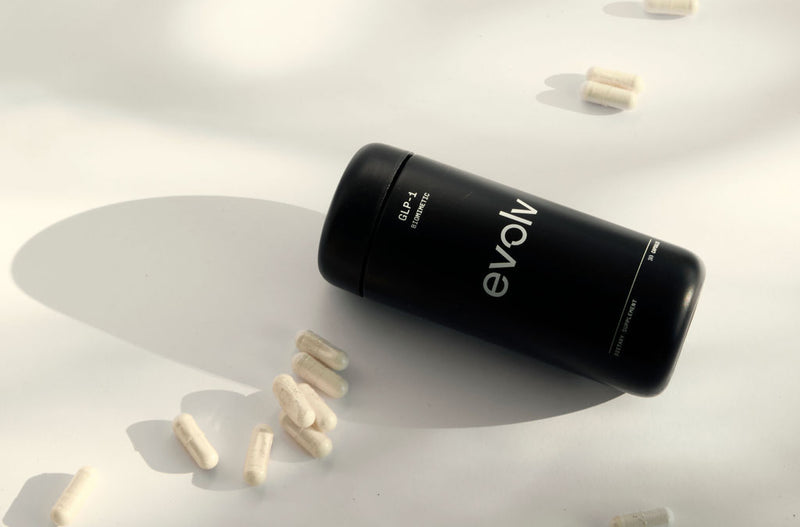
Evolv Grow is a natural biomimetic dietary supplement line built around the EV2 Peptide platform — a GHK-Cu biomimetic — designed to support hair density, follicular activity, and the natural hair growth cycle. The EV2 Peptide is bioengineered and bioavailable, engineered specifically for systemic oral delivery. Developed under Dr. Kwang Chul Kwon, who led the original EV2 Peptide research program.
In a randomized, placebo-controlled 12-week study of EV2 Peptide™, interim findings at Day 14 showed: +1.11 cm hair growth in 14 days, 39% greater hair growth vs. placebo, +0.40 cm hair thickness in 14 days, and 4× greater improvement in hair thickness vs. placebo. Improvements were observed as early as Day 7. Evolv Grow is available for Her and Him.
Read the full clinical study methodology at our Behind the Science blog and learn more about the formulation science.
2. AHK-Cu (Copper Tripeptide-3) — Close Relative, Strong Follicle Data
What it is: A related copper-binding tripeptide (Ala-His-Lys) that shares structural and mechanistic similarities with GHK-Cu but has a distinct receptor interaction profile.
How it works: Dual mechanism — promotes follicle cell proliferation while simultaneously inhibiting apoptosis through Bcl-2/Bax/caspase-3 modulation. Also stimulates VEGF and keratinocyte growth factor (KGF) expression.
What the research shows: Strong in vitro and ex vivo data — including follicle elongation at picomolar concentrations documented in the Archives of Pharmacal Research. Large-scale human RCTs are not yet available, which is why it ranks behind GHK-Cu. In formulas, AHK-Cu and GHK-Cu are often stacked; the community research (r/tressless) has strong anecdotal support for this combination. On ingredient labels, look for “Copper Tripeptide-3.”
3. Biotinoyl Tripeptide-1 — The Follicle-Anchoring Peptide
What it is: A synthetic peptide that links biotin to a tripeptide sequence, designed to support the extracellular matrix structures that keep follicles anchored in the scalp.
How it works: Stimulates laminin-5 and collagen IV at the hair bulb — the proteins that form the basement membrane holding follicles in place. Also extends the anagen phase by supporting follicle cell metabolism. Most importantly, it inhibits 5α-reductase (the enzyme that converts testosterone to DHT) without systemic hormonal exposure. This makes it one of the few topical peptides with a mechanism specific to pattern hair thinning.
What the research shows: A company-funded study showed a 58% reduction in hair loss and a 35% increase in hair density — note the funding source when weighing the effect size, but the DHT-inhibiting mechanism is pharmacologically sound. The differentiation from plain biotin is not in the name — it’s in the 5α-reductase mechanism. A biotin gummy supplements keratin-building materials; biotinoyl tripeptide-1 reduces the hormonal suppression signal on follicles.
4. Acetyl Tetrapeptide-3 — The ECM Scaffolding Peptide
What it is: A synthetic peptide that stimulates the extracellular matrix components that provide structural support for hair follicles.
How it works: Stimulates collagen III, laminin, and collagen VII production — the scaffolding proteins that keep follicles anchored and metabolically active. Prolongs anagen by supporting ECM-driven signaling that maintains follicle function over time.
What the research shows: A triple-blind RCT with 32 patients with pattern hair loss showed outcomes comparable to 3% minoxidil at 24 weeks: 17% increase in hair diameter and a 67% boost in hair growth activity. This is one of the strongest comparative data points in the non-pharmaceutical hair peptide space — “comparable to 3% minoxidil” is meaningful, and the framing matters: different mechanism, different delivery, not a pharmaceutical replacement.
Often formulated alongside biotinoyl tripeptide-1 in premium topical formulas, which makes sense mechanistically: ECM scaffolding plus DHT inhibition addresses two distinct aspects of follicle function.
5. PTD-DBM — The Wnt Activator (Early Research)
What it is: A chimeric peptide that combines a cell-penetrating domain with a Dvl-binding motif — designed specifically to unblock the Wnt/β-catenin pathway by targeting an upstream suppressor.
How it works: PTD-DBM inhibits CXXC5, a protein that normally blocks Wnt/β-catenin activation. “Blocking the blocker” allows the Wnt pathway to promote follicle anagen entry. In preclinical studies, it also promoted wound-induced hair neogenesis — formation of entirely new follicles — which no other peptide in this list has demonstrated.
What the research shows: Preclinical only. The neogenesis finding is mechanistically significant and has attracted serious research attention, but no human RCTs have been published. This is the most mechanistically interesting peptide on the list and the most experimental. Anyone claiming it works for hair regrowth in humans is ahead of the published evidence.
6. Sermorelin & Injectable Peptides (BPC-157, TB-500) — The Research-Stage Category
What they are: A category of injectable research peptides used in anti-aging medicine and performance contexts that have associated anecdotal hair effects.
-
Sermorelin: A growth hormone-releasing peptide. Increases GH and downstream IGF-1, which drives follicle cell proliferation systemically. Used in anti-aging and longevity clinics. The hair effect is secondary to the systemic GH/IGF-1 increase.
-
BPC-157 + TB-500 stack: BPC-157 is a body protection compound primarily studied for tissue repair and blood flow improvement. TB-500 is a thymosin beta-4 analog with anti-inflammatory and regenerative properties. Both improve systemic circulation — including scalp blood flow — which the community (r/tressless, r/HairlossResearch) reports correlates with faster hair growth.
What the research shows: No peer-reviewed clinical trials specifically studying any of these for hair have been published. The anecdotal community interest is high; the evidence base is not. All are injectable, not OTC, and require physician management. These are not Evolv products — they operate in a different intervention category entirely and should be approached with appropriate clinical oversight.
Topical vs. Oral Peptides — Does Delivery Method Matter?
Yes, significantly.
Topical delivery: Most peptides are too large to reliably penetrate the skin barrier at therapeutic concentrations. Skin penetration enhancement techniques (microneedling channels, nanoparticle carriers) improve delivery but add complexity. GHK-Cu topical serums have genuine clinical evidence; the question is how much reaches the follicle versus staying in the epidermis.
Oral delivery: Natural GHK-Cu and most hair peptides degrade in the gastrointestinal environment before reaching systemic circulation at levels that matter. This is the core bioavailability problem for oral hair peptides. It’s also why so few oral peptide supplements for hair have meaningful clinical data — you can’t demonstrate a follicular effect if the peptide doesn’t survive digestion.
The reengineering solution: Evolv Grow’s EV2 Peptide was engineered specifically to survive GI transit and reach systemic circulation. This changes the calculus for oral delivery. Rather than relying on topical penetration or injection, the EV2 Peptide is designed to deliver bioavailable GHK-Cu biology through an oral supplement. The interim clinical data from the 12-week study — showing meaningful growth and thickness improvements at Day 14 — reflects a delivery approach that the broader topical peptide market hasn’t solved.
Learn more about natural peptides in food and biology, and how biomimetic peptides differ from food-derived sources.
Peptides vs. Minoxidil, Finasteride, and Traditional Supplements
A direct comparison with the main existing categories:
Minoxidil: Works primarily through vasodilation — forcing increased blood flow to the scalp. Strong evidence for maintaining existing hair; the effect is more limited for regrowing lost hair. Requires continuous use to maintain results. Oral minoxidil has higher efficacy but adds systemic side effects (hypertrichosis, blood pressure effects). Peptides work differently — through receptor and growth factor signaling rather than forced vasodilation.
Finasteride/dutasteride: Block DHT systemically by inhibiting 5α-reductase throughout the body. Effective for pattern hair loss but associated with hormonal and sexual side effects in a subset of users; requires physician oversight. Biotinoyl tripeptide-1 inhibits 5α-reductase topically — without the systemic hormonal exposure — which is the mechanistic reason topical peptide formulas have attracted attention as an alternative for people who want DHT modulation without systemic drug exposure.
Traditional supplements (Nutrafol, Viviscal, Vegamour): Primarily nutrient and botanical supplementation — addressing deficiencies and providing substrate. Different mechanism category from receptor-signaling peptides. Some contain peptide-adjacent ingredients; none currently contain GHK-Cu in oral bioavailable form.
One direct data point: acetyl tetrapeptide-3 showed outcomes comparable to 3% minoxidil in a 24-week RCT. That’s not a superiority claim — it’s a comparison data point that demonstrates what clinical evidence for topical peptides looks like when properly studied.
The evidence hierarchy for hair peptides:
-
GHK-Cu — strongest clinical evidence; oral bioavailability was the limiting factor until engineered forms like EV2 Peptide addressed it
-
AHK-Cu, biotinoyl tripeptide-1, acetyl tetrapeptide-3 — well-studied, commonly combined in topical formulas, solid structure-function data
-
PTD-DBM — most mechanistically promising, most experimental; preclinical only
-
Injectable research peptides — community interest is real, clinical hair evidence is thin; physician-managed interventions
Before choosing a peptide approach, understanding how long different interventions take to show results helps set realistic expectations. See how long do peptides take to work and the science of biomimetic supplements for more context on oral bioavailability and clinical timelines.
Frequently Asked Questions
What are the best peptides for hair growth?
GHK-Cu (copper tripeptide-1) has the strongest clinical evidence, with studies showing improvement in hair density, thickness, and follicular vascularization. AHK-Cu, biotinoyl tripeptide-1, and acetyl tetrapeptide-3 follow with solid topical data. PTD-DBM and injectable peptides (BPC-157, sermorelin) are earlier-stage or physician-managed. For an oral approach backed by clinical interim data, Evolv Grow uses the EV2 Peptide — a GHK-Cu biomimetic —with +1.11 cm hair growth and 39% greater growth vs. placebo at the 14-day interim readout.*
How do copper peptides help hair?
Copper peptides like GHK-Cu stimulate VEGF to improve blood flow to follicles, promote dermal papilla cell survival, inhibit TGF-β1 (which suppresses follicle function under stress), and activate Wnt/β-catenin signaling that pushes follicles toward active growth. They also reduce androgen receptor sensitivity in follicles, which is why they’re relevant for pattern hair thinning. The mechanism is multi-directional, which is why researchers consider them a distinct category from DHT-only or blood-flow-only interventions.
Are peptide hair serums better than supplements?
It depends on the peptide. Topical GHK-Cu serums have clinical evidence, but skin barrier penetration limits how much reaches the follicle at therapeutic concentrations. Most peptides are too large to reliably penetrate skin. Oral supplements face a different challenge: most peptides degrade in the GI tract before reaching systemic circulation. Oral supplements specifically engineered for bioavailability — like Evolv Grow’s reengineered EV2 Peptide — address this directly, which is why clinical data on them is different from standard oral collagen or botanical supplements.
How long before peptides show results on hair?
Timelines vary by delivery method and peptide. Topical copper peptide studies show early follicle activity changes within 4–6 weeks, though visible density improvements take 3–6 months of consistent use. In a randomized, placebo-controlled 12-week study of EV2 Peptide™, interim measurements at Day 14 showed +1.11 cm hair growth and 39% greater growth vs. placebo, with improvements observed as early as Day 7.* Injectable research peptides show faster anecdotal onset but are not available OTC.
Can peptides help with hair thinning from pattern hair loss?
Some can. Biotinoyl tripeptide-1 inhibits 5α-reductase — the enzyme that converts testosterone to DHT, the primary driver of pattern hair thinning — without systemic hormonal exposure. Acetyl tetrapeptide-3 was compared to 3% minoxidil in a 24-week RCT and showed comparable hair density outcomes. GHK-Cu reduces androgen receptor sensitivity at the follicle level. These are structure-function approaches, not pharmaceutical treatments for pattern hair loss. If pattern hair thinning is a concern, a dermatologist consultation alongside any supplement approach is recommended.
Does BPC-157 make hair grow?
BPC-157 is a research peptide primarily studied for tissue repair, wound healing, and connective tissue recovery. It improves systemic blood flow — including scalp circulation — and has anti-inflammatory effects that may benefit the follicle environment. Anecdotally (r/tressless, r/HairlossResearch), some people report faster hair growth while using it for other purposes. However, no peer-reviewed clinical trials specifically studying BPC-157 for hair growth have been published. It requires injection and is not available OTC. Current community interest is high; the clinical evidence base for hair-specific effects has not yet matched it.
*Based on interim findings from a randomized, placebo-controlled 12-week study of EV2 Peptide™. Improvements were observed as early as Day 7. Individual results may vary.
These statements have not been evaluated by the Food and Drug Administration. This product is not intended to diagnose, treat, cure, or prevent any disease.