If you’re trying a GLP-1–based product for the first time, you might be wondering: “Am I supposed to feel something?”
The short answer is yes — but probably not in the way you expect.
For many people, the effects of GLP-1 are subtle enough that they’re easy to miss if you’re only looking for dramatic signals. This guide is here to reset expectations, explain what GLP-1 signaling is really doing in your body, and help you understand what “working” actually feels like.
GLP-1 Isn’t a Stimulant — and That’s the Point
GLP-1 isn’t a stimulant, an appetite suppressant, or a shortcut. It’s a hormone your body already makes, primarily in the lower intestine after you eat. Its job isn’t to shut off hunger instantly. Instead, GLP-1 helps your body coordinate energy more efficiently.
When GLP-1 signaling is active:
- Appetite signals are dialed down, not switched off
- Digestion slows, so food stays in the stomach longer
- Blood sugar rises more gradually after meals
- Fullness lasts longer between meals
These effects are subtle individually, but powerful together over time.
You’ll Still Feel Hunger — and That’s Normal
GLP-1 doesn’t eliminate hunger. You’ll still get hungry at mealtimes and enjoy food. What often changes is how much food feels like enough — many people stop eating sooner, snack less, and feel satisfied with smaller portions.
Not Feeling It Doesn’t Mean It’s Not Working
Because GLP-1 works through hormone signaling, not stimulation, many of its effects are behavioral and cumulative and not immediately sensory. You may not feel a rush, a sudden loss of appetite, or strong physical signals. Instead, changes often show up as fewer calories consumed without conscious restriction, less interest in second portions, easier adherence to normal meal patterns, and gradual, consistent weight change over weeks. This is why long-term outcomes matter more than immediate sensations.
Hydration Matters
Eating less often means drinking less unintentionally. Fatigue, headaches, nausea, or constipation are often hydration-related and improve with fluids and electrolytes. If you feel off, increasing water and mineral intake is one of the simplest and most effective adjustments.
Why Some People Feel Hungrier at First
GLP-1 receptor agonists slow gastric emptying, meaning food leaves the stomach more slowly and glucose enters the bloodstream later than usual. At the same time, GLP-1 signaling stimulates insulin release. In some cases, this insulin response can occur before a meaningful rise in blood glucose, especially immediately after starting use or during dose adjustments. When insulin is present without sufficient incoming glucose from digestion, the body may draw on baseline circulating glucose, leading to a transient dip in blood sugar. This mild drop can be perceived by the brain as increased hunger or food-seeking behavior. Importantly, this effect is typically temporary. As the body adapts to GLP-1-mediated timing changes between digestion, glucose appearance, and insulin signaling, hunger sensations often normalize or decrease over time.
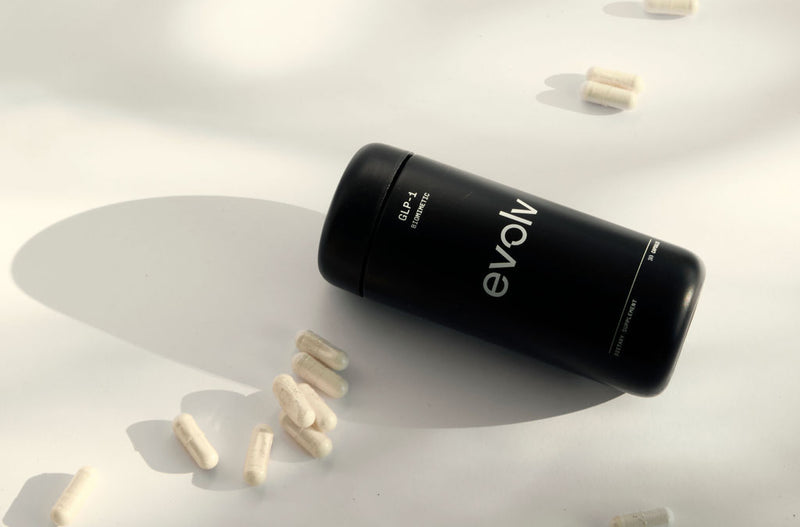
Why Evolv Feels Different
EV1 Peptide is not an injection, it’s oral, designed to engage GLP-1 pathways through the gut. That matters because the gut is where GLP-1 signaling naturally begins which means EV1 Peptide can lead to local intestinal signaling which contributes to appetite regulation. Oral delivery supports gradual, physiological activation of GLP-1–related pathways once the peptide is absorbed in the body. Rather than creating a sharp systemic spike, this approach is designed to support the body’s existing signaling rhythms, which means subtlety over intensity. If you’re expecting an immediate hit as one might experience from a high-dose injectable GLP-1 agonist drug, you may overlook the benefits of steady, biologically aligned signaling.
Slower Weight Loss Is a Feature Not A Flaw
Sustainable fat loss happens gradually. Slower progress often means better muscle preservation, hormonal balance, and long-term success.
The Bottom Line
GLP-1 isn’t meant to feel dramatic — it’s meant to feel sustainable. If you’re not feeling a strong sensation, but you notice you’re eating less without forcing it, food noise is quieter, or weight is trending down over time, then your biology is doing exactly what it’s designed to do and getting the extra support it needs. Sometimes, the most effective changes are the least loud.
References:
Holst, J.J. (2007). Physiological Reviews.
Drucker, D.J. (2018). Cell Metabolism.
Holst, J.J. et al. (2021). The Role of Incretins on Insulin Function and Glucose Homeostasis. Endocrinology.
Horowitz, M. (2013). Relationships Between Gastric Emptying, Postprandial Glycemia, and Incretin Hormones. Diabetes Care.
Karnani, M. and Burdakov, D. (2011). Multiple hypothalamic circuits sense and regulate glucose levels. Am. J. Physiol. Regul. Integr. Comp. Physiol.









 Studies

