







Why Am I Always Hungry? 14 Reasons You Can’t Stop Feeling Hungry
Authored by
The Evolv Research Team
You just ate. You’re still hungry.
You closed the fridge and walked away. Forty minutes later, you’re back, opening cabinets, looking for something — anything — to quiet the signal. Why am I always hungry? Why can’t I stop thinking about food?
It’s one of the most-searched health questions of the year, and the people asking it are not failing at willpower. Constant hunger has 14 distinct evidence-backed causes — some dietary, some hormonal, some medical, some behavioral. Knowing which one is yours is what changes the strategy.
On a recent episode of the Mom Curious podcast, Daniela Ravani put it this way: “I realize now that food noise had a lot to do with my blood sugar fluctuations. But it also was a pattern in my body and in my brain and in my life — and it was disrupted by this technology.”
That reframe matters. Hunger isn’t a character flaw. It’s a signal, and signals have causes. This article walks through the 14 most common reasons people feel hungry all the time, what to do about each, and when to involve a doctor. Evolv, the brand built around supporting the GLP-1 and GIP appetite pathways, has a particular interest in the hormonal end of this list — but most of the 14 reasons have nothing to do with supplements at all.
When Constant Hunger Is Biology, Not Willpower
Most of the 14 reasons trace back to one of two root causes: the hunger signal is being amplified (by ghrelin, sleep loss, or caloric restriction), or the satiety signal is too weak to push back (from inadequate protein, blood sugar swings, or chronic stress on the GLP-1 and GIP system).
Once you know which side of the seesaw is failing, the fix gets specific. Eating more protein doesn’t solve a sleep problem. Better sleep doesn’t fix dehydration. A supplement doesn’t fix diabetes.
Here are the 14 most common reasons — in roughly the order most people should consider them, starting with dietary mechanics and ending with the deeper hormonal patterns.
The 14 Reasons You Might Always Feel Hungry
1. You’re Not Eating Enough Protein
Protein is the most satiating macronutrient. It suppresses ghrelin (the hunger hormone) and stimulates GLP-1, GIP, and PYY — the gut hormones that signal fullness to the brain. A controlled Purdue study found that men eating only 63% of the protein RDA reported significantly higher hunger ratings (p=0.003) than those eating 125% — even when total calories were held constant.
What to do: Aim for 25-30g of protein per meal. Front-load it at breakfast — protein eaten in the morning has the strongest satiety carryover into the rest of the day.
2. Your Diet Is Low in Fiber
Dietary fiber slows gastric emptying, expands in the stomach, and feeds gut bacteria that produce short-chain fatty acids, which in turn stimulate L-cell release of GLP-1 and PYY. A 2019 meta-analysis of soluble fiber trials found meaningful reductions in subsequent caloric intake, with guar gum showing the largest effect (pooled d = −0.90).
What to do: Target 25-35g of fiber daily from vegetables, legumes, oats, and flaxseed. Eat fiber first in a meal (salad, broth-based soup) to blunt appetite before the main course arrives.
3. You’re Dehydrated and Mistaking Thirst for Hunger
The hypothalamus regulates both hunger and thirst, and the signals can easily be misread for each other. The motivational and interoceptive characteristics of mild dehydration overlap with low-grade hunger — the body prompts action without always specifying which resource it needs.
What to do: Before reaching for a snack, drink 8-12 oz of water and wait 10-15 minutes. Adequate daily hydration (roughly 2-3 liters for most adults) reduces spurious hunger throughout the day.
4. You’re Eating Too Many Ultra-Processed Foods
Ultra-processed foods are engineered to maximize palatability while stripping away the fiber and protein that drive satiety. A 2024 review found that approximately 14% of adults meet clinical criteria for ultra-processed food addiction — and chronic consumption is associated with increased hunger, reduced satiety, dysregulated reward signaling, and elevated ghrelin alongside suppressed PYY.
What to do: Replace highly processed snacks with whole-food combos that pair protein with fiber — apple and almond butter, Greek yogurt with berries, hard-boiled eggs with vegetables. Reducing ultra-processed exposure measurably lowers cue-triggered hunger episodes.
5. You Eat Too Fast
The gut-brain satiety loop has a 15-20 minute lag. Eating in 5 minutes means you can consume far more than your body needs before fullness registers. Research shows that meals consumed over 30 minutes versus 5 minutes produce significantly higher GLP-1 and PYY responses, and slower eating also suppresses ghrelin more effectively.
What to do: Aim for 20+ minute meals. Put utensils down between bites. Chew thoroughly. Eat away from screens.
6. You’re Not Getting Enough Sleep
Sleep restriction directly disrupts the hunger-satiety axis. A randomized crossover study of 19 healthy lean men found that restricting sleep to 4.5 hours versus 8.5 hours raised 24-hour ghrelin levels and increased total daily caloric intake by 340 kcal, with the ghrelin rise specifically predicting sweet food cravings the next day.
What to do: Prioritize 7-9 hours nightly. One or two nights of inadequate sleep measurably dysregulates hunger hormones by the following day — this isn’t a long-term effect, it’s the same week.
7. You’re Under Chronic Stress
Elevated cortisol — the body’s primary stress hormone — directly increases hunger and amplifies the hedonic reward value of food. A double-blind crossover study found that physiologically-relevant cortisol infusion raised hunger ratings from 3.4 to 5.3 (p=0.04) while simultaneously reducing blood flow to the hypothalamus and prefrontal cortex — the brain regions that regulate eating restraint.
What to do: Daily movement, breathwork, and sleep prioritization. Chronic stress without an outlet keeps cortisol elevated; cortisol-driven hunger is hormonal, not behavioral.
8. You’re Skipping Meals or Eating Too Little
The body interprets consistent meal skipping and chronic under-eating as a survival threat. Skipping breakfast is associated with elevated fasting glucose and metabolic dysregulation; extended gaps between meals cause sharp blood glucose drops that activate hunger-promoting AgRP neurons in the hypothalamus.
What to do: Eat regular, balanced meals every 3-5 hours. If you practice intermittent fasting, make sure the eating window is dense enough in protein and fiber to carry satiety across the fast.
9. You’re Exercising More Than You’re Refueling
High-intensity training creates large acute energy deficits. While acute exercise temporarily suppresses appetite via elevated GLP-1, PYY, and the metabolite Lac-Phe, those effects normalize within hours. Chronic under-fueling relative to output disrupts leptin signaling and resting metabolic hormones — producing persistent, difficult-to-satisfy hunger that’s biological, not willpower-related.
What to do: Match caloric intake — especially protein and carbohydrate — to training volume. Post-workout nutrition within 30-60 minutes of high-intensity sessions helps restore hormonal balance.
10. Your Hunger Hormone (Ghrelin) Is Elevated From Dieting
Ghrelin rises when you diet and stays elevated even after weight loss ends — a survival mechanism that intensifies hunger to push the body back toward its previous weight. For a full deep-dive on this mechanism, see the hormone behind your hunger signal. For the experience of why hunger sometimes intensifies in the early weeks of a new approach, this BTS piece walks through it.
What to do: Don’t rely on willpower against rising ghrelin — that’s a battle the biology is designed to win. Support the GLP-1 and GIP satiety side of the system instead.
11. You May Have Leptin Resistance
Leptin is produced by fat cells and signals the brain to stop eating when energy stores are adequate. In leptin resistance — common with excess body fat and high-sugar diets — the brain becomes deaf to this signal. Research shows obese individuals have cerebrospinal fluid-to-serum leptin ratios 4-5 times lower than lean individuals — the brain receives a fraction of the fullness signal despite high circulating leptin.
What to do: Reducing dietary sugar, saturated fat, and ultra-processed food can lower the triglyceride load that impairs leptin transport. If you suspect leptin resistance combined with significant body fat, this is worth discussing with a clinician.
12. Blood Sugar Swings Are Driving Reactive Hunger
Refined carbs trigger sharp blood glucose spikes followed by rapid declines. A 2021 study found that sucrose ingestion produces significantly weaker GLP-1 and PYY satiety responses than glucose (both p<0.001), leaving hunger inadequately suppressed after sugar-heavy meals. The result: a self-perpetuating cycle of crash, hunger, eat, crash again.
What to do: Pair carbohydrates with protein, fat, and fiber to blunt glycemic peaks. For a deeper look at how pathway-based products support metabolic health, see biomimetic products for metabolic health.
13. Hormonal Shifts From Your Menstrual Cycle (If You’re a Woman)
Estrogen suppresses appetite. Progesterone stimulates it. During the luteal phase (the week before menstruation), progesterone peaks and estrogen declines, driving measurable hunger increases. A 2022 review found that luteal-phase caloric intake exceeds follicular-phase intake by 90-529 kcal per day across multiple studies — the equivalent of an entire extra meal, with no change in physical activity.
What to do: Track your cycle alongside your hunger pattern. Increasing protein and fiber during the luteal phase can help moderate the hedonic hunger spike while still meeting the body’s genuinely increased needs.
14. Food Noise: Your Brain Keeps Wanting Even When You’re Full
Food noise is the persistent mental preoccupation with food that exists independently of physical hunger. A 2025 Science paper demonstrated that ventral tegmental dopamine neurons sustain food intake beyond physiological need, and a 2015 fMRI study found that emotional eaters are measurably less sensitive to the central effects of GLP-1 receptor activation — the satiety brake is weaker.
What to do: Learn to distinguish homeostatic hunger (physical, energy-driven) from hedonic food noise (psychological, reward-driven). Supporting the GLP-1 and GIP satiety pathway can quiet reward-driven hunger at its neurological source. For more on the connection between stress, energy, and the wider GLP-1 picture, see GLP-1’s role beyond appetite.
When to See a Doctor About Constant Hunger
Most of the 14 reasons above can be addressed with diet, sleep, and stress changes — or with patience as a hormonal pattern works through. But some forms of constant hunger are signs of an underlying medical condition that needs evaluation.
Polyphagia — abnormally intense, persistent hunger — is most commonly a symptom of uncontrolled type 1 or type 2 diabetes. When cells can’t absorb glucose properly due to insulin deficiency or insulin resistance, the body continues signaling hunger because it isn’t getting usable fuel. Other conditions to consider: hyperthyroidism (an overactive thyroid accelerates metabolism and energy demand), certain medications (corticosteroids, mirtazapine, antihistamines, some antidepressants), pregnancy and breastfeeding (physiologically normal increased hunger — consult your physician before using any supplement), and rarely, hypothalamic disorders.
A useful first workup if hunger is sudden, severe, or paired with other symptoms (unexplained weight loss, excessive thirst, frequent urination, persistent fatigue): fasting glucose, HbA1c, TSH (thyroid), and a review of any medications you’re currently taking.
The Systemic Counter: Supporting Your Satiety Signal
For most of the 14 reasons, the right fix is behavioral — better sleep, more protein, more fiber, less ultra-processed food. For three of them (ghrelin elevated from dieting, blood sugar swings, food noise), the underlying mechanism is the same: the GLP-1 and GIP satiety signal is too weak to balance a hunger signal that’s working overtime.
That’s the part Evolv was designed to address.
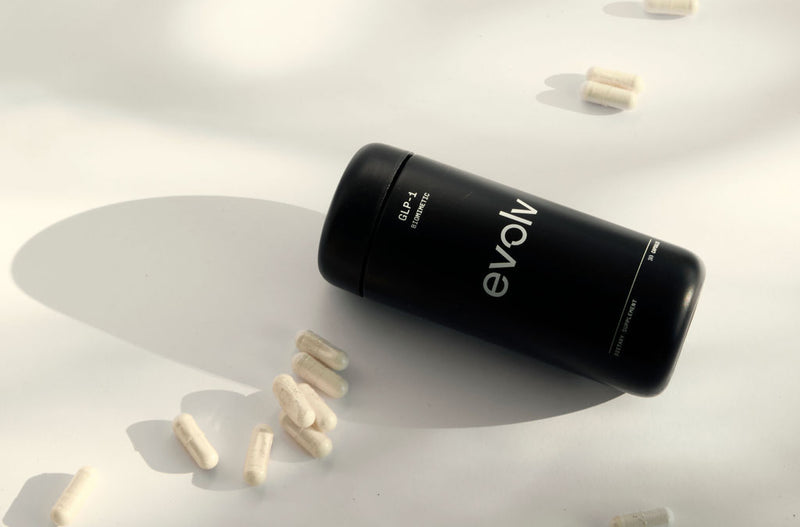
Evolv GLP-1 is a natural biomimetic dietary supplement built around a proprietary yeast-derived peptide designed to support GLP-1 and GIP appetite pathways.
The active ingredient — the bioengineered, yeast-derived EV1 Peptide — is designed to engage the body’s natural GLP-1 and GIP signaling, the satiety side of the appetite system. In the interim data of Evolv’s randomized controlled study, participants consumed approximately 750 fewer calories per day, with up to 12+ lbs of weight loss. The mechanism isn’t appetite suppression in the traditional sense — it’s pathway-based support for the satiety signaling that’s underactive in three of the most common hunger patterns: post-diet rebound, blood-sugar-driven reactive hunger, and food noise.
On the Mom Curious podcast, co-founder Becca McCarthy put the outcome simply: “It doesn’t mean you’re not hungry. It doesn’t mean that you don’t eat. It just resets your biology in a way that allows you to have a choice.”
That distinction matters. The goal isn’t to defeat hunger — it’s to restore balance to the satiety side of the system so hunger isn’t constantly winning. For more on the underlying mechanism, see how Evolv’s EV1 Peptide supports GLP-1 and GIP appetite pathways, how appetite control supplements support weight loss, and GLP-1 supplements for weight loss.
If your hunger pattern is the post-diet rebound or the food noise variety — and lifestyle levers haven’t moved it — Evolv’s oral GLP-1 biomimetic peptide is a daily tablet designed for sustained pathway engagement.
For everyone else: start with the lifestyle levers. Most of the constant hunger is solved at the dinner table, the bedroom, and the morning routine — not in a supplement aisle.
Frequently Asked Questions
What illness causes constant, uncontrollable hunger?
Polyphagia — abnormally intense, persistent hunger — is most commonly a symptom of uncontrolled type 1 or type 2 diabetes. When cells can’t absorb glucose properly, the body keeps signaling hunger because it isn’t getting the energy it needs. Hyperthyroidism (an overactive thyroid that accelerates metabolism), certain medications (corticosteroids, some antidepressants, antihistamines), and rare hypothalamic disorders can also cause excessive hunger. If hunger is sudden, severe, or paired with other symptoms like unexplained weight loss or excessive thirst, a physician should evaluate it.
Why am I suddenly hungry all the time as a woman?
Sudden, unexplained hunger in women is most often driven by hormonal shifts — particularly drops in estrogen and progesterone before menstruation, during perimenopause, or after childbirth. Estrogen has a direct appetite-suppressing effect through the hypothalamus, so when it falls, hunger signals intensify, and carbohydrate cravings often spike. Thyroid dysfunction (more prevalent in women) can also cause sudden-onset increased appetite. If hunger onset is abrupt and unexplained, a thyroid panel and blood glucose test are a useful first step with your physician.
Why do I feel hungry right after eating?
Hunger immediately after a meal usually points to one of three things: eating too quickly (the gut-brain satiety signal needs 15-20 minutes to register), a meal dominated by refined carbohydrates causing a fast blood sugar spike and crash, or a meal with too little protein and fiber to trigger the satiety hormones GLP-1, GIP, and PYY. Liquid calories like smoothies and juice are a common culprit — they empty from the stomach faster than solid food and produce weaker satiety responses.
How do I stop feeling hungry all the time?
The strongest evidence-backed levers are: increase protein to 25-30% of daily calories (the macronutrient with the largest satiety hormone response), eat adequate soluble fiber (slows gastric emptying and blunts post-meal hunger), and prioritize 7+ hours of sleep (one bad night measurably raises ghrelin and lowers leptin). If lifestyle changes don’t reduce hunger within 2-4 weeks, a medical workup to rule out thyroid dysfunction or blood sugar dysregulation is worth doing.
When should I see a doctor about always being hungry?
Constant hunger warrants medical evaluation if it is sudden and unexplained, accompanied by unexplained weight loss, persists despite eating adequate calories and protein, or comes with other symptoms like excessive thirst, frequent urination, or fatigue. These clusters can indicate undiagnosed type 1 or type 2 diabetes, thyroid dysfunction, or rarely, hypothalamic conditions. A basic workup typically includes fasting glucose, HbA1c, TSH (thyroid), and a review of current medications.
These statements have not been evaluated by the Food and Drug Administration. This product is not intended to diagnose, treat, cure, or prevent any disease.
Sources
- Apolzan JW, Carnell NS, Mattes RD, Campbell WW. “Inadequate Dietary Protein Increases Hunger and Desire to Eat in Younger and Older Men.” J Nutrition, 2007. https://pmc.ncbi.nlm.nih.gov/articles/PMC2259459/
- Salleh SN, et al. “Unravelling the Effects of Soluble Dietary Fibre Supplementation on Energy Intake and Perceived Satiety in Healthy Adults.” Foods, 2019. https://pmc.ncbi.nlm.nih.gov/articles/PMC6352252/
- McKiernan F, et al. “Thirst-drinking, hunger-eating; tight coupling?” Physiology & Behavior, 2009. https://pmc.ncbi.nlm.nih.gov/articles/PMC2671201/
- LaFata EM, et al. “Ultra-Processed Food Addiction: A Research Update.” Current Obesity Reports, 2024. https://pmc.ncbi.nlm.nih.gov/articles/PMC11150183/
- Zhu Y, Hollis JH. “How Important Is Eating Rate in the Physiological Response to Food Intake?” Nutrients, 2020. https://pmc.ncbi.nlm.nih.gov/articles/PMC7353031/
- Broussard JL, et al. “Elevated ghrelin predicts food intake during experimental sleep restriction.” Obesity, 2015. https://pmc.ncbi.nlm.nih.gov/articles/PMC4688118/
- Bini J, et al. “Stress-level glucocorticoids increase fasting hunger and decrease cerebral blood flow in regions regulating eating.” NeuroImage: Clinical, 2022. https://pmc.ncbi.nlm.nih.gov/articles/PMC9486604/
- Lee BJ, et al. “Association of main meal frequency and skipping with metabolic syndrome in Korean adults.” BMC Public Health, 2023. https://pmc.ncbi.nlm.nih.gov/articles/PMC10173485/
- Caruso L, Zauli G, Vaccarezza M. “Physical Exercise and Appetite Regulation: New Insights.” Biomolecules, 2023. https://pmc.ncbi.nlm.nih.gov/articles/PMC10452291/
- Strohacker K, et al. “Adaptations of leptin, ghrelin or insulin during weight loss as predictors of weight regain.” Obesity Reviews, 2013. https://pmc.ncbi.nlm.nih.gov/articles/PMC5357888/
- Izquierdo AG, et al. “Leptin, Obesity, and Leptin Resistance: Where Are We 25 Years Later?” Nutrients, 2019. https://pmc.ncbi.nlm.nih.gov/articles/PMC6893721/
- Yunker AG, et al. “Appetite-Regulating Hormones Are Reduced After Oral Sucrose vs Glucose.” J Clin Endo Metab, 2021. https://pmc.ncbi.nlm.nih.gov/articles/PMC7947782/
- Rogan MM, Black KE. “Dietary energy intake across the menstrual cycle: a narrative review.” Nutrition Reviews, 2022. https://pmc.ncbi.nlm.nih.gov/articles/PMC10251302/
- Zhu et al. “Hedonic eating is controlled by dopamine neurons that oppose GLP-1R satiety.” Science, 2025. https://pmc.ncbi.nlm.nih.gov/articles/PMC12009138/
- Cleveland Clinic. “Polyphagia (Hyperphagia): What It Is, Causes & Symptoms.” https://my.clevelandclinic.org/health/symptoms/24637-polyphagia-hyperphagia
- Becca McCarthy and Daniela Ravani, Mom Curious podcast. https://www.youtube.com/watch?v=AfX4Pim56xY