







GLP-1 and Inflammation: Does It Reduce Chronic Inflammation Beyond Weight Loss?
Authored by
The Evolv Research Team
The Scientific American headline from earlier this year was striking: “Ozempic’s greatest benefit may be its anti-inflammatory power.” A Harvard Health article followed, walking through the same question. The Journal of Clinical Investigation published a 2025 review by Wong and Drucker on the anti-inflammatory actions of GLP-1–based therapies.
The question isn’t fringe anymore. A growing body of clinical research suggests GLP-1 medications do more than control appetite and blood sugar — they may directly modulate the immune system, reducing chronic inflammation across multiple organ systems in ways that aren’t fully explained by weight loss.
This article walks through what the science actually shows: the five main mechanisms by which GLP-1 reduces inflammation, the clinical trial findings that are now changing how doctors think about these medications, and — critically — the honest scope boundary between what’s proven in prescription drug research and what extends to lifestyle inputs and biomimetic products. Evolv, the brand built around supporting the GLP-1 and GIP appetite pathways, has a particular reason to be precise about this distinction.
Does GLP-1 Reduce Inflammation? Yes — Here’s What’s Proven
The short answer: clinical evidence consistently shows that GLP-1 receptor agonist medications reduce systemic inflammation. The two strongest data points are landmark recent trials.
The SELECT trial (Lincoff et al., NEJM 2023) studied semaglutide 2.4 mg weekly in 17,000+ adults with overweight or obesity and established cardiovascular disease, but without diabetes. Over a mean of 39.8 months of follow-up, semaglutide produced a 20% reduction in major adverse cardiovascular events versus placebo. The critical detail: this cardiovascular benefit emerged before significant weight loss occurred. Subsequent analysis confirmed the event reduction was independent of baseline adiposity and degree of weight loss — meaning the benefit can’t be attributed to weight loss alone.
A 2025 Nature Medicine study followed nearly one million people with diabetes taking GLP-1 receptor agonists or other diabetes medications for close to a decade. GLP-1 users showed 10-20% lower rates of major cardiovascular and respiratory events, and 10-20% lower rates of neurodegenerative outcomes, compared to those on non-GLP-1 diabetes medications. The authors attributed a significant portion of this benefit to GLP-1’s anti-inflammatory effects across multiple organ systems.
The C-reactive protein evidence is just as consistent. A 2024 meta-analysis of 13 randomized controlled trials and 26,131 patients found semaglutide reduced CRP with a standardized mean difference of -0.56 (95% CI: -0.69 to -0.43) versus placebo — a robust effect. In PIONEER 2, oral semaglutide 14 mg produced a 30% CRP reduction versus empagliflozin, and mediation analysis showed that 38-79% of the anti-inflammatory effect was independent of weight and glucose changes.
The science is clear. The next question is the mechanism.
Five Mechanisms: How GLP-1 Reduces Inflammation
1. Direct Suppression of NF-κB Signaling in Immune Cells
GLP-1 receptors (GLP-1R) are expressed on macrophages, T cells, and endothelial cells. When activated, these receptors suppress NF-κB — the master transcription factor for pro-inflammatory gene expression. Liraglutide reduces NF-κB activation in endothelial cells while inhibiting TNF-α and increasing nitric oxide production; exendin-4 blocks NF-κB binding in human peripheral blood mononuclear cells and downregulates TNF and IL-1β gene expression. These effects occur within hours and precede any meaningful weight loss, establishing direct receptor-mediated action as the mechanism, not a downstream consequence of metabolic improvement.
Source: Wong CK, Drucker DJ, JCI 2025.
2. Reduction of Pro-Inflammatory Cytokines (TNF-α, IL-6, IL-1β)
GLP-1 receptor agonists consistently reduce circulating levels of the three primary pro-inflammatory cytokines across preclinical and clinical research. In a study of 40 men with type 2 diabetes taking semaglutide 1 mg weekly for six months, significant reductions in TNF-α and IL-6 were observed. Single doses of exenatide or semaglutide reduced circulating TNF-α, IL-6, and IL-1β in LPS-challenged mice within hours. The suppression is mediated through GLP-1R signaling on macrophages and other immune cells, reducing M1 (inflammatory) macrophage polarization and increasing regulatory signals.
Sources: Yaribeygi H et al. 2024; Mehdi SF et al., Front Immunol 2023.
3. Reduction of Weight-Related Adipose Tissue Inflammation
Adipose tissue in people carrying excess body fat becomes infiltrated with M1-polarized macrophages that continuously secrete inflammatory cytokines — a state called metaflammation. GLP-1 receptor agonists act directly on adipose tissue macrophages to reduce infiltration and shift their phenotype toward M2 (anti-inflammatory). Exendin-4 reduces macrophage infiltration, lowers IL-1β and IL-6 expression, and increases the anti-inflammatory cytokine IL-10. Proteomic analyses from the STEP trials revealed inflammatory pathway changes in semaglutide users that could not be fully attributed to metabolic improvements alone.
4. Gut Microbiome Modulation and Reduced LPS Endotoxemia
This is the least appreciated mechanism. In metabolic disease, gram-negative gut bacteria release lipopolysaccharides (LPS) that bind TLR4 receptors on the intestinal barrier, increasing gut permeability and driving low-grade systemic endotoxemia — a constant inflammatory stimulus from the gut. GLP-1 receptor agonists, particularly liraglutide, significantly increase the abundance of Akkermansia muciniphila (a bacterium associated with gut barrier integrity) and boost SCFA-producing bacteria. These microbiome shifts reinforce tight junction proteins, reduce intestinal permeability, lower circulating LPS, and thereby reduce systemic inflammation.
Source: Zeng Y et al., mBio 2024.
5. Central Nervous System GLP-1R Signaling
GLP-1 receptors expressed in brain neurons mediate a distinct anti-inflammatory circuit. Central GLP-1R activation inhibits inflammatory responses to multiple Toll-like receptor (TLR) agonists — not just a single inflammatory trigger — through pathways involving α-1 adrenergic and δ-opioid receptor signaling. This neuronal anti-inflammatory pathway is independent of peripheral metabolism. Intestinal L cells (the cells that produce and secrete GLP-1) themselves respond to LPS via TLR4 on their basolateral membrane — meaning the GLP-1 system functions as an endogenous inflammation sensor and brake.
Source: Wong & Drucker, JCI 2025.
The Clinical Findings: What GLP-1 Drugs Actually Do
Beyond CRP and cytokines, GLP-1 receptor agonist trials have shown organ-specific anti-inflammatory outcomes:
- Cardiovascular: The SELECT trial’s 20% MACE reduction is the strongest single finding. Sub-analyses showed reduced arterial plaque progression and improved endothelial function — vascular inflammation outcomes that fit the systemic anti-inflammatory mechanism.
- Hepatic: The ESSENCE phase 3 trial demonstrated that semaglutide 2.4 mg resolved liver inflammation (MASH) in 62.9% of patients versus 34.1% on placebo, with 37% achieving at least one stage of fibrosis improvement. Liver macrophage infiltration was reduced independent of weight loss.
- Renal: The FLOW trial showed semaglutide significantly slowed kidney function decline in people with diabetes. Renal inflammation is a known driver of declining kidney function, and the FLOW outcomes fit the anti-inflammatory mechanism.
- Joint and CNS: The STEP-9 trial showed semaglutide reduced joint pain more than placebo beyond what weight loss alone would explain. The Nature Medicine 2025 paper’s 10-20% reduction in neurodegenerative risk in nearly one million participants points to anti-neuroinflammatory effects, consistent with the central GLP-1R signaling mechanism above.
For more context on how these benefits extend across organ systems, see the benefits of GLP-1 that extend beyond appetite control and GLP-1 supplements for weight loss.
The Honest Scope Boundary: Drugs vs. Lifestyle vs. Supplements
Here’s the part that doesn’t get explained well in most coverage of this topic.
What’s proven applies to GLP-1 receptor agonist medications at therapeutic doses. Semaglutide at 1.0-2.4 mg weekly. Liraglutide at 1.8-3.0 mg daily. Tirzepatide at 5-15 mg weekly. These are FDA-approved prescription drugs that achieve pharmacological GLP-1 receptor saturation far exceeding what the body produces on its own. The 24-30% CRP reductions, the 20% cardiovascular event reductions, the MASH resolution — those numbers come from these doses, in these populations, under medical supervision.
Endogenous GLP-1 is on a different scale. When you eat a high-fiber meal, your intestinal L cells release GLP-1 — but at physiological levels that are orders of magnitude below pharmacological dosing. The receptor mechanisms are the same. The intensity isn’t. No clinical trial has measured CRP or inflammatory cytokines in response to endogenously elevated GLP-1 via diet alone and demonstrated reductions comparable to drug trials. The lifestyle pattern that supports GLP-1 secretion (Mediterranean diet, exercise, gut health) is anti-inflammatory — but that effect comes from the whole pattern, not GLP-1 signaling alone.
Supplements that support GLP-1 pathway activity are a third category. No supplement has been demonstrated in clinical trials to reduce CRP, TNF-α, IL-6, or IL-1β at levels comparable to GLP-1 receptor agonist medications. Anti-inflammatory claims on supplements that support GLP-1 pathways are not supported by clinical evidence. This isn’t a knock against supplements — it’s a structural difference. Supplements operate in the metabolic and appetite-regulation category. Drugs are designed and dosed for disease modification.
The honest framing: if you have a documented inflammatory condition, that’s a conversation with your physician about FDA-approved treatments. If you want to support metabolic health, appetite regulation, and GLP-1 and GIP signaling for appetite and food noise, lifestyle and biomimetic products operate at a different level entirely.
How Supporting Your Natural GLP-1 Pathway Fits In
For most people, GLP-1 pathway support is a daily metabolic project — not an inflammation treatment. The interventions that support endogenous GLP-1 secretion are well-documented:
- Dietary fiber (vegetables, legumes, oats) feeds gut bacteria that produce short-chain fatty acids, stimulating L-cell GLP-1 release
- Protein-rich meals trigger meaningful GLP-1 and GIP secretion alongside PYY and CCK
- Fermented foods support Akkermansia muciniphila and other beneficial bacteria
- Regular exercise modulates GLP-1 secretion and improves receptor sensitivity
For more on these inputs, see natural ways to support GLP-1 signaling through diet and lifestyle and an expert analysis of the most effective weight loss supplements. For more on the mechanism behind ghrelin and the appetite axis, see the hormone behind your hunger signal.
Evolv is in this third category, the biomimetic products category, and is precise about what that means.
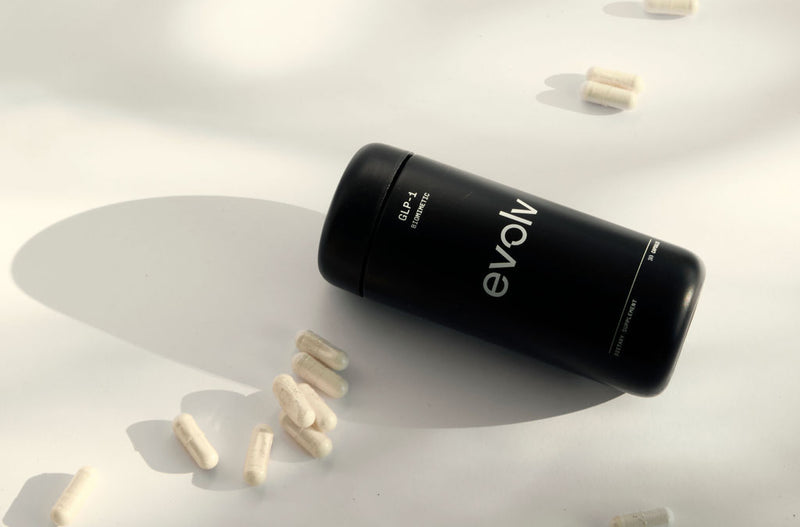
Evolv GLP-1 is a natural biomimetic dietary supplement built around a proprietary yeast-derived peptide designed to support GLP-1 and GIP appetite pathways.
The active ingredient — the bioengineered, yeast-derived EV1 Peptide — is designed to engage the body’s natural GLP-1 and GIP signaling pathways. In the brand’s 8-week data readout of their randomized controlled study, participants consumed approximately 750 fewer calories per day, with up to 12+ lbs of weight loss. The studied outcomes are metabolic and appetite-related: caloric intake, weight, waist circumference, and satiety. Inflammation was not a study endpoint, and Evolv does not make anti-inflammatory claims.
That precision matters. For more on the mechanism, see how Evolv’s EV1 Peptide supports GLP-1 and GIP appetite pathways and how appetite control supplements support weight loss.
If you’re using GLP-1 receptor agonist medications under medical supervision, the inflammation-modulating effects discussed in this article apply to you in the context of your prescriber’s clinical judgment. If you’re supporting your natural GLP-1 and GIP pathways through diet, lifestyle, and biomimetic products like Evolv’s oral GLP-1 biomimetic peptide, the benefits sit in the metabolic and appetite-regulation domain — not the anti-inflammatory therapy domain.
The science is moving fast. Future research will clarify how much of the GLP-1 anti-inflammatory effect extends to lower-dose interventions. Until then, the honest position is the one above: drugs do what drugs do at drug doses, and lifestyle and supplements do what they do in their own category.
Frequently Asked Questions
How long does it take GLP-1 to reduce inflammation?
The timeline depends on the mechanism. In preclinical models, GLP-1 receptor agonists suppress pro-inflammatory cytokines (TNF-α, IL-6, IL-1β) within hours of a single dose. Measurable reductions in C-reactive protein (CRP) in clinical trials typically emerge over weeks to months of consistent prescription medication use. The SELECT trial observed cardiovascular risk reduction before significant weight loss (under 5% body weight at 3 months), confirming early anti-inflammatory activity — but these timelines apply to GLP-1 receptor agonist medications at therapeutic doses, not to supplements or lifestyle interventions.
What’s the fastest way to reduce chronic inflammation?
Chronic inflammation isn’t something you “flush” on a quick timeline — it’s an immune response pattern that responds to sustained inputs. The strongest evidence-backed approaches are an anti-inflammatory diet pattern (Mediterranean-style, rich in omega-3 fatty acids, polyphenols, and fiber), regular moderate exercise, consistent 7+ hours of sleep, and stress management. Visible marker reductions (like CRP) on this kind of plan typically emerge over 8-12 weeks. For inflammation tied to a specific medical condition, a physician should direct treatment.
Does microdosing GLP-1 help with inflammation?
There is no published clinical trial data evaluating microdosed GLP-1 medications for inflammatory marker reductions. The anti-inflammatory effects documented in clinical trials were achieved at full therapeutic doses (semaglutide 1.0-2.4 mg/week). Whether lower compounded doses produce meaningful anti-inflammatory effects is currently an open question without evidence. Experts, including researchers quoted by STAT News in 2025, have noted that patients using compounded microdosed GLP-1 medications are essentially operating without clinical evidence on either safety or efficacy at those doses.
Can you boost GLP-1 naturally to reduce inflammation?
Dietary and lifestyle behaviors that support endogenous GLP-1 secretion include high-fiber foods (vegetables, legumes, oats), protein-rich meals, fermented foods that support beneficial gut bacteria like Akkermansia muciniphila, and regular exercise. Anti-inflammatory benefits from these lifestyle patterns are well-established in population research — but they reflect the entire dietary pattern, not GLP-1 signaling alone. Endogenous GLP-1 levels achieved through diet are substantially lower than the pharmacological levels reached with prescription GLP-1 medications studied for inflammation.
Are there natural alternatives to GLP-1 drugs for inflammation?
There are no dietary supplements that have been clinically demonstrated to reduce systemic inflammation the way GLP-1 receptor agonist medications do — that level of effect requires pharmacological dosing of an FDA-approved drug. For chronic inflammation tied to specific medical conditions, a physician should direct treatment. For lifestyle-driven low-grade inflammation, the strongest evidence supports a Mediterranean-style diet pattern, regular exercise, adequate sleep, and stress management. Supplements that support GLP-1 and GIP appetite pathways operate in the metabolic and appetite-regulation category, not as anti-inflammatory therapies.
These statements have not been evaluated by the Food and Drug Administration. This product is not intended to diagnose, treat, cure, or prevent any disease.
Sources
- Wong CK, Drucker DJ. J Clin Invest, 2025;135(21):e194751. https://www.jci.org/articles/view/194751
- Mehdi SF, et al. “Anti-inflammatory and metabolic effects of GLP-1 receptor agonists.” Front Immunol, 2023. https://pmc.ncbi.nlm.nih.gov/articles/PMC10230051/
- Bendotti G, et al. “The anti-inflammatory and immunological properties of GLP-1 receptor agonists.” Pharmacological Research, 2022. https://www.sciencedirect.com/science/article/pii/S1043661822002651
- Mosenzon O, et al. “Impact of semaglutide on high-sensitivity C-reactive protein: exploratory patient-level analyses of SUSTAIN and PIONEER randomized clinical trials.” Cardiovasc Diabetol, 2022;21:172. https://pmc.ncbi.nlm.nih.gov/articles/PMC9440529/
- Masson W, et al. “Anti-inflammatory effect of semaglutide: updated systematic review and meta-analysis.” Front Cardiovasc Med, 2024;11:1379189. https://pmc.ncbi.nlm.nih.gov/articles/PMC11270812/
- Zeng Y, et al. mBio, 2024;15(1). https://doi.org/10.1128/mbio.02032-23
- Yaribeygi H, et al. “Anti-inflammatory benefits of semaglutide: State of the art.” J Clin Transl Endocrinol, 2024;36:100340. https://pmc.ncbi.nlm.nih.gov/articles/PMC10992717/
- Lincoff AM, et al. SELECT trial. N Engl J Med, 2023;389:2221-2232. https://www.nejm.org/doi/full/10.1056/NEJMoa2307563
- Harvard Health Publishing. “Do GLP-1 drugs reduce inflammation?” 2025. https://www.health.harvard.edu/diseases-and-conditions/do-glp-1-drugs-reduce-inflammation
- STAT News. “Microdosing aims to extend the lifespan of the GLP-1 compounding market.” Nov 2025. https://www.statnews.com/2025/11/04/microdosing-glp-1-drugs-no-clinical-evidence-effective/
A note on scope: This article discusses clinical research on GLP-1 receptor agonist medications (semaglutide, liraglutide, tirzepatide). Evolv GLP-1 is a dietary supplement that supports the body’s natural GLP-1 and GIP appetite pathways. It is not a medication and does not make anti-inflammatory claims. The science below applies to prescription drugs studied at therapeutic doses, not to supplements.