







9 Foods That Increase GLP-1 Naturally
Authored by
The Evolv Research Team
GLP-1 (glucagon-like peptide-1) is the hormone behind why you stop eating when you’re full. It is the same pathway that injectable GLP-1 medications are engineered to amplify. Search for foods that increase GLP-1 and every list returns the same three: avocado, oats, fatty fish. Most stop there.
What those lists skip is the how. Not just what to eat, but why it works at the biological level, how to use it to maximize the effect, and in what order to eat it, because meal sequencing changes the GLP-1 outcome dramatically even with the identical foods.
There’s a timing problem underneath all of this: GLP-1 has a half-life of approximately 2–3 minutes in circulation. An enzyme called DPP-4 (dipeptidyl peptidase-4) degrades it almost immediately after release. This is why certain polyphenol-rich foods, not just fiber, matter for the sustained GLP-1 effect: they inhibit DPP-4 and extend how long active GLP-1 stays in circulation.
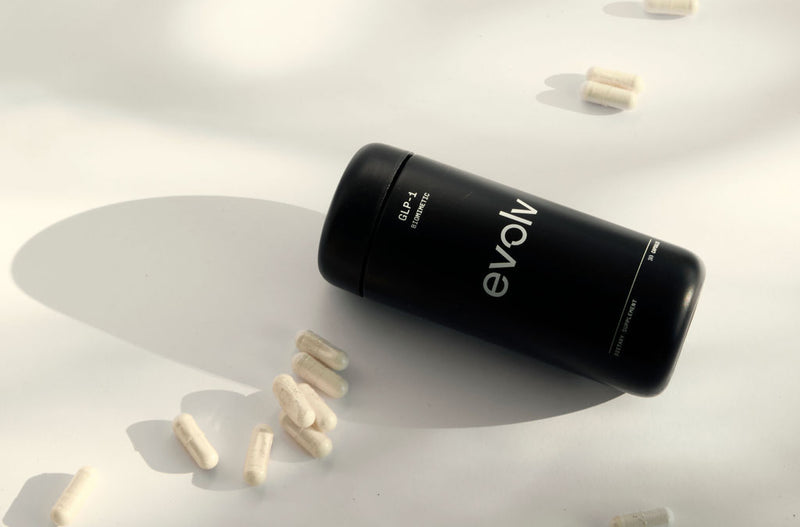
That half-life problem is also why the pathway is worth supporting from more than one direction. Evolv GLP-1 is a natural biomimetic dietary supplement built around a proprietary yeast-derived peptide designed to support GLP-1 and GIP appetite pathways. Food-based strategies and targeted daily support reach that pathway through complementary mechanisms, and the research behind both is covered here. For the full lifestyle protocol beyond food, see natural ways to support GLP-1.
How These 9 Foods Increase GLP-1: The Three Mechanisms
Before the list, the mechanism. GLP-1 is released from L-cells in the gut lining, and different foods trigger that release through different pathways. Understanding which pathway each food uses tells you how and when to deploy it.
Mechanism 1: Direct L-cell stimulation (fast, 15–30 minutes). Dietary protein, fat, and certain fatty acids directly contact L-cell receptors (GPR40, GPR43, and GPR120) and trigger GLP-1 release. This is the fastest pathway. Whey protein, avocado, and olive oil operate here.
Mechanism 2: DPP-4 inhibition (concurrent, extends active half-life). Polyphenols from berries, green tea (EGCG), dark chocolate, and coffee (chlorogenic acid) inhibit DPP-4, the enzyme that degrades active GLP-1. This mechanism doesn’t increase GLP-1 release; it extends how long circulating GLP-1 stays active. These foods work best alongside protein-rich meals, not in isolation.
Mechanism 3: SCFA fermentation (slow, 6–12+ hours). Resistant starch and dietary fiber are fermented by gut bacteria in the colon, producing short-chain fatty acids (SCFAs): butyrate, propionate, and acetate. These SCFAs directly stimulate L-cells from the colon side, generating a sustained GLP-1 signal that peaks hours after eating and extends through the night. Oats, legumes, and properly cooled starches operate here.
Layering all three mechanisms across a day is where food-based GLP-1 strategy becomes systematic rather than incidental.
The 9 Foods That Increase GLP-1 (And How to Use Each One)
1. Whey Protein
Whey protein produces the most potent direct GLP-1 response of any single food. A peer-reviewed study (PMC8278161) found whey protein generated a 141% higher active GLP-1 area under the curve compared to a rice-and-chicken meal. The mechanism: leucine-rich whey peptides directly stimulate GPR40 receptors in L-cells and trigger rapid GLP-1 release.
The protein source matters. Casein, soy, and pea protein all produce weaker acute GLP-1 responses than whey in head-to-head comparisons (Nutrients, 2021).
How to use it: As a 20–25g preload 20–30 minutes before a carb-heavy meal, or blended into overnight oats (which doubles the mechanism: direct L-cell stimulation from whey plus overnight resistant starch from the oats). Post-workout is effective, but the appetite-regulatory benefit is most useful before or with meals.
2. Avocado
Avocado’s GLP-1 effect is driven by its oleic acid (MUFA) content, a direct GPR40 and GPR120 receptor agonist. A human study (PMC6567160) found avocado consumption increased GLP-1 area under the curve by approximately 77% compared to a low-fat control.
How to use it: The research used half an avocado (standard serving). The timing matters: eating avocado before carbohydrates, whether as a starter, on eggs, or spread on a protein-first breakfast plate, triggers the GLP-1 response before glucose hits the bloodstream, which amplifies the satiety and glycemic effect. Avocado with carbs is useful; avocado before carbs is more mechanistically potent.
3. Extra-Virgin Olive Oil
Extra-virgin olive oil (EVOO) contains elenolic acid, a specific compound that triggers GLP-1 release through PLC-mediated calcium signaling in L-cells (PMC9664001). The key constraint: elenolic acid is present only in extra-virgin olive oil. It is absent in refined, light, and “pure” olive oil grades, which undergo processing that destroys phenolic content.
How to use it: As the first fat of a meal. EVOO-based salad dressing as a starter course, olive oil bread dip before protein, or drizzled over a first-course soup. The goal is L-cell contact early in the meal sequence. Two tablespoons is an adequate dose. Cooking at high heat reduces phenolic content; reserve EVOO for cold applications or low-heat finishing.
4. Oats (3g+ Beta-Glucan)
Oats work through two complementary mechanisms: beta-glucan creates a viscous gel that slows gastric emptying (extending the contact time between gut contents and L-cells), and the soluble fiber undergoes SCFA fermentation in the colon, producing the sustained overnight GLP-1 signal.
The dose threshold: 3g of beta-glucan per serving is the threshold used in clinical studies of measurable metabolic effects. One cup of dry rolled or steel-cut oats provides approximately 4g. Instant oats are processed in a way that reduces viscosity, so the gel-forming property is diminished. Instant oats do not substitute for rolled or steel-cut.
How to use them: Overnight oats are the highest-leverage preparation. Soaking raw rolled oats overnight produces both resistant starch (cold prep) and maintains beta-glucan integrity. Add whey protein to the overnight mixture, and you’ve combined mechanisms 1 and 3 in a single breakfast.
5. Legumes
Legumes are one of the most mechanistically interesting GLP-1 foods. Their established route is SCFA fermentation, and it is a strong one: the fiber and resistant starch in beans, lentils, and chickpeas are among the most fermentable in the diet, which is what produces the long-duration signal.
There is also a second, emerging route worth understanding, though it is less settled. Gut bacteria shape which bile acid species circulate after a meal, and one of those species, hyocholic acid, is a notably strong activator of the TGR5 receptor. Research in Cell Metabolism showed that hyocholic acid raises GLP-1 secretion by activating TGR5 while simultaneously inhibiting FXR, a combination not seen with other bile acids. Separate work has shown that the gut microbiome regulates the post-meal GLP-1 response through this bile-acid-to-TGR5 route. What has not been established is a legume-specific version of this pathway, so regard it as a plausible additional mechanism behind fiber-rich meals rather than an established property of beans.
How to use them: Chickpeas, lentils, or white beans eaten before the main carbohydrate course, whether in a pre-meal salad, as a starter, or as the base of a grain bowl with protein on top, maximizes both the sequencing benefit and the mechanical slow-digestion effect. Canned legumes (rinsed) work as well as dried and cooked for GLP-1 purposes.
6. Fermented Foods (L. Reuteri Focus)
Fermented foods work through the gut microbiome, building the bacterial populations that convert dietary fiber into GLP-1-stimulating SCFAs. Among bacterial strains, Lactobacillus reuteri has the strongest single-strain human evidence: a randomized controlled trial published in Diabetes Care found L. reuteri supplementation increased GLP-1 levels by approximately 76% compared to placebo.
Other fermented foods (kefir, kimchi, sauerkraut, miso, tempeh) contribute to building Akkermansia muciniphila and other SCFA-producing bacteria that support the long-duration fermentation pathway.
How to use them: The practical application is daily, not occasional. One to two tablespoons of kimchi or sauerkraut with meals, or one cup of kefir at breakfast, consistently exposes the gut microbiome to fermentable substrates and live cultures. Note: individual variation is significant here, because the SCFA-to-GLP-1 pathway depends on having the right microbial populations. If you’ve tried high-fiber eating without effect, building microbiome diversity with fermented foods should come first.
7. Fatty Fish
Fatty fish (salmon, sardines, mackerel) trigger GLP-1 release through GPR120, the omega-3 fatty acid receptor. EPA and DHA directly stimulate L-cells and also upregulate GLP-1 and PYY (peptide YY) signaling in the gut. A secondary benefit: omega-3s reduce systemic inflammation, which matters because chronic inflammatory signaling disrupts ghrelin and leptin regulation independently.
How to use it: The sequencing benefit applies strongly here. Eating fatty fish before rice, pasta, or bread amplifies the GLP-1 response, and a Japanese RCT found fish eaten before rice produced a 15% greater GLP-1 AUC compared to simultaneous consumption. Practically: a salmon starter before a grain-based main, or sardines on crispbread before a pasta dish.
8. Berries and Dark Chocolate (≥70% Cacao)
These two operate primarily through DPP-4 inhibition, extending the active half-life of GLP-1 already circulating rather than triggering new release. Berry anthocyanins and related phenolic compounds have been shown to inhibit DPP-IV directly in laboratory assays (Fan et al., Evidence-based Complementary and Alternative Medicine, 2013). Dark chocolate at 70%+ cacao showed an enhanced early GLP-1 response in one human study, attributed to its polyphenol density.
The practical permission: these are foods many people already eat or want to eat. The DPP-4 inhibition pathway means they’re genuinely useful when paired with a protein-first meal, not as standalone “health foods” but as polyphenol cofactors that extend the GLP-1 already triggered by protein and fat.
How to use them: A small handful of berries (blueberries, blackberries) eaten with a protein-rich meal amplifies the GLP-1 effect compared to the protein alone. A square or two of ≥70% dark chocolate after a high-protein meal activates the DPP-4 inhibition mechanism in the same window.
9. Green Tea (EGCG) and Coffee (Chlorogenic Acid)
Green tea’s EGCG is one of the better-studied food-derived DPP-4 inhibitors. Matcha delivers 3–5x higher EGCG concentration than steeped green tea. EGCG combines direct DPP-4 inhibition with L-cell GLP-1 stimulation, operating on both the release and the degradation mechanisms simultaneously.
Coffee’s chlorogenic acid is associated with GPR40 and GPR43 activity in L-cells, and also appears to contribute to DPP-4 inhibition. The result: a morning coffee with a protein-first breakfast covers mechanisms 1 (direct L-cell activation from protein), 2 (DPP-4 inhibition from chlorogenic acid), and the foundation for mechanism 3 (if overnight oats or legumes are part of the meal).
The morning protocol: protein source (eggs, whey shake, Greek yogurt) → healthy fat (EVOO-dressed starter, avocado) → coffee alongside → carbohydrate last. Three mechanisms active within a single meal.
Why Cooling Cooked Starches Amplifies Their GLP-1 Effect
The same foods, prepared differently, produce radically different GLP-1 outcomes. Almost nobody knows this, and it is the single highest-leverage change available without buying anything new.
The mechanism is retrogradation, the conversion of digestible cooked starch into resistant starch (RS) when food is cooled. Resistant starch resists digestion in the small intestine and reaches the colon intact, where gut bacteria ferment it into SCFAs. The critical point: reheating does not eliminate the RS conversion, and the resistant starch structure persists even after reheating.
Rice: Cook, then refrigerate 12–24 hours. Research shows this reduces the glycemic response by 30–50% and increases RS content (PMC9013350). Reheat and serve normally. Day-old rice in stir-fry or grain bowls is functionally superior for GLP-1 signaling to freshly cooked rice.
Pasta: Cook al dente, refrigerate overnight, serve cold or reheated. Chickpea pasta nearly doubles in RS content on cooling, approximately 1.83g/100g fresh to 3.65g/100g cooled (Metabolites, 2024). Cold pasta salads eaten first in a meal sequence combine the RS fermentation pathway with the sequencing benefit.
Potatoes: Cooked potatoes refrigerated overnight have significantly higher RS than hot mashed or fresh-cut fries. Cold potato salad (olive oil-dressed) is mechanistically superior to hot potato preparations for GLP-1 purposes. This is not common knowledge outside nutrition research.
Oats: Raw rolled oats soaked overnight (overnight oats) deliver the most RS. Steel-cut oats cooked and refrigerated retain more RS than instant oats at any preparation stage.
Individual variation caveat: The RS fermentation pathway depends on having adequate SCFA-producing bacteria in the gut microbiome. If you’ve increased fiber intake without noticing appetite or satiety effects, microbiome diversity may be the bottleneck. Fermented foods built up over 4–8 weeks typically improve this responsiveness.
Eating Order Matters More Than You Think
Meal sequencing, the order in which you consume foods within a meal, produces larger GLP-1 differences than simply choosing “GLP-1 foods” without considering timing.
The counterintuitive finding from research (PMC4876745): eating protein and fat before carbohydrates produced a 73% lower blood glucose area under the curve and a meaningfully higher GLP-1 response compared to eating the same foods in carb-first order. The mechanism: early L-cell activation from protein and fat means GLP-1 is already circulating and slowing gastric emptying when carbohydrates begin to enter the bloodstream.
A Japanese randomized controlled trial (PMC4742500) found fish eaten before rice produced a 15% greater GLP-1 AUC compared to simultaneous consumption. Other research found that vegetables as a preload alone did not consistently increase GLP-1, because the effect is driven by protein and fat, not fiber in isolation.
Practical morning protocol applying all three mechanisms: 1. Protein first: eggs, Greek yogurt, cottage cheese, or whey protein 2. Healthy fat: EVOO-dressed starter, avocado, or olive tapenade 3. Polyphenol cofactor: coffee or green tea alongside the meal 4. Carbohydrates last: overnight oats, berries, or toast at the end of the meal sequence
This is not a restrictive diet. It’s the same foods many people already eat, reorganized within the meal to maximize the GLP-1 response.
Why These Foods Work Better Together
The three mechanisms are additive when layered across a day:
Layer 1, fast (15–120 min): Protein-first + avocado/EVOO at breakfast triggers direct L-cell activation. GLP-1 is elevated within 30 minutes and supports glycemic stability through the morning.
Layer 2, extended half-life (concurrent): Green tea or coffee alongside the meal, and berries or dark chocolate post-meal, inhibit DPP-4 and extend how long the Layer 1 GLP-1 stays active.
Layer 3, day-long signal (6–12+ hours): Overnight oats, cooled rice, legumes, and fermented foods at breakfast and lunch produce SCFA fermentation that generates sustained GLP-1 pathway signaling through the afternoon and evening.
One-day sample protocol: - Breakfast: overnight oats with whey protein stirred in → protein first, oats second → coffee alongside - Lunch: salmon starter on olive oil-dressed salad → cooled rice bowl with legumes → berries for polyphenol DPP-4 inhibition - Evening: green tea → small square of dark chocolate (70%+)
This protocol covers all three mechanisms at every meal window without requiring new foods, only preparation changes and sequencing adjustments.
What to Eat While on GLP-1 Medication
The same mechanisms matter for people already taking a GLP-1 receptor agonist, but the practical constraints change. Reduced appetite and slower gastric emptying mean smaller volumes of food have to carry more nutrition, and the guidance from major medical centers converges on a few priorities.
Protein first, and enough of it. Preserving lean mass during appetite suppression is the central nutritional concern. Protein-forward meals do double duty: they support lean mass, and they trigger the same L-cell response described above.
Fiber, introduced gradually. Beans, vegetables, whole grains, and fruit with the skin on support the SCFA fermentation pathway and help with the constipation that often accompanies slowed motility. Build up gradually rather than all at once.
Smaller, nutrient-dense meals. With reduced capacity, calorie-dense whole foods such as olive oil, avocado, nuts, and fatty fish deliver more nutrition per bite than bulky low-calorie options.
Hydration. Slowed gastric emptying and reduced intake together make dehydration easy to miss.
Discuss any dietary strategy with the prescribing physician, particularly if you are managing blood sugar alongside the medication. For the broader eating framework beyond the medication window, see the metabolic health diet.
What About Supplements?
Food-based GLP-1 support is real and meaningful, but some people want more structure than meal prep allows. Several product categories extend the same mechanisms.
Evolv GLP-1 is where the category meaningfully shifts. Evolv GLP-1 is a natural biomimetic dietary supplement built around a proprietary yeast-derived peptide designed to support GLP-1 and GIP appetite pathways.
Its active ingredient, the bioengineered, yeast-derived EV1 Peptide, is designed to support your own GLP-1 and GIP signaling. Your gut makes GLP-1, and that is the only place it comes from. No product carries the hormone itself, prescription or supplement; what they work on is the pathway. The EV1 Peptide is how Evolv works on that pathway: a distinct molecule designed to support the signaling pathways your gut already runs. In Evolv’s randomized controlled study, with results read out at 8 weeks, participants consumed approximately 750 fewer calories per day and lost up to 12+ lbs. See Evolv’s science page for the clinical methodology. Evolv GLP-1 is available as a daily oral supplement.
The rest of the shelf works on adjacent mechanisms rather than on the signaling itself.
Prebiotic fiber (psyllium, inulin, beta-glucan powder): Adds fermentable substrate when dietary intake runs low. That is a bulk-and-substrate effect rather than engagement of the signaling pathway, so the result reflects whatever fiber you were already eating. For how the wider category compares, see the top supplements for healthy metabolism.
L. reuteri probiotic: Builds the bacterial populations that ferment fiber into SCFAs (+76% GLP-1 in Simon et al., Diabetes Care, 2015). Results depend heavily on an individual’s existing microbiome, and it does little on its own without consistent dietary fiber alongside.
Berberine: Studied mostly for glucose markers rather than for appetite signaling, with modest and inconsistent findings. Before using berberine, consult a healthcare provider, because it can interact with medications, and the National Center for Complementary and Integrative Health notes that more evidence is needed for many of its proposed uses.
For how GLP-1 pathway support translates to weight management outcomes, see GLP-1 pathway support for weight loss and the clinical research behind the Evolv GLP-1 platform.
Food-based GLP-1 support is real, measurable, and additive. A single high-protein, EVOO-dressed, protein-first breakfast with overnight oats activates three independent GLP-1 mechanisms in a single meal. That’s not a theoretical benefit. It’s a daily biological foundation that supports appetite regulation, and the change many people report noticing first is the food noise going quieter, whether they’re managing weight independently, working with a physician on a broader plan, or using GLP-1 pathway support as a long-term strategy.
The foods haven’t changed. The prep and the sequence are what change the outcome.
Frequently Asked Questions
Does the order you eat food affect GLP-1?
Yes, significantly. Eating protein and fat before carbohydrates activates L-cells early in digestion, so GLP-1 is already circulating when carbohydrates arrive. Research found eating protein first produced a 73% lower blood glucose response compared to eating carbs first, with a meaningfully larger GLP-1 area under the curve. Same foods, different order, very different hormonal outcome.
Does cooking method change a food’s GLP-1 effect?
Yes. Cooling cooked starchy foods (rice, pasta, potatoes, oats) overnight in the refrigerator converts digestible starch to resistant starch through retrogradation. Resistant starch reaches the colon intact, where gut bacteria ferment it into short-chain fatty acids, the primary trigger for sustained GLP-1 pathway signaling. Reheating does not eliminate the resistant starch conversion, so day-old rice reheated for dinner still delivers more RS than freshly cooked rice.
Can diet alone raise GLP-1 meaningfully?
Diet produces real, measurable GLP-1 responses on a meal-by-meal timescale. Prescription GLP-1 receptor agonists are a different kind of intervention: physician-managed, injectable, and continuous. They are different tools for different situations. The food-based strategy is most valuable as a sustained daily foundation and as a complement to other GLP-1 pathway support approaches.
How quickly do GLP-1 foods take effect?
Speed depends on the mechanism. Protein and fat trigger direct L-cell stimulation within 15–30 minutes of eating. Polyphenol-based DPP-4 inhibition (from berries, green tea, dark chocolate) extends the half-life of GLP-1 already in circulation, so the effect is concurrent with eating. Resistant starch fermentation produces short-chain fatty acids over 6–12 hours, creating a sustained overnight and next-morning signal.
What tea increases GLP-1?
Green tea is the one with real mechanistic support, through EGCG, among the most potent food-derived DPP-4 inhibitors studied. Matcha delivers roughly 3–5x the EGCG of steeped green tea. Two practical points the ingredient lists skip: tea works by extending the life of the GLP-1 you have already released rather than triggering new release, so it does most of its work alongside or just after a protein-containing meal rather than on an empty stomach; and steeping time matters more than leaf grade, since EGCG extraction keeps climbing for roughly the first three minutes. Black and oolong teas are partially oxidized and carry less EGCG. Most herbal infusions carry none.
Do GLP-1 foods still work if you’re on GLP-1 medication?
Yes, and the combination is generally additive. Food-based strategies that support natural GLP-1 pathway signaling complement pharmaceutical GLP-1 receptor agonists by supporting the baseline hormonal environment. Protein-first eating, resistant starch, and DPP-4-inhibiting polyphenols all operate through mechanisms that remain active alongside GLP-1 medications. Always discuss dietary strategy with the prescribing physician when combining with medication.
These statements have not been evaluated by the Food and Drug Administration. This product is not intended to diagnose, treat, cure, or prevent any disease.