







Biotin for Hair Loss: Does It Actually Work?
Authored by
The Evolv Research Team
Biotin is in every hair gummy on the market, every vitamin-aisle “hair, skin, nails” formula, and most shampoos labeled “thickening” or “strengthening.” Despite this, dermatologists have been quietly skeptical for years — and the research backs up that skepticism.
If you’ve taken biotin for months and haven’t noticed meaningful new growth, you’re not imagining it. The reason isn’t compliance or patience. It is a mechanism. Biotin supports hair health by correcting a specific deficiency. If that deficiency isn’t present — and it usually isn’t — there’s nothing to correct.
This is an honest evidence review of biotin for hair growth: what it does, what the research actually shows, who genuinely benefits, and what a more targeted approach looks like when biotin isn’t the answer.
What Biotin Is and What It Actually Does
Biotin — also called vitamin B7 — is a water-soluble B vitamin that acts as a coenzyme in metabolic processes, including the synthesis of keratin. Keratin is the structural protein that hair is made of. It’s also the structural protein of fingernails — which is why biotin deficiency affects both hair and nail health, and why you’ll find it in virtually every “hair, skin, and nails” formula on the market. The connection marketers seized on: biotin → keratin production → hair growth. It sounds like a direct line.
The catch is in the qualifying phrase: biotin is essential for keratin synthesis, but “essential” doesn’t mean “more is better.” Essential nutrients function at sufficiency. Adding more than you need doesn’t accelerate the process.
Biotin is found naturally in eggs, beef liver, salmon, sweet potato, nuts, and seeds. Most adults who eat a reasonably varied diet already meet or exceed the 30 mcg adequate intake.
The Keratin Connection
When biotin is present at adequate levels, it supports normal keratin production in follicle cells. When biotin is insufficient, keratin synthesis is impaired, and the result is brittle hair and nails. Supplement biotin in someone deficient, and the keratin-production bottleneck clears. That’s the legitimate mechanism.
The problem is that this mechanism requires a deficiency to fix. It’s like adding more oil to an engine that already has the right oil level — the additional oil doesn’t make the engine run better; there’s simply nothing it can improve.
What the Research Actually Shows
The most comprehensive review of biotin for hair was published in 2017 in the journal Skin Appendage Disorders (Patel et al., PMC). The researchers searched all of the medical literature for reported cases where biotin supplementation improved hair or nail outcomes. They found 18 cases. In every single one, there was an underlying pathology — biotin deficiency, biotinidase deficiency, or an inherited disorder that impairs biotin absorption. Their conclusion: “There have been no randomized, controlled trials to prove the efficacy of supplementation with biotin in normal, healthy individuals.”
A 2019 nutrient review (Almohanna et al.) confirmed: “The efficacy of biotin in supplements for hair, skin, and nails as a means to remedy these conditions is not supported in large-scale studies.”
In vitro data adds to the picture: biotin did not influence normal follicle keratinocyte growth in non-deficient cells. The mechanism simply doesn’t activate when the cofactor is already available at adequate levels.
Cleveland Clinic dermatologist Dr. Wilma Bergfeld notes that biotin “helps prevent hair loss” but that “there isn’t enough research to definitively state that biotin can help grow hair.” That’s the dermatologist consensus: biotin maintains normal hair function in people who have it at adequate levels; it doesn’t generate new growth in people who already have sufficient biotin.
The Verdict in Plain Terms
Biotin works if you’re deficient. It doesn’t move the needle if you’re not. That’s the science summary — and it’s the assessment you’ll find across every credentialed source, regardless of whether they sell supplements.
Since biotin is water-soluble, your kidneys excrete whatever isn’t needed. The body doesn’t store biotin reserves beyond sufficiency. Megadosing doesn’t increase bioavailability, doesn’t build reserves, and doesn’t amplify the mechanism — because the mechanism requires a gap to fill.
Who Biotin Actually Helps
There are specific cases where biotin supplementation is clinically justified:
Inherited metabolic disorders: Biotinidase deficiency (impairs biotin recycling) and holocarboxylase synthetase deficiency (impairs biotin activation) both create genuine biotin insufficiency at the cellular level. Supplementation in these cases is therapeutic and documented.
Acquired dietary deficiency: Long-term restricted diets, eating disorders, or malnutrition states that exclude biotin-rich foods can deplete levels over time. Resolution follows supplementation.
Medication-induced depletion: Certain anti-seizure medications (valproic acid, carbamazepine) and long-term antibiotic use are associated with reduced biotin levels. If you take these medications, testing is appropriate before assuming sufficiency.
One commonly misquoted statistic: 38% of women complaining of hair loss had low biotin levels in one cited analysis. The catch: most subjects had confounding factors — antibiotic use, seborrheic dermatitis, or other skin conditions. The number gets recycled in supplement marketing as evidence of widespread deficiency in the general female population, which is not what the data shows.
If you suspect deficiency, the appropriate first step is a blood test — not adding high-dose supplements. A biotin or biotinidase blood panel tells you whether supplementation is actually indicated.
The Side Effect Most People Don’t Expect
Biotin acne is real, consistently reported across dermatology forums, Reddit communities, and increasingly in dermatology practice, and it’s significantly underrepresented in supplement marketing.
High-dose biotin may increase sebaceous gland activity — producing excess sebum and triggering breakouts, particularly on the face, back, and jaw. Many users report stopping biotin specifically because of severe breakout episodes that began within weeks of starting supplementation. If you’ve been on high-dose biotin and developed new or worsening acne, this is the most likely mechanism.
The lab interference risk is more serious. In 2019, the FDA issued a warning that high-dose biotin supplements can interfere with immunoassay-based lab tests — including TSH (thyroid), troponin (cardiac), and hormone panels — causing false results. If you have blood work scheduled, stop biotin supplementation at least 2–3 days beforehand and inform your physician.
Neither of these risks is catastrophic at low doses. At the 5,000–10,000 mcg levels common in commercial supplements, they become meaningful enough to weigh against a benefit that isn’t there for most users anyway.
Why the Dose on the Label Is Misleading
The 5,000–10,000 mcg doses on popular biotin supplements represent 10,000–33,000% of the 30 mcg adequate daily intake. This isn’t science — it’s marketing.
The logic apparently is that more of a beneficial nutrient is more beneficial. For fat-soluble vitamins (A, D, E, K), that can be true, and dosing matters carefully. For water-soluble vitamins like biotin, excess is excreted in urine. The body absorbs what it needs and removes the rest. High doses don’t increase bioavailability or efficacy in someone who’s already sufficient.
High megadose numbers on labels create a perception of potency and differentiation. They’re not a reason to choose one product over another if you’re already biotin-sufficient, which you almost certainly are.
What Actually Has Evidence for Hair Growth
When biotin isn’t the answer, here’s where the evidence points:
Correcting actual deficiencies that drive hair loss: Iron and ferritin levels are the most clinically documented nutritional drivers of hair shedding in women. One analysis found iron deficiency associated with the majority of cases in women with hair concerns. Ferritin below approximately 24–30 ng/mL is the commonly cited threshold below which hair shedding can increase. Vitamin D deficiency is associated with hair loss in the literature; zinc has inconsistent evidence, but some correlation. If you’ve been losing hair, a panel that includes ferritin, vitamin D, zinc, and thyroid function is a better starting point than a biotin supplement.
Physician-managed interventions: Minoxidil is a topical (and now oral) treatment that works through vasodilation — increasing blood flow to follicles. Strong evidence for maintaining existing hair; ongoing use required. Finasteride and dutasteride block the DHT systemically and are effective for pattern hair thinning in men; physician-managed, hormonal mechanism, side effect profile requires clinical discussion. These are different tools for different use cases — not a hierarchy.
Peptide-based follicular signaling — a different mechanistic tier: This is where the science moves beyond nutrient correction into cellular signaling. Peptides like GHK-Cu don’t correct a deficiency. They’re biological signals — engaging follicle receptors, promoting dermal papilla cell activity, extending anagen, and supporting the scalp collagen matrix. Learn more about how natural peptides work at the follicular level.
This is mechanistically different from vitamin supplementation. Biotin gives the follicle the building material it needs to maintain keratin production. Peptides tell dormant follicles to enter active growth, support the vascular environment that feeds follicles, and modulate the signaling pathways that govern the hair cycle.
Evolv Grow — A Peptide Approach to Follicular Support
Evolv Grow is a natural biomimetic dietary supplement line built around the EV2 Peptide platform — a bioavailable oral form of GHK-Cu signaling — designed to support hair density, follicular activity, and the natural hair growth cycle.*
The EV2 Peptide is engineered and bioavailable — a GHK-Cu biomimetic (modeled on a naturally occurring copper tripeptide that declines significantly with age) specifically designed for systemic oral delivery. GHK-Cu in its natural form doesn’t survive the GI tract at therapeutically relevant levels; the EV2 Peptide is engineered to reach systemic circulation. Learn more about the full clinical methodology at our Behind the Science blog and the formulation science behind EV2.
In a randomized, placebo-controlled 12-week study of EV2 Peptide™, interim findings at Day 14 showed:
-
+1.11 cm hair growth in 14 days*
-
39% greater hair growth vs. placebo*
-
+0.40 cm hair thickness in 14 days*
-
4× greater improvement in hair thickness vs. placebo*
Improvements were observed as early as Day 7.
Evolv Grow is available in two SKUs: Grow for Her — supporting growth, volume, density, and reducing shedding — and Grow for Him — targeting crown, hairline density, and scalp coverage.
The mechanism is not a deficiency correction. It’s direct follicular signaling — a different lever entirely from biotin or any other B vitamin approach.
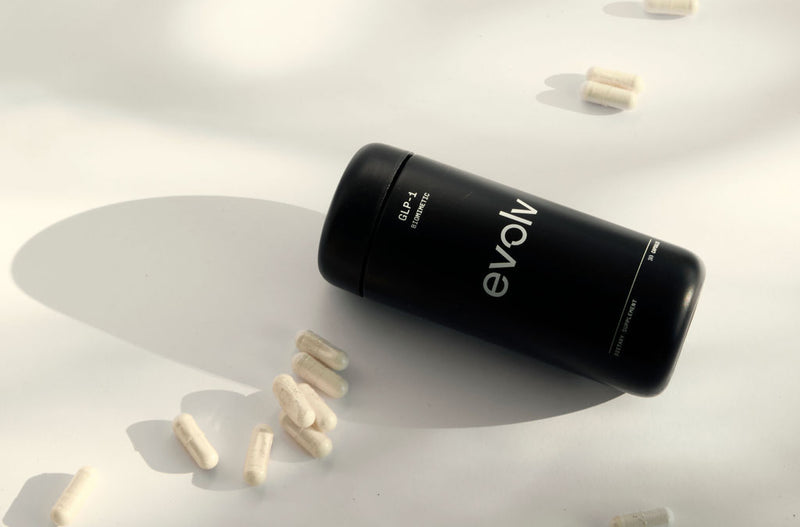
One additional note: rapid weight loss of any kind — including through GLP-1 pathway support or aggressive calorie restriction — can push hair into a resting-phase shedding cycle during the transition period. If you’re using a GLP-1 product alongside Evolv Grow, that’s an intended combination for the audience managing both weight and hair health. Review the postpartum hair loss article for context on hormonal and physiological hair shedding triggers.
Biotin has a legitimate role in hair health — and that role is narrow. For adults who are deficient (rare), biotin supplementation supports normal hair function. For the majority who aren’t deficient, months of biotin supplementation are unlikely to produce meaningful new growth, because there’s no gap in the mechanism to fill.
If you’re looking for a more targeted approach — one that signals follicular activity directly rather than correcting a deficiency you probably don’t have — that’s where the peptide-based tier operates. How long that timeline looks is covered in how long do peptides take to work, with the EV2 clinical interim data providing a reference point.
Frequently Asked Questions
Does biotin actually help hair growth?
Only if you have a documented biotin deficiency. The landmark 2017 review of all reported biotin-for-hair cases in medical literature found that every patient had an underlying deficiency or pathology — biotinidase deficiency, inherited metabolic conditions, or dietary depletion. For healthy adults who aren’t deficient — which describes most of the people buying hair vitamins — no randomized controlled trials demonstrate that biotin supplementation promotes new hair growth.
How much biotin should you take for hair growth?
The daily adequate intake is 30 mcg; 35 mcg if pregnant. For clinical hair concerns with a confirmed biotin deficiency, doctors may recommend up to 3,000 mcg. The 5,000–10,000 mcg doses common in commercial supplements represent 10,000–33,000% of daily requirements. Since biotin is water-soluble and excreted when intake exceeds need, megadosing above sufficiency adds no additional hair benefit — it just increases acne and lab interference risk.
Can you take too much biotin?
No established toxic ceiling has been identified since biotin is water-soluble. But higher doses carry real downsides: biotin can trigger severe acne breakouts in some people by increasing sebum production, and the FDA issued a warning that high-dose biotin interferes with thyroid (TSH), cardiac (troponin), and hormone blood tests, potentially causing dangerous false results. If you have blood work scheduled, stop biotin supplementation at least 2–3 days in advance and tell your physician.
Does biotin help if I’m not deficient?
The research says no, not for hair growth. No RCT has demonstrated that biotin supplementation promotes hair growth in non-deficient healthy adults. In vitro studies confirmed that biotin did not influence normal follicle keratinocyte growth in cells that already had adequate biotin. If your levels are sufficient, supplementing more doesn’t provide a new signal to your follicles — it just asks your kidneys to do more work.
What works better than biotin for hair growth?
It depends on the root cause. For deficiency-driven hair shedding, correcting iron and ferritin is the most clinically evidenced intervention — ferritin below approximately 24–30 ng/mL is consistently associated with increased hair shedding in women. Vitamin D deficiency is also associated with hair loss. For those without a clear deficiency, peptide-based approaches like GHK-Cu signal follicular activity rather than correcting a missing nutrient. Evolv Grow is built around EV2 Peptide — a bioavailable oral form of GHK-Cu — designed to support hair density, follicular activity, and the natural hair growth cycle.* If shedding is sudden or significant, consult a dermatologist to rule out underlying causes first.
*Based on interim findings from a randomized, placebo-controlled 12-week study of EV2 Peptide™. Improvements were observed as early as Day 7. Individual results may vary.
These statements have not been evaluated by the Food and Drug Administration. This product is not intended to diagnose, treat, cure, or prevent any disease.