







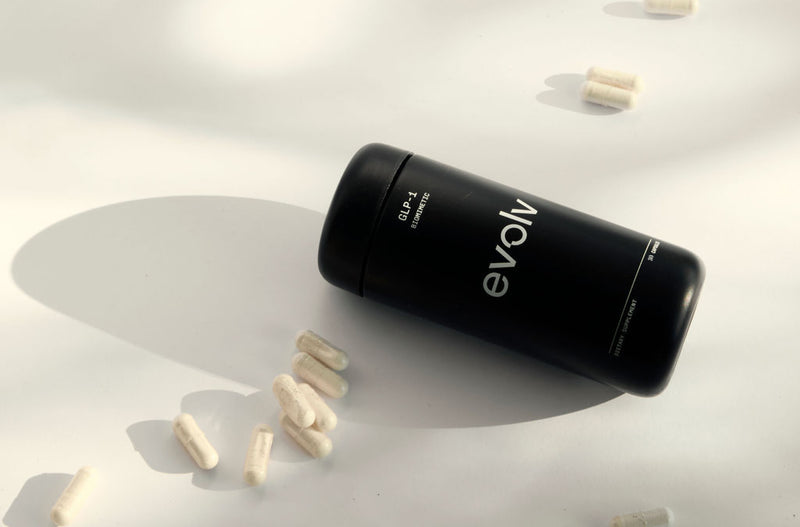


BioDrive (dba Evolv) Response to the FDA Warning Letter
On August 24, 2026, the U.S. Food and Drug Administration issued a warning letter (CMS #731846) to BioDrive, Inc., the company behind Evolv GLP-1. BioDrive submitted its response on September 15, 2026, within the period the letter specified. The full text of that response is published below, unchanged.
September 15, 2026
Jamie M. Bumpas
Compliance Officer
United States Food and Drug Administration
Human Foods Program, Office of Enforcement
5001 Campus Drive
College Park, Maryland 20740-3835
Re: Response to Warning Letter, CMS #731846 (BioDrive, Inc. dba Evolv – Evolv GLP-1 Biomimetic)
Dear Ms. Bumpas:
This letter is in response to the Human Foods Program (HFP)’s warning letter dated August 24, 2026 (CMS #731846), concerning BioDrive Inc. (“BioDrive”)’s Evolv GLP-1 Biomimetic dietary supplement and its dietary ingredient, Saccharomyces cerevisiae S288C EV1-Peptide (“EV1-Peptide”). BioDrive takes HFP’s concerns seriously and appreciates the opportunity to explain why its product is not adulterated under Section 402(f)(1)(B) of the Federal Food, Drug, and Cosmetic Act (the “Act”). For the reasons and supporting information discussed herein, BioDrive’s EV1-Peptide product does not violate the Act.
I. Background
On March 17, 2025, BioDrive proactively filed a New Dietary Ingredient Notification (NDIN) for EV1-Peptide under section 413(a)(2) of the Act (21 U.S.C. § 350b(a)(2)), after having engaged in two pre-submission meetings with the Office of Dietary Supplement Programs (ODSP).
On March 28, 2025, the NDI Team within ODSP responded, and stated that it did not review the submission because it believed that BioDrive did not provide sufficient information to establish that EV1-Peptide met the definition of a “dietary ingredient” within the meaning of 21 U.S.C. § 321(ff)(1) (see Attachment A). In this communication, ODSP stated that BioDrive was “not prohibited from submitting a new pre-market notification” for EV1-Peptide, in which BioDrive could provide further information establishing that EV1-Peptide qualifies as a “dietary ingredient” within the meaning of the Act.
Accordingly, on April 14, 2025, BioDrive filed the second NDIN in which it explained that the EV1-Peptide satisfies the dietary ingredient definition in multiple ways, including because (1) it is a chain of amino acids, which thereby satisfies 21 U.S.C. § 321(ff)(1)(D); (2) it is a dried yeast biomass that expresses a protein as a metabolite, which satisfies 21 U.S.C. § 321(ff)(1)(F); and (3) this metabolite is present in the dried yeast extract present at the end of the manufacturing process, which is intended to supplement the diet, further satisfying the dietary ingredient definition under 21 U.S.C. §§ 321(ff)(1)(E)-(F). On April 23, 2025, ODSP issued a Request for More Information (RFMI) to BioDrive, requesting additional information about the expressed protein, more details about the (b)(4), as well as additional supporting documentation that BioDrive had supplied by reference only in the NDIN submission and for which ODSP requested a narrative description. BioDrive responded to this RFMI on April 27, 2025.1
On May 14, 2025, ODSP issued another RFMI to BioDrive raising questions about the appropriate name for EV1-Peptide and related questions addressing various aspects of BioDrive’s 125-page NDIN (see Attachment B). In this letter, ODSP referenced “clinical studies and adverse event reports (AERs) found outside your notification” that allegedly involved “formulations of similar compounds,” though ODSP did not provide any additional details in this letter (or since) on the specific information or AERs.
In response to ODSP’s May 14, 2025, RFMI letter, on May 19, 2025, BioDrive provided comprehensive answers and data to explain why safety risks associated with GLP-1/GIP prescription drugs were not applicable to the safety profile of BioDrive’s NDI. BioDrive explained how EV1-Peptide is analogous to endogenous GLP-1/GIP in that it supports the natural pathways of endogenous hormones and is distinct from GLP-1/GIP agonist drugs.
On July 3, 2025, ODSP responded to the NDIN. In the July 3 letter (see Attachment C), ODSP stated that “FDA was unable to establish the safety of [BioDrive’s] new dietary ingredient, ‘Saccharomyces cerevisiae S288C EV1-Peptide.’” The primary premise for this conclusion was ODSP’s statement that BioDrive’s NDI “appears to be functionally related” and has “structural similarities” to GIP/GLP-1 drugs and these drugs are associated with certain safety concerns. Because the July 3 letter provided no specific factual and regulatory bases for comparing BioDrive’s NDI (a dietary ingredient for use in a dietary supplement) to a drug or drugs for the purposes of reviewing the NDIN, BioDrive requested a meeting with ODSP to (1) discuss the bases for ODSP’s conclusion and (2) understand why ODSP believed that the detailed answers and data that BioDrive had provided in its May 19, 2025, response to the RFMI were not sufficient.
On July 29, 2025, ODSP held a meeting with BioDrive, but it did not provide any specific factual and regulatory bases for comparing BioDrive’s NDI (dietary supplement) to a drug or drugs for the purposes of reviewing the NDIN. Despite BioDrive’s repeated requests (including a specific written request following the July 29, 2025, meeting), ODSP never provided the clinical studies, adverse event reports, or other extra-record materials it said it relied on, nor any details on how or why it determined that BioDrive’s NDI was a “similar compound” to such drugs, despite BioDrive’s detailed information in its May 19, 2025, submission explaining that the EV1-Peptide is distinct from GLP-1/GIP agonist drugs.
Following the meeting, on July 30, 2025, BioDrive submitted a request to ODSP for that information, but heard nothing from ODSP until August 11, 2025, when ODSP directed BioDrive to file a FOIA request instead of providing the requested information.
On August 14, 2025, BioDrive submitted a letter (see Attachment D) to ODSP providing clarification on ODSP’s apparent misunderstanding regarding the NDI’s safety based on its recommended labeling and included a declaration from a physician. Additionally, on August 15, 2025, BioDrive, through counsel, submitted a FOIA request but eight months after the submission of the request still had not received any records from FDA.
II. ODSP Improperly Converted BioDrive’s NDI Notification Process into a Preapproval Requirement
Section 413 of the Act (21 U.S.C. § 350b) establishes a notification system, not a premarket approval system. A notifier satisfies the statute by submitting, at least 75 days before marketing, the history of use or other evidence of safety that is the basis for its own conclusion that the product will reasonably be expected to be safe (21 U.S.C. § 350b(a)(2); 21 C.F.R. § 190.6(a), (b)(4)). Nothing in Section 413 or its implementing regulation authorizes FDA to condition marketing on the notifier first obtaining an affirmative safety clearance from the agency. Although 21 C.F.R. § 190.6(f) provides that FDA’s failure to respond to a notification “does not constitute a finding by the agency that the new dietary ingredient or the dietary supplement that contains the new dietary ingredient is safe or is not adulterated[,]” that regulatory silence cuts both ways: it also means the agency cannot treat its own non-response as a de facto bar to marketing, and FDA bears the burden of demonstrating that a dietary ingredient is unsafe or adulterated if it disagrees with the notifier’s conclusion. See 21 U.S.C. § 342(f)(1)(B); 21 C.F.R. § 190.6(f); see also Dietary Supplement Health and Education Act of 1994, Pub. L. No. 103-417, § 4, 108 Stat. 4325, 4328 (placing the burden of proof on the government in proceedings to enforce section 402 adulteration standards for dietary supplements).
FDA’s own guidance for industry confirms that the NDIN is the vehicle by which the notifier documents the basis for its own safety conclusion: “The notification must contain the information … which provides the basis on which the manufacturer or distributor of the NDI or dietary supplement (the notifier) has concluded that the dietary supplement containing the NDI will reasonably be expected to be safe.”2 As FDA stated in the preamble to the NDI regulation, “[The FDCA] requires only that the notification provide information which is the basis on which the manufacturer or distributor has concluded that a dietary supplement containing such dietary ingredient will reasonably be expected to be safe when used under the conditions recommended or suggested in the labeling.” 62 Fed. Reg. 49886, 49888 (Sept. 23, 1997) (emphasis added). Treating an NDIN response, or ODSP’s continued silence following one, as a bar to marketing effectively imposes a preapproval standard on dietary supplements, which is inconsistent with the plain meaning of the Act and Congressional intent. Indeed, in enacting DSHEA, Congress expressly stated that “dietary supplements are safe within a broad range of intake, and safety problems with the supplements are relatively rare,” and that the legislation was needed because “the Federal Government should not take any actions to impose unreasonable regulatory barriers limiting or slowing the flow of safe products and accurate information to consumers.” Dietary Supplement Health and Education Act of 1994, Pub. L. No. 103-417, § 2, 108 Stat. 4325, 4325 (1994) (Congressional Findings).
At the July 29, 2025, meeting, ODSP stated that it considered extra-record materials under the National Academy of Sciences 2005 Framework. However, a 20-year-old advisory framework cannot override current federal law on what is required to submit an NDI notification, particularly when FDA itself stated in the preamble to the NDI notification regulation that “[t]he agency . . . in deciding what information needs to be provided, is bound by the standard in the act. It is not free to rewrite the law.” 62 Fed. Reg. 49886, 49888 (Sept. 23, 1997).
In effect, by conditioning continued marketing on safety data that FDA itself refuses to identify or disclose, and by relying on extra-record materials that it reviewed for months without informing BioDrive, this warning letter is being used to articulate a de facto preapproval requirement that is contrary to the statute’s plain meaning and Congressional intent.3
III. BioDrive’s Safety Data Demonstrate That EV1-Peptide Will Reasonably Be Expected to Be Safe
Section 413(a)(2) of the Act (21 U.S.C. § 350b(a)(2)) and its implementing regulation, 21 C.F.R. § 190.6(b)(4), require a notifier to submit the history of use or other evidence of safety, including any citation to published articles, that is the basis for its conclusion that the dietary supplement will reasonably be expected to be safe. In its NDIN, BioDrive submitted (b)(4)
BioDrive also submitted a declaration from Dr. Ben Cocchiaro (see Attachment E), a clinician and Assistant Research Professor in the Department of Community Health and Prevention at the Dornsife School of Public Health at Drexel University. Dr. Cocchiaro’s declaration establishes that: (1) although injectable GLP-1 and GIP/GLP-1 agonist drugs have been associated with increased risk of gallbladder and biliary disease, a similar increase has not been observed in patients taking GLP-1RA oral medications—the route of administration for which BioDrive’s dietary supplement is labeled—and such risks are more frequently seen at higher doses (Cocchiaro Decl. ¶ 14); (2) there are only two reported cases of acute kidney injury in patients taking GLP-1 and GIP/GLP-1 agonist drugs, one of which identified GI symptoms and dehydration, not the drug itself, as the likely mechanism (Cocchiaro Decl. ¶ 19); (3) there are only two reported cases of liver injury associated with these drugs referenced in the package inserts, both involving patients with significant medical comorbidities (Cocchiaro Decl. ¶ 21); and (4) while acute pancreatitis was reported as a serious adverse event in clinical trials of these drugs, meta-analyses of study data did not find that these drugs significantly increased this risk (Cocchiaro Decl. ¶ 20). Critically, the pharmacokinetic data further support Dr. Cocchiaro's conclusions: EV1-Peptide is designed to support the body’s natural endogenous GLP-1/GIP pathways, in contrast to GLP-1RA and GIP/GLP-1RA prescription drugs, which are synthetic agonists engineered for supraphysiological potency and duration. (b)(4) whereas injectable GLP-1RA and GIP/GLP-1RA drugs have 80–90% bioavailability and half-lives of five to seven days. These differences are not marginal; they are orders of magnitude apart and fundamentally distinguish the safety profile of BioDrive’s dietary ingredient from that of the prescription drugs to which FDA has compared it.
BioDrive also supplemented the record with (b)(4)
In sum, the publicly available information and peer-reviewed literature support the professional opinion of Dr. Cocchiaro that the potential adverse events raised by ODSP would not be expected to occur in individuals taking a dietary supplement containing EV1-Peptide under the proposed conditions of use, given its oral delivery, (b)(4)
BioDrive has continued to evaluate the safety of its product, even after it submitted its NDIN. It commissioned (b)(4), an independent research organization, to conduct a 12-week human clinical study, which concluded that the product was well tolerated. Only two adverse events (nausea and nasal congestion) were reported as part of the 12-week study, representing substantially fewer gastrointestinal adverse events than those typically reported with GLP-1 receptor agonists.4 These findings were consistent with the safety data BioDrive had previously submitted to ODSP during the NDIN process, and Dr. Cocchiaro’s professional opinion, further corroborating the favorable safety profile of BioDrive’s dietary supplement.
IV. FDA Failed to Engage on the Substance and Withheld Its Own Evidence
Despite the safety data summarized above, ODSP appears to not have substantively engaged with BioDrive’s evidence. In its July 3, 2025, letter responding to the NDIN, ODSP concluded that it “was unable to establish the safety” of EV1-Peptide, but the primary basis for that conclusion was ODSP’s assertion that BioDrive’s NDI “appears to be functionally related” and has “structural similarities” to GIP/GLP-1 drugs—without addressing the pharmacokinetic data BioDrive had submitted showing that the two are orders of magnitude apart, and that any similarity stems from the EV1-Peptide’s support for the natural endogenous GLP-/GIP pathways in the body. ODSP’s July 3 letter provided no specific factual and regulatory bases for comparing BioDrive’s NDI (a dietary ingredient for use in a dietary supplement) to a drug or drugs. Despite BioDrive’s repeated requests and ODSP’s acceptance for review of the NDI (confirming that the NDI pathway would be appropriate) ODSP never provided the clinical studies, adverse event reports, or other extra-record materials ODSP said it relied on. Additionally, ODSP never provided any details on how or why it determined that BioDrive’s NDI was a “similar compound” to such drugs and how that perceived similarity imputed any adverse events associated with the drugs to EV1-Peptide—despite BioDrive’s detailed explanation as to how the EV1-Peptide is distinct from GLP-1/GIP agonist drugs. Given ODSP’s failure to identify or produce the specific studies or adverse event data underlying its stated concerns, BioDrive made a reasoned judgment based on the totality of the available data—(b)(4) and the professional opinion of a clinician, research professor, and public health professional—and proceeded to market the product.
V. BioDrive Has Acted in Good Faith and Remains Willing to Engage with ODSP
BioDrive remains ready to engage with FDA to obtain agency feedback on the design of any further safety trials the agency believes are warranted and to address any remaining safety concerns. BioDrive would welcome the opportunity to work collaboratively with FDA to identify mutually agreeable study protocols, endpoints, and data submissions that would satisfy the agency’s requirements and facilitate the continued lawful marketing of Evolv GLP-1 Biomimetic.
Moreover, BioDrive is amenable, as it explained in the July 29, 2025 meeting, to work with ODSP on revisions to its labeling to address any specific concerns that FDA has. FDA’s recent interactions with Korglutide demonstrate that ODSP has utilized this approach for other GLP-1-related peptide ingredients, which, similar to EV1-Peptide, FDA also regulates as dietary supplements under the NDIN framework.5
Given that the NDIN framework evaluates safety “under the conditions recommended or suggested in the labeling of the dietary supplement,” labeling plays a key role in the safety assessment under Section 413. (21 U.S.C. § 350b(a)(2); 21 C.F.R. § 190.6(b)(4)). While BioDrive believes that its product currently is appropriately labeled with the appropriate specific conditions of use, BioDrive is prepared to work with FDA to revise the labeling of Evolv GLP-1 Biomimetic as needed to address the agency’s stated concerns—whether through adjusted dosage recommendations, additional excluded populations, supplemental warnings, or other modifications to the conditions of use—consistent with the approach that ODSP accepted in the Korglutide NDIN.
VI. Conclusion
For the foregoing reasons, and given the evidence that BioDrive has amassed supporting the EV1-Peptide, (b)(4), the independent human clinical study, and the Cocchiaro Declaration, BioDrive respectfully submits that Evolv GLP-1 Biomimetic is not adulterated under Section 402(f)(1)(B) of the Act (21 U.S.C. § 342(f)(1)(B)), and that the NDIN BioDrive submitted satisfied the requirements of section 413(a)(2) of the Act (21 U.S.C. § 350b(a)(2)) and 21 C.F.R. § 190.6. BioDrive remains committed to working cooperatively with FDA and, to that end, renews its request for the specific studies, adverse event reports, and other information referenced in the warning letter and in ODSP’s July 3, 2025 letter, so that BioDrive may respond to any specific concerns. BioDrive is also willing to work with FDA on any additional safety trials and any required revised labeling to address any of ODSP’s specific concerns, consistent with the precedent established by the Korglutide NDIN. BioDrive is submitting this response within the 15-working-day period specified in the warning letter and stands ready to provide any additional information FDA may require.
Sincerely,
BioDrive, Inc.
325 Hudson Street, 4th Floor
New York, NY 10013
- Because FDA considered the information BioDrive submitted on April 27, 2025 to be substantive, it reset the NDIN filing date to April 28, 2025.
- FDA, Draft Guidance for Industry: Dietary Supplements: New Dietary Ingredient Notifications and Related Issues, at 10 (April 2024).
- Such a substantive change to the NDI notification framework—effectively converting a notification system into a preapproval regime—would require notice-and-comment rulemaking under the Administrative Procedure Act, 5 U.S.C. § 553.
- (b)(4)
- In November 2025, Caregen Co., Ltd. submitted NDIN #1445 for Korglutide, an oral GLP-1 mimetic peptide designed for weight management and metabolic balance. In December 2025, FDA responded to that notification and asked the sponsor to modify labeling/conditions of use in response to apparent concerns about the ingredient’s safety. See Caregen Co., Ltd, New Dietary Ingredient Notification for Korglutide, available at https://www.regulations.gov/document/FDA-2025-S-0023-0148.