







13 Best Supplements to Lower Blood Sugar Naturally
Authored by
The Evolv Research Team
Blood sugar management isn’t just about glucose on a lab report. It’s about the 3 p.m. energy crash. The carb cravings that spike after a stressful day. The slow creep of fasting glucose from 95 to 105 to 115 over a few years of annual physicals.
By the time blood sugar crosses clinical thresholds, the metabolic dysfunction driving it has been building quietly. And while diet and exercise form the foundation of any blood sugar strategy, specific supplements have clinical evidence for influencing two key markers: fasting plasma glucose (FPG) and HbA1c — the 2-3 month average of blood sugar control.
This article reviews 13 supplements with published clinical data on these markers, ranked by the strength and specificity of their glucose-related evidence. Each entry covers the mechanism, the data, dosing, and what to realistically expect.
Among the newer approaches covered here is GLP-1 pathway support, which works at the incretin signaling layer rather than downstream on glucose uptake. Evolv, a biotech supplement company, developed the first oral GLP-1 biomimetic peptide around this mechanism: the EV1 Peptide, a yeast-derived molecule designed to support both GLP-1 and GIP appetite pathways.
How Blood Sugar Regulation Works
Understanding the supplements below requires a quick look at the system they’re supporting.
When you eat, carbohydrates break down into glucose, which enters the bloodstream. Your pancreas detects the rise in blood glucose and releases insulin — a peptide hormone that signals cells (muscle, fat, liver) to absorb glucose and use it for energy or storage.
Two key hormones orchestrate this response:
- Insulin — the primary glucose-lowering hormone, released by pancreatic beta cells
- GLP-1 — an incretin hormone that amplifies insulin secretion in proportion to the glucose load and slows gastric emptying to reduce post-meal glucose spikes
When this system works efficiently, blood sugar rises modestly after meals and returns to baseline within 1-2 hours. When it doesn’t — because of insulin resistance, beta cell dysfunction, or impaired incretin signaling — glucose stays elevated for longer, and fasting glucose gradually climbs.
For a deeper understanding of how GLP-1 signaling works, that primer covers the biology in detail.
When Supplements May Help
Supplements for blood sugar support occupy a specific niche. They’re most relevant for people who:
- Have fasting glucose in the 100-125 mg/dL range (pre-diabetic territory)
- Are actively managing metabolic health through diet and exercise and want additional support
- Have identified specific nutrient deficiencies (magnesium, chromium) that affect glucose metabolism
- Want to support healthy GLP-1 signaling and incretin function
Supplements are not substitutes for prescribed medications. If your physician has prescribed blood sugar-lowering medication, do not replace it with supplements. These products work alongside — not instead of — medical guidance.
13 Supplements to Lower Blood Sugar
1. GLP-1 Pathway-supporting Biomimetics
Mechanism: GLP-1 is an incretin hormone that drives glucose-dependent insulin secretion — insulin released in proportion to blood glucose, not as a constant drip. It also slows gastric emptying, reducing the rate at which glucose enters the bloodstream after meals. This dual effect supports a healthier post-meal glucose response and more stable blood sugar throughout the day.
This is where the category meaningfully shifts. Most blood sugar supplements work downstream — on glucose uptake or insulin receptor sensitivity. GLP-1 pathway support works at the signaling layer, coordinating insulin release, appetite regulation, and gastric emptying as an integrated system.
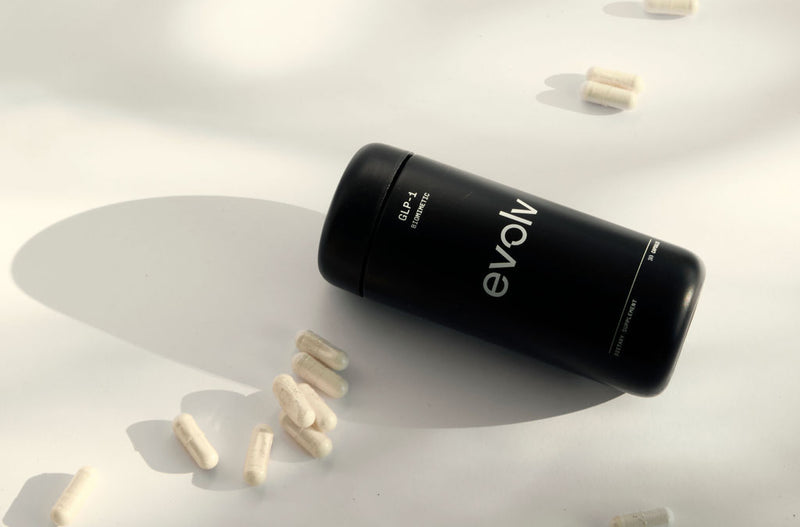
Evolv GLP-1 is a biomimetic dietary supplement built around a proprietary, yeast-derived peptide designed to support both GLP-1 and GIP appetite pathways.
Its active ingredient — the bioengineered, yeast-derived EV1 Peptide — is designed to support the body’s natural GLP-1 signaling. In an 8-week randomized controlled study, participants consumed approximately 750 fewer calories per day and lost up to 12+ lbs — outcomes in the same magnitude range that published prescription GLP-1 trials report at the 8-week timepoint. Evolv GLP-1 is designed for daily oral use with no harsh side effects — in our 8-week clinical study, no participants reported hair or muscle concerns.
As Evolv co-founder Becca McCarthy shared on the Mom Curious podcast: “GLP-1 is a natural hormone and a biological pathway in our own bodies. We own it.”
Realistic expectations: GLP-1 pathway support addresses the signaling coordination between appetite, insulin, and glucose — supporting stable blood sugar through better metabolic signaling, not isolated glucose disposal.
2. Berberine
Mechanism: Berberine activates AMPK (AMP-activated protein kinase), which increases glucose uptake into cells, supports insulin receptor sensitivity, and modulates hepatic glucose output. It also appears to influence gut microbiota composition, which affects systemic glucose metabolism.
Evidence: An umbrella meta-analysis of multiple systematic reviews found berberine reduced fasting plasma glucose by 0.515 mmol/L (approximately 9.3 mg/dL) and HbA1c by 0.57%. These are among the largest effect sizes documented for any single supplement ingredient.
Typical dosing: 500mg, 2-3 times daily with meals (1,000-1,500mg/day total)
Realistic expectations: Effects typically appear within 8-12 weeks. GI side effects (cramping, diarrhea) are common, especially at higher doses. Start low and titrate up. Berberine may interact with medications metabolized by CYP enzymes — consult your physician. Note that berberine’s action on the GLP-1 pathway is indirect and short-lived rather than sustained pathway engagement.
3. Fenugreek
Mechanism: Fenugreek seeds contain galactomannan fiber and the amino acid 4-hydroxyisoleucine. The fiber slows carbohydrate digestion and glucose absorption. 4-hydroxyisoleucine directly stimulates insulin secretion from pancreatic beta cells in a glucose-dependent manner — similar in principle to incretin signaling.
Evidence: A meta-analysis of 19 RCTs found fenugreek supplementation reduced fasting plasma glucose by 20.32 mg/dL and HbA1c by 0.54%. Effects were most pronounced in studies lasting 12+ weeks.
Typical dosing: 5-50g/day of fenugreek seed powder, or 500-1,000mg of standardized extract
Realistic expectations: Fenugreek has a strong evidence base but wide dosing variability across studies. The seed powder form is more consistent with the clinical data than isolated extracts. Common side effects include GI discomfort and a maple syrup-like body odor (from sotolone). Allow 12+ weeks for measurable glucose change.
4. Chromium Picolinate
Mechanism: Chromium enhances insulin receptor tyrosine kinase activity and supports GLUT4 transporter translocation — both of which improve glucose entry into cells in response to insulin. The picolinate form has the best documented absorption profile among chromium supplements.
Evidence: Meta-analysis data shows chromium picolinate reduces fasting plasma glucose by approximately 19 mg/dL and HbA1c by 0.71%. Effects are most significant in people with demonstrated chromium deficiency or elevated baseline glucose.
Typical dosing: 200-1,000mcg/day (200-400mcg is the most studied range)
Realistic expectations: Chromium’s effects are dose-dependent and influenced by baseline chromium status. People with adequate chromium levels may see minimal additional benefit. Allow 8-16 weeks for measurable changes. Generally well tolerated with minimal side effects.
5. Probiotics
Mechanism: The gut microbiome directly influences glucose metabolism. Specific probiotic strains (Lactobacillus, Bifidobacterium) modulate gut-derived GLP-1 secretion, reduce intestinal permeability (which contributes to systemic inflammation and insulin resistance), and produce short-chain fatty acids that improve insulin sensitivity.
Evidence: A meta-analysis of 32 RCTs found probiotic supplementation reduced fasting blood sugar by 13.27 mg/dL and HbA1c by 0.44%. Multi-strain formulations showed stronger effects than single-strain products.
Typical dosing: Multi-strain formulations containing Lactobacillus and Bifidobacterium species, typically 10-50 billion CFU/day
Realistic expectations: Probiotic effects on blood sugar emerge gradually over 8-12 weeks as the microbiome composition shifts. Results depend heavily on strain selection and individual gut health. Not all probiotics are equal — look for formulations with strains specifically studied for metabolic outcomes.
6. Cinnamon (Ceylon)
Mechanism: Cinnamon contains cinnamaldehyde and type-A proanthocyanidins that activate insulin receptors directly, improving cellular glucose uptake. It also slows gastric emptying and inhibits alpha-glucosidase enzymes in the gut, reducing the rate of carbohydrate breakdown and glucose absorption.
Evidence: A meta-analysis of 24 RCTs found cinnamon reduced fasting blood glucose by 10.93 mg/dL. Effects on HbA1c have been variable across studies but generally positive. The consistency of the fasting glucose reduction makes cinnamon one of the better-supported complementary supplements.
Typical dosing: 1-6g/day of Ceylon cinnamon (avoid cassia cinnamon at high doses due to coumarin content)
Realistic expectations: Cinnamon is a moderate-effect supplement best used as part of a broader strategy. Effects on fasting glucose are consistent but modest. Allow 8-12 weeks. Ceylon cinnamon is preferred over cassia for long-term use.
7. Alpha-lipoic Acid (ALA)
Mechanism: ALA activates GLUT4 glucose transporters through an insulin-independent pathway — meaning it can help move glucose into cells even when insulin signaling is impaired. It’s also a potent antioxidant that reduces oxidative stress, which directly damages insulin signaling pathways.
Evidence: At 600mg/day, ALA has been shown to reduce fasting plasma glucose by approximately 9.2 mg/dL. Higher doses (600-1,200mg/day) have shown more pronounced effects. HbA1c reduction of approximately 0.32% has been reported across meta-analyses.
Typical dosing: 300-600mg/day (R-ALA form for potentially better absorption)
Realistic expectations: ALA’s insulin-independent mechanism makes it particularly useful for people with significant insulin resistance. Effects emerge within 8-12 weeks. Generally well tolerated, though GI effects are possible. The antioxidant benefits compound over time.
8. Magnesium
Mechanism: Magnesium is a cofactor for insulin receptor tyrosine kinase and dozens of enzymes in glucose metabolism. Deficiency — estimated in up to 50% of the U.S. population — directly impairs insulin signaling and glucose disposal. Restoring adequate magnesium levels can improve both insulin sensitivity and glucose handling.
Evidence: A meta-analysis of 24 RCTs found magnesium supplementation improved HbA1c in people with type 2 diabetes. Optimal effects were observed at approximately 250mg/day of elemental magnesium. Effects were strongest in people with documented magnesium deficiency.
Typical dosing: 200-400mg/day elemental magnesium (glycinate or citrate for absorption)
Realistic expectations: If you’re magnesium deficient, correcting the deficiency can meaningfully improve glucose handling within 12-16 weeks. If you’re already replete, additional magnesium likely won’t move blood sugar markers. A serum or RBC magnesium test helps determine whether this is the right starting point for you.
9. Myo-inositol
Mechanism: Myo-inositol is an intracellular second messenger in the insulin signaling cascade. It helps relay the signal from the insulin receptor to downstream glucose transporters. Supplementation can improve the efficiency of this intracellular communication, supporting glucose disposal.
Evidence: While myo-inositol is best known for HOMA-IR improvement (covered in insulin resistance research), it also shows effects on glucose handling. A meta-analysis reported a 2-hour OGTT (oral glucose tolerance test) glucose reduction of 0.69 mmol/L — indicating improved glucose clearance after a glucose challenge.
Typical dosing: 2,000-4,000mg/day, divided into two doses
Realistic expectations: Myo-inositol is particularly well-studied in PCOS populations but has broader applicability for glucose handling. Effects develop over 12-24 weeks. Very well tolerated even at higher doses.
10. Omega-3 Fatty Acids (EPA/DHA)
Mechanism: Omega-3s reduce systemic inflammation — specifically the chronic low-grade inflammation that impairs insulin signaling and contributes to metabolic dysfunction. EPA and DHA also modulate cell membrane composition, which can influence insulin receptor function and glucose transporter activity.
Evidence: A meta-analysis of 33 trial comparisons (Zhang et al., 2022, Clinical Nutrition) found omega-3 supplementation reduced HbA1c by 0.19%. The effect is modest but consistent, and the anti-inflammatory mechanism provides broad metabolic support beyond glucose control alone.
Typical dosing: 2-4g/day combined EPA/DHA from fish oil or algae-derived sources
Realistic expectations: Omega-3s are not a targeted glucose-lowering supplement — they support the metabolic environment. The anti-inflammatory benefits compound over 12+ weeks and are most relevant for people with elevated inflammatory markers. Think of this as a foundation layer, not a standalone intervention.
11. Ginseng (Panax Ginseng and American Ginseng)
Mechanism: Ginseng contains ginsenosides, bioactive compounds that appear to improve insulin sensitivity by enhancing GLUT4 translocation and supporting pancreatic beta-cell function. Both Panax ginseng (Asian) and Panax quinquefolius (American ginseng) have been studied, with slightly different ginsenoside profiles.
Evidence: A meta-analysis of RCTs found ginseng supplementation significantly reduced fasting blood glucose and HOMA-IR, with American ginseng showing particularly consistent effects on post-meal glucose. Some studies report FPG reductions of 8-15 mg/dL over 8-12 weeks.
Typical dosing: 1-3g/day of standardized ginseng extract (look for ginsenoside content on the label)
Realistic expectations: Effects are modest and most apparent in people with mildly elevated blood sugar. Allow 8-12 weeks. Ginseng may interact with blood thinners and some diabetes medications. Consult your physician before use.
12. Aloe Vera
Mechanism: Aloe vera contains compounds (acemannan, aloe-emodin) that appear to enhance insulin secretion from pancreatic beta cells and improve cellular glucose uptake. It also has anti-inflammatory properties that may support the metabolic environment underlying blood sugar regulation.
Evidence: A meta-analysis found aloe vera supplementation reduced fasting blood glucose by approximately 30 mg/dL and HbA1c by 0.41% in people with type 2 diabetes or prediabetes. Effects were most consistent in studies using inner leaf gel or standardized aloe extracts rather than whole leaf preparations.
Typical dosing: 300-500mg/day of standardized aloe vera extract or 1-2 tablespoons of inner leaf gel
Realistic expectations: The glucose effect is meaningful in clinical studies, though quality varies significantly between aloe products. Choose standardized extracts with verified active compound content. Allow 8-12 weeks. GI side effects (diarrhea, cramping) can occur with whole-leaf aloe products — inner leaf gel is better tolerated.
13. Vitamin D
Mechanism: Vitamin D receptors are present on pancreatic beta cells, and vitamin D plays a role in insulin secretion and insulin sensitivity. Vitamin D deficiency — which affects an estimated 42% of U.S. adults — is independently associated with higher risk of insulin resistance and type 2 diabetes.
Evidence: Meta-analyses show vitamin D supplementation can improve fasting glucose and HOMA-IR, with the strongest effects in people who are vitamin D deficient at baseline (serum 25(OH)D below 20 ng/mL). For people with sufficient vitamin D levels, additional supplementation shows minimal glycemic benefit.
Typical dosing: 1,000-4,000 IU/day (dose depends on baseline serum levels — a blood test is recommended before starting)
Realistic expectations: Vitamin D’s blood sugar benefits are dose-dependent on deficiency status. If you’re deficient, correcting the deficiency can meaningfully improve insulin sensitivity within 12-16 weeks. If your levels are already adequate, vitamin D supplementation is unlikely to further reduce blood sugar. Get tested first.
How to Approach Blood Sugar Supplementation
A few principles that apply across all 13 options:
Test first. Get a baseline fasting glucose, fasting insulin, and HbA1c before starting any supplement. Without a baseline, you can’t measure change. Retest at 12 weeks.
Start with one. Multi-supplement stacks are tempting but make it impossible to identify what’s working. Choose the supplement that best matches your situation (deficiency correction, signaling support, or glucose disposal) and assess your response before adding more.
Don’t skip the foundation. No supplement compensates for a high-glycemic diet, sedentary lifestyle, or poor sleep. These are multipliers, not replacements. For a practical guide to metabolic health through diet, that article covers the lifestyle foundation alongside supplementation.
Consult your physician. Several of these supplements (berberine, chromium, ALA, fenugreek) can interact with blood sugar-lowering medications and increase hypoglycemia risk. Always discuss supplementation with your doctor if you take diabetes medications.
For a broader view of how appetite regulation, GLP-1 signaling, and metabolic health interconnect, see how GLP-1 supplements work to naturally control appetite and explore the most effective weight loss supplements for a different lens on the same metabolic pathways.
Frequently Asked Questions
What supplements lower blood sugar the most?
Based on meta-analyses of randomized controlled trials, berberine shows large fasting glucose effects (FPG -0.515 mmol/L, HbA1c -0.57%) — though its action on the GLP-1 pathway is indirect and short-lived. Fenugreek shows strong results (FPG -20.32 mg/dL, HbA1c -0.54%). Chromium picolinate reduces FPG by approximately 19 mg/dL and HbA1c by 0.71%. GLP-1 pathway support through biomimetics addresses the incretin signaling layer that coordinates glucose-dependent insulin release. Explore Evolv GLP-1 for more.
Can supplements lower blood sugar enough to avoid medication?
Supplements are not substitutes for prescribed medications. Some people with mildly elevated blood sugar may find that lifestyle changes plus targeted supplementation are sufficient — but this should always be determined with your physician based on your specific lab values, medical history, and risk factors. Never discontinue or avoid prescribed medication based on supplement use alone.
How long does it take for supplements to lower blood sugar?
Most clinical studies measuring fasting glucose and HbA1c effects run 8-24 weeks. Berberine studies typically show results at 8-12 weeks. Probiotics show fasting glucose change at 8 weeks. HbA1c reflects a 2-3 month average, so any supplement targeting HbA1c requires at least 12 weeks for a meaningful reading. Evolv GLP-1 is designed to begin engaging GLP-1 and GIP pathways within approximately 4 hours of intake, with body composition shifts emerging as daily use becomes consistent. Consistency and timing (with meals, as directed) are critical.
Are blood sugar supplements safe to take with diabetes medication?
Some blood sugar-supporting supplements can interact with diabetes medications — particularly those that lower blood glucose (metformin, insulin, sulfonylureas). Combining supplements with medication may increase the risk of hypoglycemia. Always consult your physician before adding supplements to a diabetes medication regimen. Learn more about our science and the GLP-1 pathway approach.
What is the difference between fasting glucose and HbA1c?
Fasting plasma glucose (FPG) measures your blood sugar at a single point in time — typically after an 8-12 hour fast. HbA1c measures the percentage of hemoglobin in your blood that has glucose attached, reflecting your average blood sugar over the past 2-3 months. Both markers matter: FPG shows your daily baseline, while HbA1c shows your long-term trend.
Sources
- Liu D, Zhao H, Zhang Y et al. Berberine and FPG. Frontiers in Pharmacology. 2025. PMID: 40740996.
- Nazari A et al. Berberine umbrella meta-analysis. Clinical Therapeutics. 2024. PMID: 38016844.
- Vajdi M, Noshadi N, Bonyadian A et al. “Therapeutic effect of fenugreek supplementation on type 2 diabetes mellitus: a systematic review and meta-analysis of clinical trials.” Heliyon. 2024. PMID: 39286181.
- Asbaghi O et al. “Effects of chromium supplementation on glycemic control in patients with type 2 diabetes.” Pharmacological Research. 2020. PMID: 32730903.
- Hejazi N, Ghalandari H, Rahmanian R et al. “Effects of probiotics supplementation on glycemic profile in adults with type 2 diabetes mellitus.” Clinical Nutrition ESPEN. 2024. DOI: 10.1016/j.clnesp.2024.09.014.
- Jibril AT, Jayedi A, Shab-Bidar S. “Efficacy and safety of oral alpha-lipoic acid supplementation for type 2 diabetes management.” Endocrine Connections. 2022. PMID: 36006850.
- Xu L, Li X, Wang X, Xu M. “Effects of magnesium supplementation on improving hyperglycemia in type 2 diabetes.” Frontiers in Nutrition. 2022. DOI: 10.3389/fnut.2022.1020327.
- Miñambres I, Cuixart G, Gonçalves A, Corcoy R. “Effects of inositol on glucose homeostasis.” Clinical Nutrition. 2019. PMID: 29980312.
- Zhang C et al. “Marine omega-3 and glycemic control in type 2 diabetes.” Clinical Nutrition. 2022. PMID: 34999331.
- Evolv GLP-1 8-week randomized controlled study: evolvlife.com/blogs/bts-behind-the-science/clinically-studied-the-research-behind-evolv-glp-1.
These statements have not been evaluated by the Food and Drug Administration. This product is not intended to diagnose, treat, cure, or prevent any disease.