







8 Best Supplements for Insulin Resistance: Improve Sensitivity Naturally
Authored by
The Evolv Research Team
Insulin resistance doesn’t announce itself. It develops gradually — years before blood sugar levels cross clinical thresholds. Your cells become progressively less responsive to insulin’s signal, forcing your pancreas to produce more and more insulin to maintain normal glucose levels. By the time fasting glucose rises, the underlying resistance may have been building for a decade.
An estimated 40% of U.S. adults aged 18-44 have some degree of insulin resistance, and that number rises to over 60% in adults over 45. It’s one of the most prevalent metabolic disruptions in the developed world — and one of the most responsive to intervention.
Diet and exercise remain the foundation. But specific supplements have demonstrated measurable effects on insulin sensitivity markers — particularly HOMA-IR (Homeostatic Model Assessment of Insulin Resistance), the standard clinical index for tracking insulin resistance over time.
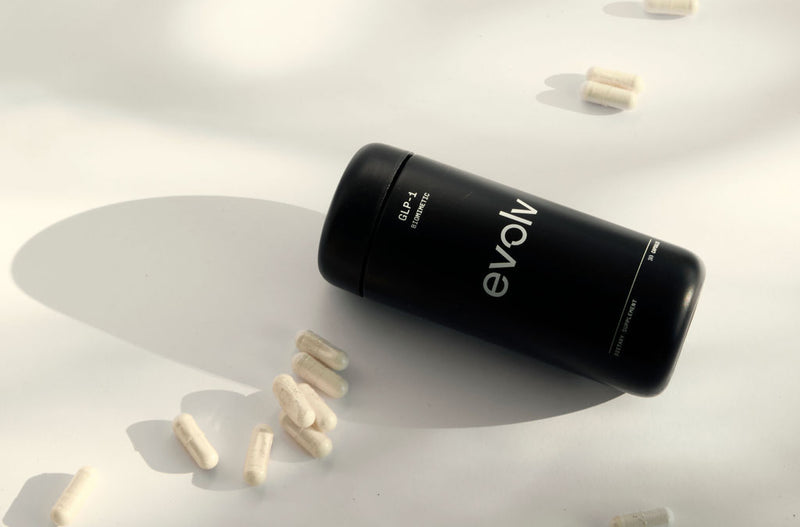
One category gaining attention is GLP-1 pathway support, which targets the incretin signaling layer that connects appetite regulation directly to insulin release. Evolv, a biotech supplement company, built the first oral GLP-1 biomimetic peptide around this connection: the EV1 Peptide, a yeast-derived molecule designed to support both GLP-1 and GIP appetite pathways.
This article covers 8 supplements with clinical evidence for supporting insulin sensitivity, ranked by mechanism strength and evidence quality, with biomimetics first.
What is Insulin Resistance?
Insulin is a peptide hormone produced by your pancreas in response to blood glucose. Its primary job is signaling cells — muscle, fat, and liver cells — to absorb glucose from the bloodstream and use it for energy or storage.
Insulin resistance occurs when those cells stop responding efficiently to insulin’s signal. Glucose stays elevated in the blood, and the pancreas compensates by producing more insulin. This creates a cycle: higher insulin → cellular adaptation → even less sensitivity → even higher insulin.
The clinical marker for tracking this cycle is HOMA-IR, calculated from fasting glucose and fasting insulin levels. A HOMA-IR below 1.0 is generally considered healthy. Above 2.0 suggests meaningful insulin resistance.
The supplements below target different points in this cycle — from receptor sensitivity to glucose transporter activation to the incretin signaling that links appetite regulation to insulin release.
8 Supplements for Insulin Resistance
1. GLP-1 Pathway-supporting Biomimetics
Mechanism: GLP-1 is an incretin hormone — it stimulates glucose-dependent insulin secretion from the pancreas. This means insulin is released in proportion to blood glucose levels, not as a blanket response. GLP-1 signaling also slows gastric emptying, reducing the rate of glucose entry into the bloodstream after meals and supporting a healthier post-meal glucose response.
The incretin effect is directly relevant to insulin resistance because it supports the pancreas’s ability to secrete insulin in the right amount at the right time — matching insulin output to glucose load rather than overproducing insulin continuously.
This is where the category meaningfully shifts. Unlike supplements that work downstream on cellular glucose uptake, GLP-1 pathway support addresses the signaling layer that coordinates insulin release, appetite regulation, and glucose handling simultaneously.
Evolv GLP-1 is a biomimetic dietary supplement built around a proprietary, yeast-derived peptide designed to support both GLP-1 and GIP appetite pathways.
Its active ingredient — the bioengineered, yeast-derived EV1 Peptide — is designed to support the body’s natural GLP-1 signaling. In an 8-week randomized controlled study, participants consumed approximately 750 fewer calories per day and lost up to 12+ lbs — outcomes in the same magnitude range that published prescription GLP-1 trials report at the 8-week timepoint. Evolv GLP-1 is designed for daily oral use with no harsh side effects — in our 8-week clinical study, no participants reported hair or muscle concerns.
As Evolv co-founder Becca McCarthy shared on the Mom Curious podcast: “The biggest impact beyond the weight loss for me was that ability to sustain my high performance throughout the whole day. I am somebody who always hit that 3:00 wall. GLP-1 changed that for me.”
Realistic expectations: GLP-1 pathway support addresses the metabolic signaling layer that connects appetite, insulin, and glucose handling. Results vary individually — read more about why Evolv works faster for some.
2. Berberine
Mechanism: Berberine activates AMP-activated protein kinase (AMPK), an enzyme that functions as a cellular energy sensor. AMPK activation increases glucose uptake into cells, supports insulin receptor sensitivity, and supports healthy lipid metabolism. It also appears to modulate gut microbiota composition, which influences systemic metabolic function.
Evidence: Clinical trials have shown berberine can reduce HOMA-IR by up to 44.7% in individual studies (Zhang et al., 2008, Metabolism). Multiple meta-analyses support its effect on insulin sensitivity, though head-to-head data versus prescription medications remains limited.
Typical dosing: 500mg, 2-3 times daily with meals (total 1,000-1,500mg/day)
Realistic expectations: Effects on HOMA-IR typically appear within 8-12 weeks of consistent use. GI side effects (diarrhea, cramping) are common at higher doses. Start at 500mg/day and increase gradually. Berberine acts indirectly on the GLP-1 pathway through AMPK and the microbiome — effects on GLP-1 itself are short-lived and surface-level rather than sustained pathway engagement.
3. Myo-inositol
Mechanism: Myo-inositol functions as a second messenger in the insulin signaling cascade — it helps relay insulin’s signal from the receptor to the cell’s internal machinery. When cells are insulin resistant, the inositol signaling step is often impaired. Supplementing myo-inositol can help restore this intracellular communication.
Evidence: A meta-analysis of 20 RCTs found myo-inositol supplementation reduced HOMA-IR by an average of 1.21 points — clinically meaningful for moving someone from the insulin-resistant range toward normal. The strongest evidence comes from studies in women with polycystic ovary syndrome (PCOS), where insulin resistance is a central driver.
Typical dosing: 2,000-4,000mg/day, often divided into two doses
Realistic expectations: HOMA-IR improvements typically emerge at 12-24 weeks. Myo-inositol is generally very well tolerated, even at higher doses. For PCOS-related insulin resistance, the evidence is particularly strong.
4. Magnesium
Mechanism: Magnesium is a cofactor for over 300 enzymatic reactions, including the insulin receptor tyrosine kinase — the enzyme that initiates insulin signaling at the cellular level. Magnesium deficiency impairs this receptor function and is independently associated with higher insulin resistance. An estimated 50% of the U.S. population consumes less magnesium than the recommended daily intake.
Evidence: A meta-analysis of 24 RCTs showed that magnesium supplementation improved HOMA-IR, with optimal effects observed at approximately 250mg/day of elemental magnesium. Effects were most pronounced in people with existing magnesium deficiency.
Typical dosing: 200-400mg/day elemental magnesium (glycinate or citrate forms for better absorption)
Realistic expectations: Magnesium’s effect on insulin sensitivity depends heavily on baseline status. If you’re deficient, supplementation can produce meaningful HOMA-IR improvement within 12-16 weeks. If you’re already replete, additional magnesium may not further improve sensitivity. A serum magnesium test can help determine your starting point.
5. Chromium Picolinate
Mechanism: Chromium amplifies insulin receptor tyrosine kinase activity, enhancing the receptor’s response to insulin binding. It also appears to increase the number of insulin receptors on cell surfaces and support GLUT4 transporter translocation — the mechanism by which glucose enters cells.
Evidence: A meta-analysis found chromium picolinate supplementation reduced fasting plasma glucose by approximately 19 mg/dL. Some studies report improvements in HOMA-IR, though the magnitude varies. The picolinate form appears to have the best absorption profile among chromium supplements.
Typical dosing: 200-1,000mcg/day (200-400mcg is the most common effective range)
Realistic expectations: Chromium’s effects are generally modest and most apparent in people with demonstrated chromium deficiency or higher baseline glucose levels. Expect 8-16 weeks for measurable effects. This is best considered a supporting supplement rather than a primary intervention.
6. Alpha-lipoic Acid (ALA)
Mechanism: ALA is unique — it activates GLUT4 glucose transporters independently of insulin. This means it can help glucose enter cells even when the insulin signaling pathway is impaired. ALA is also a potent antioxidant that reduces oxidative stress, which is both a cause and consequence of insulin resistance.
Evidence: A dose-response meta-analysis (Jibril et al., 2022, Endocrine Connections) found ALA supplementation can reduce HbA1c by approximately 0.32%, with peak effects observed around 300mg/day. ALA also appears to support nerve function, which is relevant for people managing peripheral effects of blood sugar dysregulation.
Typical dosing: 300-600mg/day (R-ALA form may have better bioavailability)
Realistic expectations: ALA effects on insulin sensitivity markers typically appear within 8-12 weeks. It’s generally well tolerated but can cause mild GI effects in some people. The insulin-independent glucose uptake mechanism makes it a useful complement to other approaches.
7. Cinnamon (Ceylon)
Mechanism: Cinnamon contains bioactive compounds (cinnamaldehyde, type-A proanthocyanidins) that appear to activate insulin receptors directly — enhancing their sensitivity to insulin binding. Research also suggests cinnamon can slow gastric emptying and reduce the rate of carbohydrate digestion, blunting post-meal glucose spikes.
Evidence: A meta-analysis of 24 RCTs found cinnamon supplementation reduced fasting blood glucose by approximately 10.93 mg/dL. Effects on HOMA-IR and insulin levels have been mixed but generally positive, particularly in populations with elevated baseline glucose.
Typical dosing: 1-6g/day of Ceylon cinnamon (cassia cinnamon contains coumarin, which can be problematic at high doses)
Realistic expectations: Cinnamon’s effects are modest but consistent across studies. It works best as a complementary support alongside diet and other interventions rather than a standalone insulin resistance strategy. Expect 8-12 weeks for measurable effects.
8. Omega-3 Fatty Acids (EPA/DHA)
Mechanism: Omega-3s reduce systemic inflammation — a key driver of insulin resistance. Chronic low-grade inflammation impairs insulin signaling at the cellular level. EPA and DHA also modulate cell membrane fluidity, which can influence insulin receptor function and glucose transporter activity.
Evidence: A meta-analysis of 33 trial comparisons (Zhang et al., 2022, Clinical Nutrition) found omega-3 supplementation reduced HbA1c by approximately 0.19%. While the direct effect on HOMA-IR is modest, the anti-inflammatory mechanism provides systemic metabolic support that underlies insulin sensitivity.
Typical dosing: 2-4g/day combined EPA/DHA
Realistic expectations: Omega-3s are not a targeted insulin resistance intervention — they support the metabolic environment in which insulin signaling occurs. The anti-inflammatory effect compounds over 12+ weeks and is most meaningful for people with elevated inflammatory markers. This is a foundation-layer supplement, not a standalone solution.
How These Supplements Complement Each Other
These 8 supplements target different points in the insulin resistance pathway:
- Signaling layer: GLP-1 pathway support (incretin-mediated insulin secretion)
- Receptor layer: Magnesium, chromium, cinnamon (insulin receptor function)
- Intracellular layer: Myo-inositol (second messenger signaling), ALA (GLUT4 activation)
- Metabolic regulation: Berberine (AMPK activation, gut microbiome)
- Systemic environment: Omega-3s (anti-inflammatory foundation)
Some combinations may be complementary — supporting different mechanisms simultaneously. However, stacking multiple supplements increases cost and complexity. Start with the approach that best matches your situation, track your response with HOMA-IR testing, and consult your physician before combining, especially if you take blood sugar-lowering medications.
For a broader look at metabolic health beyond insulin resistance, see best supplements to support metabolic health. For understanding how GLP-1 supports appetite regulation, that guide covers the signaling mechanism in more detail.
Frequently Asked Questions
What supplements help with insulin resistance?
Several supplements have clinical evidence for supporting insulin sensitivity, measured by HOMA-IR or related markers. Berberine has shown HOMA-IR improvements of up to 44.7% in individual studies, though its action on the GLP-1 pathway is short-lived and indirect. Myo-inositol reduced HOMA-IR by 1.21 points across 20 RCTs. Magnesium, chromium picolinate, alpha-lipoic acid, cinnamon, and omega-3s all have supporting evidence. GLP-1 pathway-supporting biomimetics support insulin sensitivity through the incretin pathway. Explore Evolv GLP-1 for more.
Can supplements replace metformin for insulin resistance?
Supplements are not replacements for prescribed medications. Some supplements have shown effects on glucose markers in studies, but they are not FDA-approved for any medical condition. If you’re taking metformin or any diabetes medication, consult your physician before adding supplements — and never discontinue prescribed medication without medical guidance.
How long does it take for supplements to improve insulin sensitivity?
Most clinical studies showing HOMA-IR improvement run 8-16 weeks. Berberine studies typically show results at 8-12 weeks. Magnesium studies show effects at 12-16 weeks. Myo-inositol studies often measure at 12-24 weeks. Evolv GLP-1 works on a different timeline — it begins engaging GLP-1 and GIP pathways in approximately 4 hours of the first dose, with measurable body composition changes typically appearing as daily use becomes consistent. Consistency matters more than speed — sustainable improvement in insulin sensitivity requires sustained supplementation alongside diet and exercise.
What is HOMA-IR and why does it matter?
HOMA-IR (Homeostatic Model Assessment of Insulin Resistance) is a calculation using fasting insulin and fasting glucose levels to estimate insulin resistance. A normal HOMA-IR is typically below 1.0, with values above 2.0 suggesting significant insulin resistance. It’s the most widely used clinical marker for tracking changes in insulin sensitivity over time. Learn more about related metabolic markers at our science page.
Should you take multiple insulin resistance supplements together?
Some supplements work through different mechanisms and may complement each other — for example, magnesium (cofactor support) alongside berberine (AMPK activation). However, stacking multiple supplements increases complexity and cost without guaranteed additive benefit. Start with one evidence-backed supplement, track your response, and consult your physician before adding others — especially if you take blood sugar-lowering medications.
Sources
- Zhang Y et al. “Treatment of Type 2 Diabetes and Dyslipidemia with the Natural Plant Alkaloid Berberine.” Metabolism. 2008. PMID: 18473197.
- Miñambres I, Cuixart G, Gonçalves A, Corcoy R. “Effects of inositol on glucose homeostasis: systematic review and meta-analysis of randomized controlled trials.” Clinical Nutrition. 2019. PMID: 29980312.
- Xu L, Li X, Wang X, Xu M. “Effects of magnesium supplementation on improving hyperglycemia, hypercholesterolemia, and hypertension in type 2 diabetes: a pooled analysis of 24 randomized controlled trials.” Frontiers in Nutrition. 2022. DOI: 10.3389/fnut.2022.1020327.
- Asbaghi O et al. “Effects of chromium supplementation on glycemic control in patients with type 2 diabetes: a systematic review and meta-analysis of randomized controlled trials.” Pharmacological Research. 2020. PMID: 32730903.
- Jibril AT, Jayedi A, Shab-Bidar S. “Efficacy and safety of oral alpha-lipoic acid supplementation for type 2 diabetes management: a systematic review and dose-response meta-analysis.” Endocrine Connections. 2022. PMID: 36006850.
- Zhang C et al. “Marine omega-3 and glycemic control in type 2 diabetes.” Clinical Nutrition. 2022. PMID: 34999331.
- Evolv GLP-1 8-week randomized controlled study: evolvlife.com/blogs/bts-behind-the-science/clinically-studied-the-research-behind-evolv-glp-1.
These statements have not been evaluated by the Food and Drug Administration. This product is not intended to diagnose, treat, cure, or prevent any disease.