







Hormone Balance and Weight Loss: How to Balance Hormones to Shed Pounds
Authored by
The Evolv Research Team
You’re doing everything right. Eating less. Moving more. The scale won’t budge.
If your doctor keeps telling you to “just eat less and move more,” you’re not crazy — and you’re not alone. By midlife, most women say their hormones are the reason their weight stopped responding to the basics. They’re not wrong.
Every guide to hormone balance and weight loss walks you through the same five or six hormones: cortisol, insulin, leptin, ghrelin, estrogen, thyroid. They’re not wrong about those, either. But they almost always miss one. The hormone your body produces every time you eat. The hormone that quiets food noise. The one Ozempic mimics from the outside, but that your own biology produces first. GLP-1.
As Evolv co-founder Becca McCarthy shared on the Mom Curious podcast: “GLP-1 is a natural hormone and a biological pathway in our own bodies. We own it.” It’s not just an injectable drug. It’s a hormone your body makes on its own, and it’s the missing piece in most hormone-balance conversations.
That reframing matters because supporting GLP-1 — the hormone, not the drug — used to mean an injectable prescription. That’s no longer the only option.
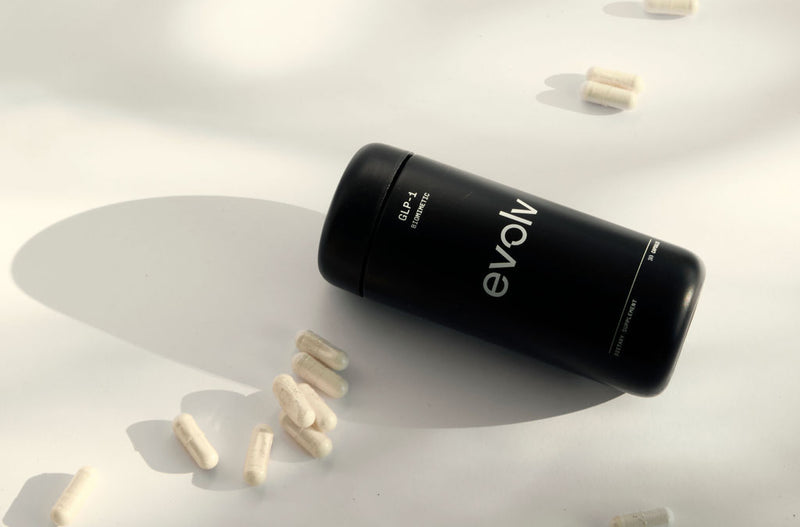
Evolv GLP-1 is a natural biomimetic dietary supplement built around a proprietary yeast-derived peptide designed to support GLP-1 and GIP appetite pathways.
Its active ingredient — the bioengineered, yeast-derived EV1 Peptide — is the first of its kind to deliver clinical-study results in a daily oral tablet. Across Evolv’s randomized controlled study — with results read out at 8 weeks — participants lost up to 12+ lbs and consumed approximately 750 fewer calories per day, with no participant-reported hair or muscle concerns.
This guide walks through the six hormones that actually shape weight loss — including the one nobody else is talking about — and shows you how to support each without wrecking the rest.
Why Hormones Drive Weight Loss (and Why Calorie Math Alone Doesn’t Work)
The “calories in, calories out” model is technically true at the thermodynamic level. But it misses how hormones shape both sides of that equation — what you crave, how full you feel, how your body decides whether to store energy as fat or burn it for fuel.
Hormones are chemical messengers. They regulate the systems that determine appetite (do you feel hungry?), satiety (do you feel full?), insulin sensitivity (do you store fat or use it?), and metabolic rate (how fast does your body burn through what you eat?). When hormonal signaling drifts from its normal patterns — usually quietly, over years — the standard advice stops working.
That’s why two people on identical diets get different results. That’s why exercise that worked at 30 stops working at 45. And that’s why the answer isn’t “try harder.” It’s understanding which hormone is shaping which lever, and supporting the system as a whole.
Cortisol: The Stress Hormone That Drives Belly Fat
If your weight has shifted to your midsection — even though your diet hasn’t changed — cortisol is usually the first suspect.
Cortisol is your body’s primary stress hormone. It’s supposed to spike when you face a threat, then come down once the threat passes. The problem with modern life is that the “threats” — deadlines, inbox pings, financial stress, poor sleep — don’t switch off. Chronically elevated cortisol signals your body to store fat preferentially around the organs (visceral fat), the kind that produces “cortisol gut,” “stress belly,” or what perimenopausal women often call “meno belly.”
Cortisol also drives cravings. When it’s elevated, you don’t want broccoli — you want carbs, sugar, and quick energy. That’s not a willpower problem. It’s a hormonal one.
The other tell-tale sign? Waking up around 3 AM with a racing mind. Cortisol naturally rises in the early morning hours; when it spikes too high, sleep breaks before you’re rested.
What helps cortisol:
-
Sleep 7–9 hours, consistent bedtime and wake time
-
Daily stress regulation (walks outside, breathwork, strength training — not cardio that further spikes cortisol)
-
Magnesium glycinate before bed (well-tolerated, supports relaxation and sleep onset)
-
Adaptogens like ashwagandha for sustained stress patterns
Lifestyle is the foundation here. Supplements help, but they won’t outwork a chronically dysregulated sleep–stress cycle.
Insulin and Blood Sugar: The Storage Hormone
Insulin’s job is to move glucose from your blood into your cells, where it’s either used for energy or stored as fat. When insulin works well, blood sugar stays stable, and you have steady energy. When it doesn’t — usually because cells have stopped responding efficiently — your body keeps producing more insulin to compensate, which drives fat storage and makes it harder to access stored fat for fuel.
This pattern is especially common in women with PCOS and in perimenopause, when shifting estrogen affects how cells respond to insulin. The visible signs: stubborn weight that won’t move, sugar and carb cravings that feel relentless, post-meal energy crashes, and weight that concentrates around the midsection.
The lever that works for blood sugar is post-meal glucose response — keeping the spike after a meal as gentle as possible.
What helps blood sugar patterns:
-
Front-load protein: 30 g at your first meal sets the tone for the day
-
Eat fiber-rich vegetables before refined carbs (fiber first, starch second)
-
Walk for 10–15 minutes after meals — this alone can blunt the glucose spike
-
Inositol (2–4 g daily) has solid evidence in PCOS-related blood sugar patterns
If your blood sugar is consistently bouncing high and low, work with a doctor to test fasting insulin and HbA1c rather than assuming you can fix it with willpower.
Leptin, Ghrelin, and GLP-1: The Appetite Hormones
Here’s where most hormone-balance articles stop short.
Leptin and ghrelin are the two appetite hormones every competitor covers. Leptin is the long-term satiety signal — produced by your fat cells, it tells your brain “you have enough energy stored, you can stop eating.” Ghrelin is the hunger trigger; it spikes before meals and pushes you to eat. The two are supposed to balance.
But there’s a third hormone in this system, and it’s far more powerful than either of them: GLP-1.
GLP-1 is what your body produces every time you eat. It’s not a drug. It’s a hormone — one of the body’s most direct appetite regulators. As Becca McCarthy explained on the Mom Curious podcast: “When you eat, your body produces the GLP-1 hormone. That hormone meets its receptors, and those receptors signal to various organs in your body — your pancreas, your stomach, your brain, your liver — and tell them what to do because you’ve now consumed food and you’re full.”
That signal is what tells your brain to stop. It slows digestion so you feel full longer. It quiets the constant background hum that most people call cravings, and that the GLP-1 conversation now calls food noise — the mental side of appetite that lifestyle changes alone rarely touch.
Most articles skip GLP-1 because, until recently, the only way to address it was prescription medication (semaglutide, tirzepatide). The conversation got conflated with the drug. But GLP-1, the hormone, is something else entirely — it’s biology your body owns. (For a deeper dive on the hormone itself, see what GLP-1 actually is.)
The newer biomimetic category supports this pathway naturally, without injection. Evolv GLP-1 is the only oral GLP-1 biomimetic peptide with clinical-study results in this range — up to 12+ lbs lost at the 8-week data readout, approximately 750 fewer calories per day, and up to 4+ inches of waist reduction. Most participants reported reduced food noise within the first 4 hours of taking the first dose. (For the mechanism, see how the biomimetic category works.)
This is where the category meaningfully shifts. Traditional appetite suppressants — caffeine, fiber, garcinia, plant-extract products — target hunger or thermogenesis. They don’t engage GLP-1 signaling. (Here’s why most weight loss supplements don’t work on this lever specifically.) Pathway-based products like Evolv operate at a different layer of the system — supporting the same biological signal that quiets food noise from the inside out.
Estrogen and Progesterone: The Female Hormones
For women, estrogen and progesterone shape weight in ways that have nothing to do with calories.
Estrogen helps regulate fat distribution. Before perimenopause, fat tends to land on the hips and thighs (a metabolically safer pattern). As estrogen declines, fat redistributes to the midsection — the visible signature of “menopause weight.” That shift is hormonal, not behavioral.
Progesterone fluctuates across the menstrual cycle and tends to drop earlier than estrogen in perimenopause. The result for many women: PMS that gets worse, water retention that spikes in the luteal phase, mood swings that intensify, and weight that feels uncontrollable in the two weeks before a period.
The hardest part of this stage isn’t the symptoms themselves. It’s how little real support there is. As Becca McCarthy put it on the Mom Curious podcast: “We don’t have adequate health care around perimenopause, menopause, postnatal to help us solve around that. So, we’re left to fend for ourselves.”
What helps female hormones:
-
Strength training preserves muscle mass and supports metabolic rate as estrogen drops
-
Protein at 30 g per meal supports satiety and muscle preservation
-
Hormone replacement therapy (HRT) is a conversation worth having with your doctor — it’s not the right answer for everyone, but it’s underused
-
Supporting GLP-1 and GIP appetite pathways can complement HRT, not replace it
McCarthy described combining both: “It was that really unique cocktail of HRT and GLP-1 that worked in tandem to help me not only tackle those symptoms, but also lose those extra five pounds.” For many women navigating perimenopause, supporting the GLP-1 hormone alongside HRT is the combination that finally moves the scale. (How GLP-1 connects weight, hormones, and longevity walks through this overlap in more detail.)
Thyroid: The Metabolism Hormone
Your thyroid produces two hormones, T3 and T4, that set the pace at which every cell in your body uses energy. When thyroid function slows, metabolic rate slows with it. The result can be persistent fatigue, weight gain despite stable eating, cold hands and feet, dry skin, hair thinning, and brain fog.
Subclinical hypothyroidism is common in women, particularly after 50 and after pregnancy. It often gets missed because routine bloodwork only checks TSH (thyroid-stimulating hormone) — when a more complete picture requires free T3, free T4, reverse T3, and thyroid antibodies (TPO and TgAb).
If three or more of these symptoms apply, ask your doctor for a full thyroid panel. Don’t assume “tired and gaining weight” is just stress. The thyroid is one of the few places where a real medical workup can unlock results that no amount of dieting will.
This is the one hormone in this article where the right move is medical, not supplemental. Get screened first, then make any other changes second.
How to Support Hormone Balance for Weight Loss
The question most readers come here for is: “Okay, so what do I actually do?”
Think about it in three tiers, layered in order.
Tier 1: Foundation (Lifestyle)
These aren’t optional. Without them, no supplement or medication will hold its effect.
-
Sleep 7–9 hours with consistent bed and wake times. Disrupted sleep elevates cortisol and ghrelin while suppressing leptin — the worst possible appetite combination.
-
Protein at the first meal (30 g), repeated throughout the day. This stabilizes blood sugar, supports muscle mass, and reduces cravings.
-
Daily movement, including 10–15 minute post-meal walks. Strength training twice a week preserves muscle as hormones shift.
-
Stress regulation — not just “less stress,” but a daily practice: breathwork, time outside, anything that signals safety to your nervous system.
This foundation takes weeks to months to fully reset. It’s the floor everything else builds on.
Tier 2: Traditional Supplements (Indirect Support)
Useful for specific patterns, but they don’t directly engage appetite hormones. For the broader landscape, see supplements to balance hormones and lose weight — a category-by-category breakdown of what each lever actually targets.
-
Magnesium glycinate (200–400 mg) for sleep, cortisol, and post-meal glucose response
-
Inositol (2–4 g/day, myo + D-chiro) for PCOS-related blood sugar patterns
-
Ashwagandha for sustained cortisol patterns and sleep onset
-
Omega-3s for inflammation that complicates insulin sensitivity
These help around the edges. They’re not the lever that quiets food noise.
Tier 3: GLP-1 Pathway–Supporting Biomimetics
This is where the category meaningfully shifts.
Biomimetics are pathway-based products designed to engage biological signaling systems. Unlike stimulant-based or fiber-only approaches, this category is designed to support the underlying signaling that drives appetite and weight loss behavior. Evolv GLP-1 is the implementation built around a proprietary, bioengineered, yeast-derived peptide — the EV1 Peptide — that supports GLP-1 and GIP appetite pathways.
What sets this category apart isn’t marketing — it’s the clinical data. At the 8-week data readout of Evolv’s randomized controlled study, participants:
-
Lost up to 12+ lbs
-
Reduced calorie intake by approximately 750 calories per day
-
Lost up to 4+ inches at the waist
-
Experienced no harsh side effects and no participant-reported hair or muscle concerns
Most participants noticed food noise reduction within the first 4 hours of the first dose. (The science behind Evolv GLP-1 walks through the mechanism.) Evolv GLP-1 is currently the only natural oral GLP-1 peptide of its kind available in the supplement category — the only dietary supplement with clinical-study results in this range.
For a comparison of how natural GLP-1 pathway support compares to broader metabolic health supplements, the supporting articles cover the landscape in detail.
Bottom Line: Building Your Hormone Balance Plan
Hormone balance and weight loss aren’t one lever — it’s six, working together. Cortisol shapes where you store fat. Insulin shapes whether you can access it. Leptin and ghrelin shape physical hunger. Estrogen shapes distribution and metabolic rate. The thyroid shapes the speed of the whole system. And GLP-1 — the hormone every “balance” guide skips — shapes the mental side of appetite that lifestyle alone rarely touches.
The work is sequential, not magical. Foundations first (sleep, protein, movement, stress). Then traditional supplements for specific patterns. Then, pathway-based GLP-1 support for the appetite hormone that no other lever quite reaches.
For the GLP-1 piece, Evolv GLP-1 is the only clinically studied biomimetic in this category — designed to support GLP-1 and GIP appetite pathways with the only natural oral peptide of its kind on the market.
These statements have not been evaluated by the Food and Drug Administration. This product is not intended to diagnose, treat, cure, or prevent any disease.
Frequently Asked Questions
How does hormone balance affect weight loss?
Multiple hormones — cortisol (stress), insulin (blood sugar), leptin and ghrelin (hunger and satiety), estrogen (storage and distribution), thyroid (metabolic rate), and GLP-1 (appetite regulation) — work together to determine how your body uses, stores, and releases energy. When any of them drifts from its normal pattern, weight loss becomes harder even when diet and exercise are dialed in. The most overlooked hormone in this conversation is GLP-1.
Which hormones control metabolism and appetite?
For appetite specifically: GLP-1 (the dominant satiety signal), GIP (the co-incretin), ghrelin (the hunger trigger), leptin (the long-term energy signal), and CCK (short-term fullness). For metabolic rate and fat storage: thyroid (T3 and T4), insulin, cortisol, estrogen, and progesterone. Most articles cover the metabolic group and skip the appetite group, but appetite hormones are often the more directly controllable lever for weight loss.
What are the signs of hormonal weight gain?
Sudden weight gain despite a stable diet and exercise routine; weight concentrated around the midsection or hips rather than evenly distributed; irregular periods; persistent fatigue; hair or skin changes; mood swings; sugar and carb cravings that feel impossible to override; sleep disruption (especially waking around 3 AM); and bloating. If three or more apply, a basic hormone screening with your doctor is a reasonable first step.
What can I do if hormones are blocking my weight loss?
Address the specific imbalance — thyroid screening if fatigued, blood sugar protocol for PCOS-related patterns, cortisol management for stress-driven weight changes — rather than chasing a generic “hormone balance” supplement. Layer appetite regulation on top: GLP-1 pathway support is where supplements can directly engage the satiety hormone most people overlook. Evolv GLP-1 is an example of a supplement that begins working in just 4 hours and reduces food noise.
Can supplements support hormone balance for weight loss?
It depends on which hormone you’re targeting. For cortisol-related patterns, magnesium and ashwagandha have evidence. For PCOS-related blood sugar, inositol has solid data. For direct appetite regulation, the newer biomimetic category engages GLP-1 and GIP appetite pathways more directly. Evolv GLP-1 is the clinically studied example in this category — its randomized controlled study, read out at 8 weeks, showed participants lost up to 12+ lbs without harsh side effects.